.webp)
How to Pack Fragile Items for a Move: A Complete Guide to Protecting What Matters Most
Written by:
Superior Moving & Storage
Published:
June 26, 2026
Learn how to pack fragile items for a move the right way — glassware, artwork, electronics, and more. Step-by-step techniques to keep breakables safe on moving day.
Knowing how to pack fragile items for a move is one of the most important skills you can develop before moving day arrives. Broken dishes, shattered picture frames, and cracked electronics are among the most common — and most avoidable — casualties of a poorly planned relocation. At Superior Moving & Storage, we've seen exactly what happens when fragile belongings are packed with care and when they aren't. The difference is almost always technique, materials, and time. This guide gives you everything you need to protect your most breakable possessions from the first box you tape shut to the last item you unwrap in your new home.
Packing fragile items isn't complicated, but it does require intentionality. Rushing this part of your move — using the wrong materials, leaving air gaps in boxes, or skipping the wrapping step — is what turns a smooth relocation into an expensive one. Here's how to do it right.
Why Fragile Items Break During a Move — and How to Prevent It
Before diving into specific techniques, it helps to understand the actual mechanics of how things break in transit. Moving boxes aren't stationary — they're loaded onto trucks, stacked, shifted around corners, and set down on hard surfaces dozens of times between your front door and your new home. The two main causes of breakage are impact (a box getting bumped or dropped) and vibration (constant movement against other surfaces during transport).
The good news is that both causes are largely preventable with proper packing. Adequate cushioning absorbs impact. Snug packing — with no room for items to shift — eliminates the vibration damage that accumulates over a long drive. Every technique in this guide addresses one or both of these root causes.
A note on materials: resist the temptation to substitute newspaper for packing paper. Newspaper ink transfers onto dishes, glassware, and artwork, and it provides less cushioning than dedicated packing paper. Proper packing materials are worth the investment. If you'd rather leave this work to professionals, our packing services include full materials and trained packers who handle fragile items every day.
Packing Glassware, Dishes, and Kitchen Items
The kitchen is typically where the most breakage happens during a move — and it's also the category where good technique makes the biggest difference. Follow these steps carefully.
Dishes and Plates
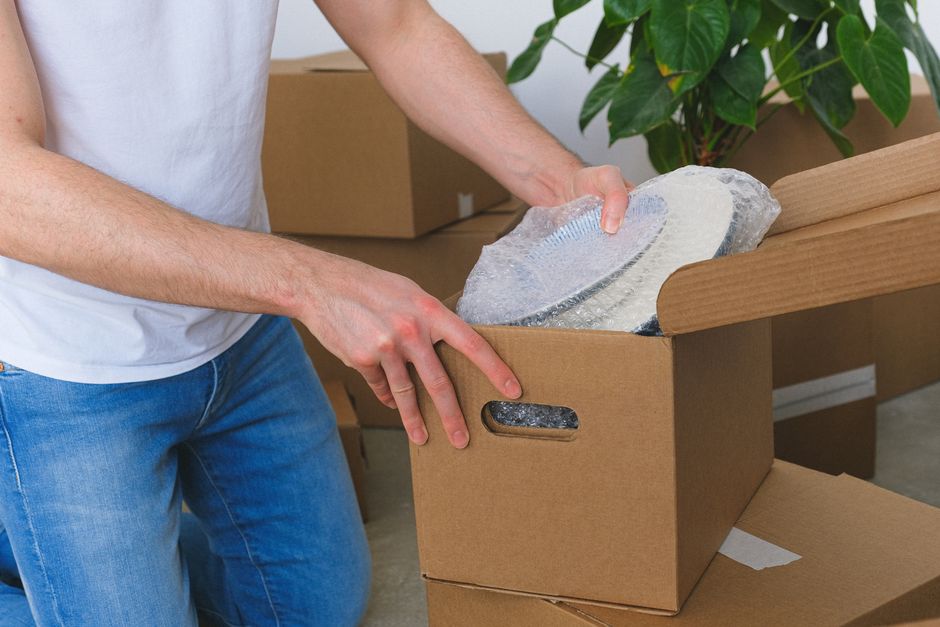
The most important rule for packing dishes: pack them vertically, like records in a crate, not stacked flat. Plates packed flat concentrate all the stress of anything placed on top directly onto the ceramic, which is how they crack. Packed on their edges, the weight distributes along the rim — far more durable by design.
- Line the bottom of the box with at least three inches of crumpled packing paper or foam padding.
- Wrap each plate individually in two to three sheets of packing paper, tucking the ends in as you roll.
- Stand wrapped plates vertically in the box, packed snugly side by side.
- Fill any remaining gaps with crumpled paper so nothing can shift.
- Add a final layer of padding on top before sealing.
Glasses and Stemware
Stemware is the most fragile category in the kitchen. Stems snap under even modest pressure, so extra protection here is non-negotiable.
- Stuff the inside of each glass with crumpled packing paper before wrapping the outside — this prevents the glass from collapsing inward under pressure.
- Wrap the outside with two to three sheets of packing paper, spiraling from base to rim.
- Place glasses upright in the box — never upside down — with the heaviest pieces on the bottom.
- Use cell dividers (available at most moving supply stores) whenever possible. They're specifically designed for this purpose and worth every penny.
- Never fill a glass box more than three-quarters full. Top it off with padding and seal it.
Bowls and Mugs
Bowls should be nested only after each one is individually wrapped. Place them in the box with the openings facing down. Mugs should be wrapped individually with the handles given extra paper padding — handles are almost always the first thing to go.
Packing Artwork, Mirrors, and Framed Items
Flat artwork and mirrors present a different challenge: their size makes them awkward, and their surfaces are easily scratched even when they don't shatter outright. The key is isolating the surface and providing rigid support on both sides.
Framed Artwork and Photographs
- Cut an X across the glass surface with painter's tape. This doesn't strengthen the glass, but it holds the pieces together if the glass does break, preventing shards from damaging the artwork behind it.
- Wrap the entire frame in several layers of packing paper or bubble wrap, securing with tape that doesn't touch the frame directly.
- Use picture boxes (sold in flat-pack form) sized as close to the frame as possible. Use cardboard corner guards for added protection.
- Stand framed pieces on their longest edge — never flat — and pack them snugly in boxes with padding on both sides.
Large Mirrors and Glass Tabletops
Large mirrors and glass tabletops should be wrapped in moving blankets or furniture pads and transported upright in the truck, leaning against a padded wall — never laid flat on the truck floor. Ask your moving crew to treat these as priority items. Our team is trained to handle oversized fragile pieces, and for truly irreplaceable items, specialty moving services include custom crating that provides a level of protection no standard box can match.
Packing Electronics
Electronics are fragile in a different way — they're vulnerable to both physical impact and static electricity. The best approach is always to use original manufacturer packaging when you have it. The foam inserts are molded to the exact dimensions of the device and provide protection that aftermarket solutions rarely match.
When original packaging isn't available:
- Wrap screens — TVs, monitors, tablets, laptops — with anti-static bubble wrap or foam sheeting. Standard bubble wrap can generate static; anti-static versions are widely available and worth the difference.
- Remove cables and accessories and pack them separately in labeled bags. Tangled cables bouncing around in a box can scratch screens and housings.
- Double-box electronics when possible: pack the wrapped device in a snug inner box, then place that box inside a larger outer box with padding on all sides.
- Label all electronics boxes "FRAGILE – THIS SIDE UP" and make sure your crew knows to keep them upright and away from heavy boxes.
Flat-screen TVs deserve special attention. They should be transported vertically — never lying flat — in a TV box or wrapped in moving blankets and secured upright in the truck. The panels are not designed to bear weight across their face and will crack if laid flat under any significant load.
General Fragile-Packing Rules That Apply Everywhere
Regardless of what you're packing, a handful of universal rules will make every fragile box safer.
Use the Right Box Weight
Fragile items should go in smaller, lighter boxes. A box of dishes should generally weigh no more than 30–40 pounds. Heavy boxes are harder to control, more likely to be dropped, and more likely to be placed under other heavy boxes in the truck — all of which increases breakage risk.
Never Leave Empty Space
Any air gap in a box is room for items to shift during transit. Fill every gap with crumpled packing paper, foam peanuts, or soft items like kitchen towels. When you shake a sealed box, you shouldn't hear or feel anything moving.
Label Every Box Clearly
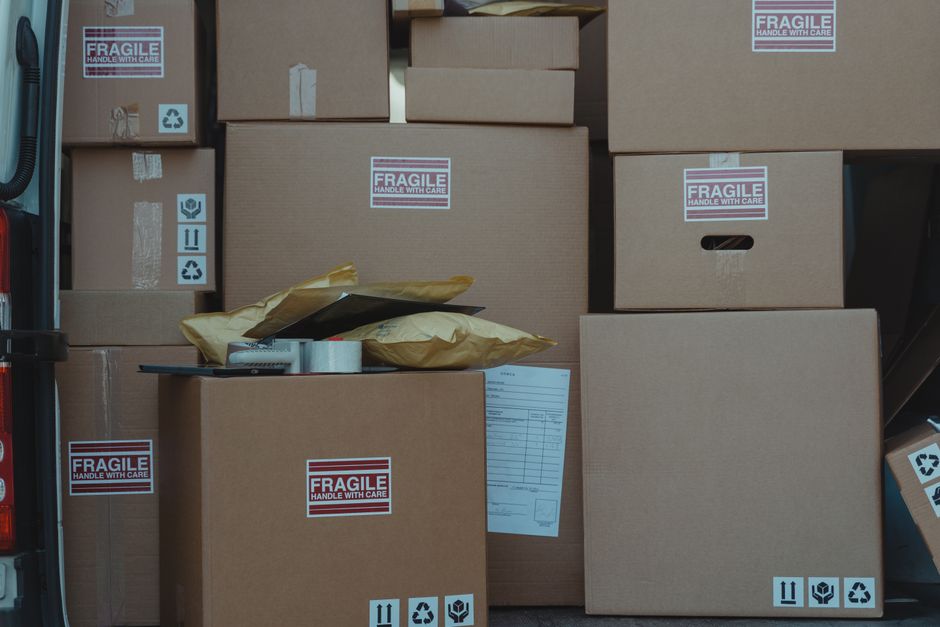
Write "FRAGILE" in large letters on all four sides and the top of every fragile box. Add "THIS SIDE UP" with an arrow for anything that must stay oriented a specific way. Labels only work if the crew reads them — make them unmissable.
Heavier Items on the Bottom, Lighter on Top
This applies both inside each box and in the truck. Never place a heavy box on top of a fragile one. When loading the truck, heavier furniture and appliances go first, against the walls. Fragile boxes go last, on top, where they're least likely to get crushed.
Consider Professional Packing for High-Value Items
For irreplaceable, high-value, or unusually delicate items — antiques, fine art, musical instruments, custom glass installations — no amount of DIY packing is as reliable as professional handling. Our professional packing team uses materials and techniques specifically matched to the items being moved, and that expertise is worth it when the alternative is an item that can't be replaced. For items requiring custom crating or specialized handling, explore our specialty moving services for a higher level of care.
The effort you put into packing fragile items before moving day is effort that pays off on the other side — in belongings that arrive intact, in a new home that comes together without the frustration of discovering broken pieces mid-unpack, and in the peace of mind that comes from knowing you did this part right.
Frequently Asked Questions
What is the best material for packing fragile items?
The best materials for packing fragile items are packing paper (unprinted), bubble wrap, foam sheeting, and purpose-built foam peanuts. Avoid newspaper — the ink transfers onto dishes and glassware and it provides less cushioning than dedicated packing paper. For high-value items, anti-static bubble wrap is recommended for electronics, and custom foam inserts or crating materials are ideal for fine art and antiques.
Should I pack dishes flat or on their edges?
Always pack dishes on their edges, standing vertically like records in a crate — never stacked flat. Plates packed flat concentrate all the weight of whatever is placed on top directly onto the ceramic, which is how they crack. Packed vertically, the stress distributes along the rim, which is structurally much stronger.
How do I pack a flat-screen TV for a move?
The safest option is to use the original manufacturer's box with its molded foam inserts. If that's not available, wrap the TV in anti-static bubble wrap or foam sheeting and place it in a TV-specific moving box. Critically, transport the TV vertically — never lying flat. Flat-screen panels are not designed to bear weight across their face and can crack internally if laid flat, even without visible external damage.
How do I know if a fragile box is packed correctly?
Gently shake the sealed box. If you can hear or feel anything shifting inside, the box needs more padding. A properly packed fragile box should feel solid — nothing moving, nothing rattling. Also check the weight: fragile boxes should be relatively light (under 40 pounds for dishes), which makes them easier to handle carefully and less likely to be dropped or stacked under heavy items.
Is it worth hiring professional packers for fragile items?
For most standard fragile items like dishes and glassware, careful DIY packing using the right materials is effective. However, for high-value, irreplaceable, or unusually delicate items — fine art, antiques, custom glasswork, musical instruments — professional packing is strongly worth the investment. Professional packers use materials and techniques matched specifically to each item, and the cost of their service is almost always less than the cost of replacing or repairing a damaged piece.



Have Questions About Your Move?
Find clear answers to common moving questions. Learn more about our services, process, and what to expect on moving day.
Our team is here to help. Contact us for personalized assistance with your moving needs.
Ready for a Stress-Free Move?
Let our family help your family with a move handled the right way from start to finish. Request your free quote today and see why Philadelphia families have trusted us since 1981.