.webp)

How to Prepare Your New Home Before Moving Day: A Room-by-Room Setup Guide
Written by:
Superior Moving & Storage
Published:
June 30, 2026
Learn how to prepare your new home before moving day with this room-by-room setup guide — cleaning, utilities, safety checks, and what to do first.
Knowing how to prepare your new home before moving day is one of the most underrated parts of a successful relocation. Most people spend weeks planning the move itself — the boxes, the truck, the timeline — and almost no time thinking about what needs to happen at the destination before the first piece of furniture comes through the door. At Superior Moving & Storage, we've watched customers arrive at beautiful new homes only to discover the power isn't on, the floors haven't been cleaned since the previous owners left, or the Wi-Fi router is sitting in a box somewhere under a stack of kitchen items. This guide walks you through exactly what to do at your new home — room by room, priority by priority — before moving day arrives.
Getting your new home ready in advance isn't about perfection. It's about removing friction. When your movers arrive and start unloading, you want to be directing traffic, not hunting for a working outlet or realizing you have no idea where the circuit breaker is. A few hours of preparation ahead of time pays off enormously on the day of the move and in the days that follow.
Why Preparing Your New Home Before the Move Matters
There's a common mental model of moving that goes like this: pack everything at the old house, load the truck, unload at the new house, then figure out the new place. That sequence feels logical, but it creates a bottleneck. The moment your belongings arrive at a home that isn't ready, every subsequent step becomes harder.
Think about what happens when boxes arrive before you've done a deep clean: now you're cleaning around furniture, or worse, unpacking and cleaning simultaneously. Think about what happens when your movers need to know where the couch goes, but you haven't walked the rooms or measured for placement. Suddenly the efficiency of a well-organized moving crew is wasted while decisions get made on the fly.
Preparing your new home in advance also gives you a rare window to do things that become nearly impossible once you're moved in — deep cleaning inside cabinets, painting walls without tarping furniture, checking behind appliances, replacing outlet covers, testing every light switch. These tasks are trivially easy in an empty home and genuinely difficult in a full one.
Before You Do Anything: Utilities, Keys, and Access
Your preparation starts before you even set foot in the new home for a walkthrough. Several administrative and logistical tasks need to happen as early as two weeks before move-in day.
Transfer and Activate All Utilities
Contact every utility provider — electric, gas, water, internet, and if applicable, oil or propane — and confirm that service will be active on or before your move-in date. Don't assume that service transfers automatically when ownership changes. In many cases it does not, and arriving to a home without power or water on move day is a completely avoidable problem. Schedule activation at least two to three days before your move date to give yourself a buffer if anything goes wrong.
Get All Sets of Keys and Access Credentials
Confirm you have keys, garage door openers, gate codes, mailbox keys, and any building access fobs before moving day. If you're moving into a building with a loading dock or freight elevator, contact building management well in advance to reserve your move-in window. Many buildings have strict rules about when moving can occur, and your professional movers will need that information to plan accordingly.
Change the Locks
Regardless of whether your home is newly built or previously owned, rekeying the exterior locks before you move in is a basic security step. You have no way of knowing who has copies of the previous keys — former owners, contractors, housekeepers, neighbors. A locksmith can rekey most standard locks for a modest cost, and it's far easier to schedule before your belongings are in the house.
Deep Clean Before the Furniture Arrives
An empty home is a cleaning opportunity you will never get back once the move begins. Even if the previous owners or tenants left the property in good condition, a thorough cleaning before you move in is almost always worth the time. You're not cleaning around furniture or boxes — you have full access to every surface.
Kitchens and Bathrooms First
Prioritize the kitchen and bathrooms because these are the spaces where cleanliness matters most and where residue from previous occupants is most likely to linger. Inside every cabinet and drawer, wipe down shelves, walls, and hinges. Clean inside the oven, refrigerator (if it stays with the home), and dishwasher. In bathrooms, scrub grout, replace toilet seats if that's a preference, and run the exhaust fan to check it works.
Floors, Walls, and Windows
Hardwood and tile floors should be swept and mopped before any furniture is placed. If you're putting down area rugs, do it after the floors are clean and dry. Wipe down baseboards and door frames — these collect dust and are nearly impossible to reach properly once furniture is in place. Clean windows from the inside while you still have unobstructed access to every sill.
HVAC Vents and Filters
Replace the HVAC filter before move-in day. A clogged or dirty filter will circulate dust and allergens throughout the home from the moment you turn on the heat or air conditioning. While you're at it, remove and vacuum every air vent cover in the house — this is a five-minute task in an empty home and a significant nuisance once furniture is covering vents.
Room-by-Room Preparation Checklist
Once the deep clean is done and utilities are confirmed, walk through the home room by room with a practical setup mindset. Here's what to address in each space before boxes start coming through the door.
Living Room and Common Areas
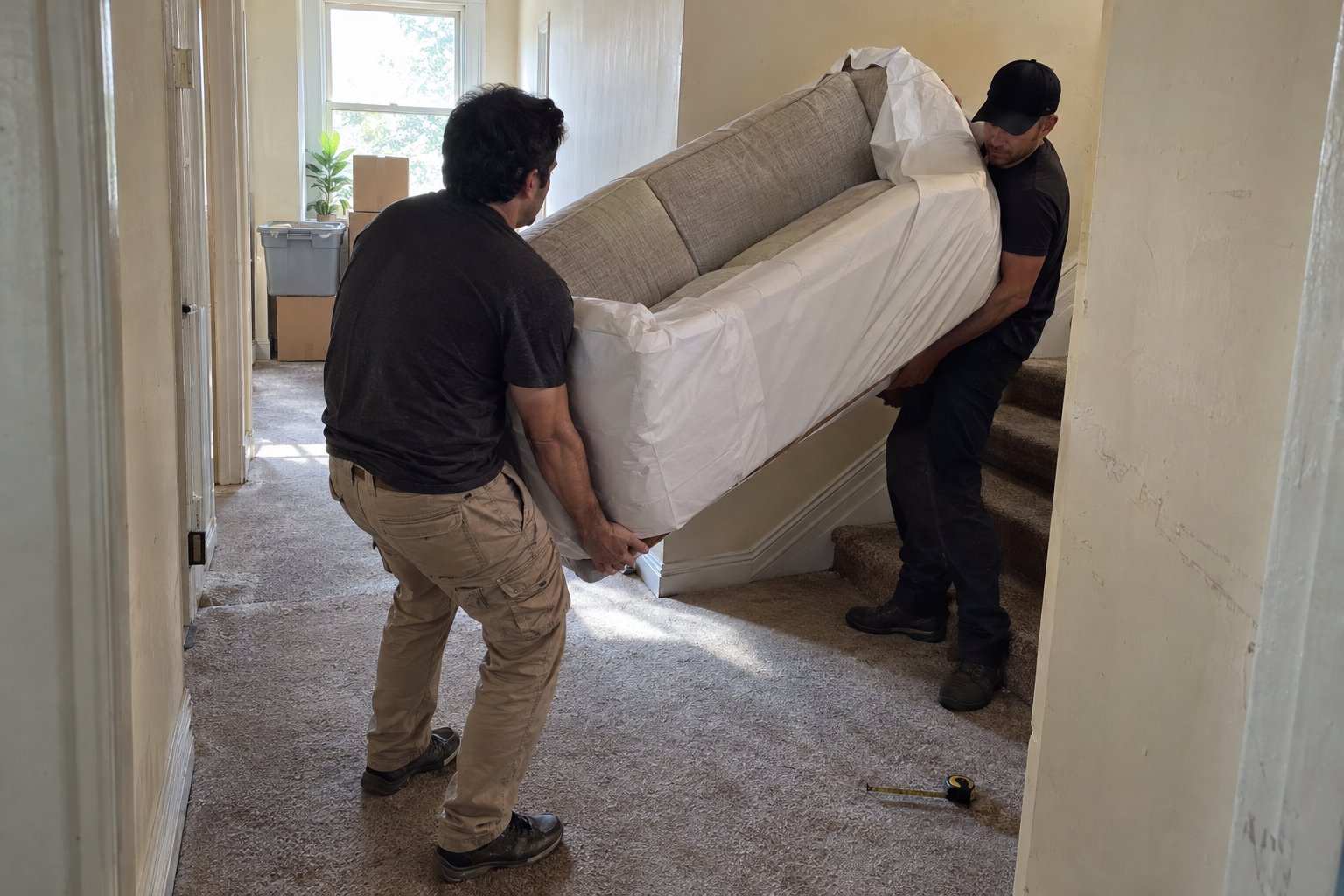
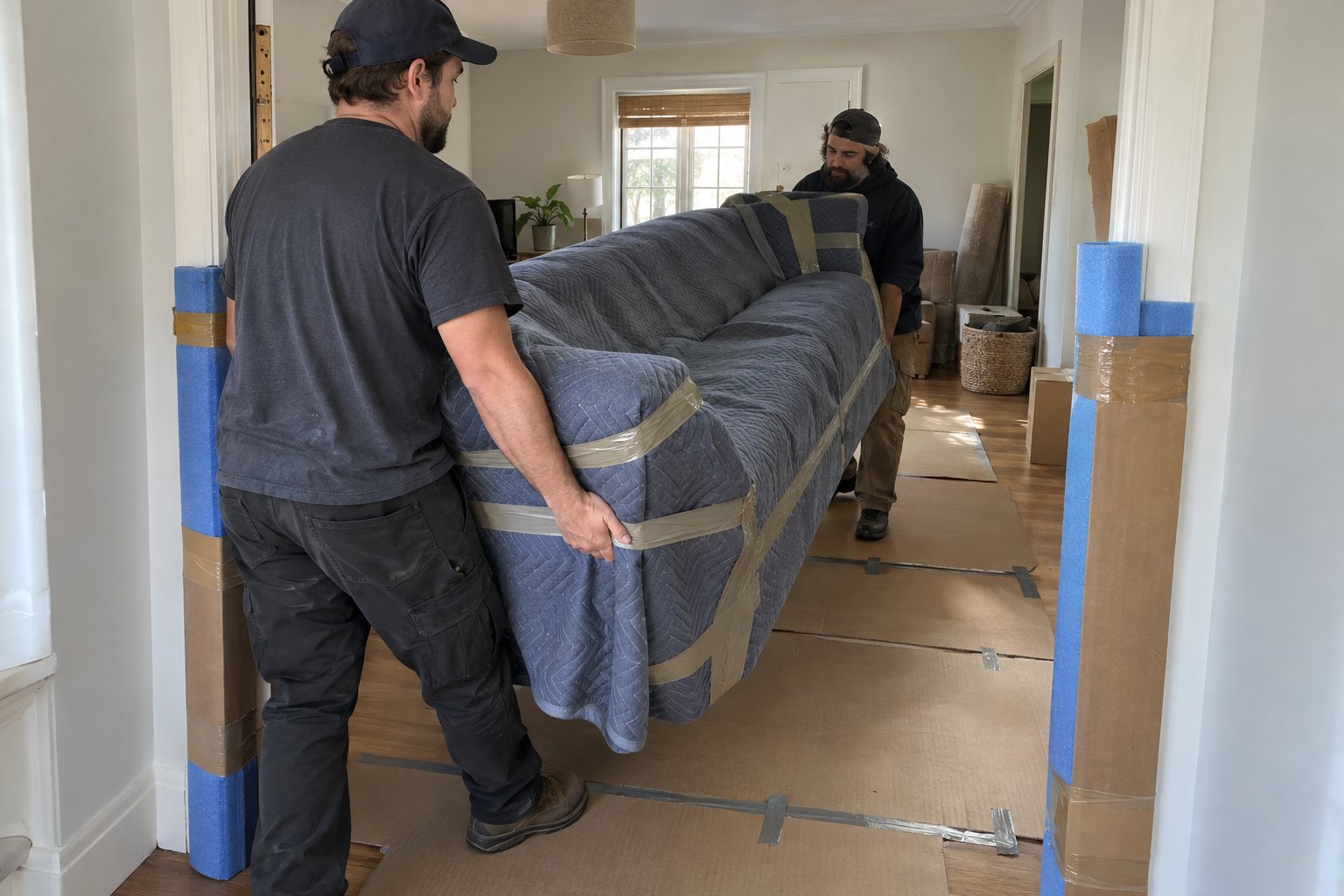
- Measure doorways, hallways, and stairwells — confirm that large furniture pieces can physically fit where you plan to put them before moving day, not during it. If you're working with specialty moving services for oversized or unusual pieces, share these measurements with your moving team in advance.
- Identify where your TV and entertainment equipment will go, and ensure the outlet configuration and cable routing make sense before the couch is in place.
- If you're mounting anything on walls — TVs, shelving, art — do it now, before every wall is blocked by furniture.
Bedrooms
- Confirm the furniture layout for each bedroom in advance, especially if beds need to be assembled. Knowing exactly where each bed goes means your movers can place pieces correctly on the first pass.
- If you're installing closet organizers, shelf liners, or drawer dividers, do it before the room is furnished.
- Test every light fixture and ceiling fan. Replace any burnt-out bulbs now — you'll be grateful when you're unpacking in the evening and need working light in every room.
Kitchen
- Line cabinet shelves before boxes arrive. This takes fifteen minutes in an empty kitchen and becomes a multi-day project once everything is already unboxed and sitting on countertops.
- Confirm the refrigerator, dishwasher, and range are in working order if they're included in the home.
- Identify where your small appliances — microwave, coffee maker, toaster — will live so your unpacking crew can put boxes in the right zones from the start.
Garage, Basement, and Storage Areas
- Designate clear zones in the garage and basement for specific categories of items: tools, sports equipment, seasonal storage. A few pieces of painter's tape labeling zones takes five minutes and dramatically speeds up the unloading process.
- If you're using a storage unit as part of your move — a common strategy during transitions — coordinate that logistics in advance so your movers know exactly which items are going off-site. Our guide to how to use storage during a move covers that process in detail.
Safety and Infrastructure Checks You Shouldn't Skip
Beyond cleanliness and layout, there are a handful of safety and infrastructure items that genuinely need to happen before you move in. These are easy to overlook in the excitement of a move — and occasionally serious if they are.
Test Smoke and Carbon Monoxide Detectors
Press the test button on every smoke detector and carbon monoxide detector in the home. Replace batteries in any unit that doesn't respond correctly. If units are older than ten years, replace them entirely. This is a non-negotiable safety task that takes under fifteen minutes for an entire home.
Locate the Circuit Breaker and Main Water Shut-Off
Know where the circuit breaker panel is before you're in the dark trying to find it. Label every breaker if they aren't already labeled. Locate the main water shut-off valve — both for emergencies and for practical reasons like connecting appliances. These are things you want to find calmly in advance, not urgently in a crisis.
Check for Plumbing Issues
Run every faucet, flush every toilet, and run the showers before move-in day. Slow drains, running toilets, or weak water pressure are easier to have addressed when the home is empty than once everything is in place. If you're moving into an older home, consider having a plumber do a quick inspection before move-in.
Final Steps: Making Day-One Livable
The last thing to do before the movers arrive is to set up what we call a "day-one essentials zone" — a designated area in the new home (often the kitchen counter or a bathroom shelf) where your most immediately needed items will go. This includes toilet paper, paper towels, hand soap, phone chargers, a change of clothes, and anything you'll need the first night before unpacking begins in earnest.
You don't need your whole home set up by bedtime on move-in day. But you do need to be able to function — wash your hands, charge your phone, sleep in a bed, make a cup of coffee in the morning. Thinking through these basics in advance, and keeping those items accessible throughout the move, is the difference between an exhausting but manageable first night and a genuinely miserable one.
If you want professional support with any part of the move — from packing at the origin to placement and setup at the destination — our full packing services are available as a standalone add-on or as part of a complete moving package. The preparation you do in advance and the professional support you bring in on moving day work together to make the whole experience significantly smoother.
Moving into a new home is one of the most significant transitions a person makes. The work you do before move-in day isn't about adding more to your plate — it's about protecting the investment you've already made in a well-planned move. Walk through the new space with this guide in hand, and you'll arrive on moving day with a destination that's genuinely ready to receive you.
Frequently Asked Questions
How far in advance should I prepare my new home before moving in?
Ideally, you should start preparing your new home at least one to two weeks before your move date. Use that window to activate utilities, rekey the locks, and schedule any repairs or professional cleaning. In the two to three days immediately before the move, do the full deep clean and room-by-room setup so the home is ready to receive furniture and boxes the moment your movers arrive.
Do I really need to clean a new home before moving in?
Yes — even if the previous owners cleaned before leaving or the builder did a construction clean, a move-in deep clean is almost always worthwhile. You have unobstructed access to every surface, cabinet interior, baseboard, and vent cover in an empty home. Once furniture and boxes are in place, those same surfaces become far harder to reach. Spending a few hours cleaning an empty home now saves significant effort later.
What utilities do I need to set up before moving day?
At minimum, confirm that electric, gas (if applicable), and water service will be active on your move-in date. Internet and cable service should also be scheduled, ideally with installation happening before or on move day. Don't forget to check whether oil or propane tanks need to be filled if your home uses those fuel sources. Contact each provider at least two weeks out and confirm activation a day or two before the move.
What safety checks should I do before moving into a new home?
Test every smoke detector and carbon monoxide detector and replace batteries or units as needed. Locate the main circuit breaker panel and the main water shut-off valve. Run all faucets, flush all toilets, and check that drains flow properly. Rekey exterior locks. These checks take a short amount of time in an empty home and are significantly harder to address once you're fully moved in.
What should I set up first when moving into a new home?
Focus first on the essentials that make the home livable on day one: your bed (so you can sleep), bathroom supplies (toilet paper, hand soap, towels), kitchen basics (coffee maker, a few dishes), and phone chargers. Set these items aside as a 'first night' kit during packing so they don't end up buried in boxes. Once those basics are in place, unpack room by room over the following days at a sustainable pace.

Have Questions About Your Move?
Find clear answers to common moving questions. Learn more about our services, process, and what to expect on moving day.
Our team is here to help. Contact us for personalized assistance with your moving needs.
Ready for a Stress-Free Move?
Let our family help your family with a move handled the right way from start to finish. Request your free quote today and see why Philadelphia families have trusted us since 1981.