.webp)

How to Declutter Before a Move: A Practical Guide to Getting Rid of What You Don't Need
Written by:
Superior Moving & Storage
Published:
July 3, 2026
Learn how to declutter before a move with this practical, room-by-room guide. Decide what to keep, donate, sell, or toss — and make your move easier and cheaper.
Knowing how to declutter before a move is one of the most practical things you can do to reduce cost, stress, and chaos on moving day. Most people underestimate how much they own until they're standing in front of a closet that hasn't been opened in two years, trying to decide whether to pack its contents or abandon them entirely. At Superior Moving & Storage, we've seen firsthand how the volume of what you move directly affects how much you pay, how long the move takes, and how much unpacking work awaits you on the other side. This guide gives you a clear, systematic approach to decluttering before your move — what to tackle first, how to make decisions quickly, and what to do with everything you decide not to bring.
Decluttering isn't about minimalism. It's about intentionality. You're not trying to throw away your life — you're trying to make sure every item that travels to your new home is something you actually want there. Here's how to do it well.
Why Decluttering Before a Move Saves You More Than You Think
The connection between clutter and moving cost is direct and often underestimated. Most local moves are priced by the hour. The more items your crew has to pack, carry, and load, the longer the job takes — and the higher your bill. For long-distance moves, pricing is frequently based on weight, which means every unnecessary box of old magazines or unused kitchen gadgets is costing you real money to transport across state lines.
Beyond cost, there's the unpacking problem. Items you didn't need at your old address won't magically become useful at the new one. They'll arrive in boxes, get unloaded into corners, and sit there for months — or years. Decluttering before you move means you're not paying to transport clutter, and you're not living in it at the destination either.
There's also a psychological dimension. Moving into a new space with only the things you've consciously chosen to keep feels fundamentally different from moving the entirety of your old life wholesale into a new location. The new space feels intentional rather than inherited.
When to Start Decluttering — and How to Build a Timeline
The earlier you start decluttering, the better. Ideally, you want to begin the process at least four to six weeks before your move date. This gives you enough time to be thoughtful rather than reactive, and to pursue the best disposal options for each category of item — selling, donating, recycling, or discarding.
Six or More Weeks Out
Start with the lowest-stakes areas: storage spaces, attics, basements, garages, and closets you rarely open. These zones tend to accumulate the most un-evaluated clutter, and sorting through them takes longer than you expect. Beginning here also gives you time to list valuable items for sale rather than rushing to donate or discard them at the last minute.
Three to Four Weeks Out
Move into living spaces — the rooms you use every day. By this point you've built the habit of evaluating items rather than reflexively keeping them, which makes this phase faster. Focus on bookshelves, media storage, decorative items, and furniture you're not sure fits the new space.
One to Two Weeks Out
Tackle the kitchen, home office, and any specialty areas like a workshop or hobby room. These tend to have high volumes of small items — tools, kitchen gadgets, cables, supplies — that require individual decisions. Give yourself a full day per room if possible.
The Three-Question Framework for Every Item
Decision fatigue is the enemy of effective decluttering. The more decisions you make, the worse your judgment gets — and the more you default to keeping things "just in case." A consistent framework prevents this from happening.
For every item you pick up, ask three questions in order:
- Have I used this in the last 12 months? If the answer is no, the burden of proof for keeping it goes up significantly.
- Would I buy this again today? If you wouldn't spend money on it now, that's useful information about its actual value to you.
- Does it have a defined place in my new home? If you can't picture where it goes in the new space, it's more likely to become clutter there too.
Items that fail all three questions should almost always go. Items that pass all three are keepers. Items that land somewhere in the middle require a judgment call — and that's fine. The goal is faster, cleaner decision-making, not perfection.
Room-by-Room Decluttering Priorities
Bedrooms and Closets
Clothing is one of the highest-volume clutter categories in most homes. A useful approach: if you haven't worn something in a year, set it aside. If it no longer fits or reflects how you actually dress, set it aside. Shoes, bags, and accessories follow the same logic. Furniture decisions in bedrooms usually come down to whether pieces fit the new layout — if you don't have a measurement-based answer, wait until you have a floor plan before deciding.
Kitchen
Kitchens tend to accumulate redundant tools, broken appliances, and items used for a single occasion years ago. Be honest about what you actually cook. If you own four cutting boards, you likely need one or two. Small appliances — bread makers, pasta machines, ice cream churns — deserve particular scrutiny if they're rarely used. Expired pantry items should simply be discarded, not moved.
Living Spaces and Books
Books are one of the heaviest categories to move and one of the most emotionally charged to part with. A practical approach: keep books you intend to reread or reference, and consider donating the rest to libraries, used bookstores, or community exchanges. For media like DVDs, CDs, and physical games, be realistic about whether you still have the hardware to use them.
Garage, Basement, and Storage Areas
These zones are where things go when you're not ready to make a decision — which means they deserve extra scrutiny before a move. Duplicate tools, seasonal items you never use, sports equipment from hobbies you've abandoned, and broken items you meant to fix are all fair game for disposal. If something has been in a box in the basement for more than a year without being opened, that's meaningful information.
Home Office
Old cables, outdated electronics, and years of paper files are the main offenders here. Shred documents containing personal information rather than simply recycling them. For electronics, look for manufacturer take-back programs or certified e-waste recyclers in your area rather than sending them to landfill. If you're considering a labor-only moving service to handle heavy office furniture and equipment, decluttering electronics and filing systems beforehand will make that day far more efficient.
What to Do With What You're Getting Rid Of
Having a plan for disposal makes the decluttering process faster and more satisfying. Rather than setting things aside with vague intentions, decide on your primary channels before you begin.
Sell
Furniture, electronics, appliances, sporting goods, and collectibles may have real resale value. Online marketplaces, local buy/sell groups, and consignment stores are all viable channels. Give yourself enough time — items listed too close to move day often don't sell, and you end up donating or discarding them anyway. Start listing early so you're not making rushed decisions at the end.
Donate
Clothing, household goods, kitchenware, books, and furniture in good condition are welcomed by most donation organizations. Many will even schedule a pickup directly from your home for larger items, which saves you the trip. Confirm the organization's current accepted items list before setting things aside — not all donations are accepted at all times.
Junk Removal
For items that are neither sellable nor in condition to donate — broken furniture, worn-out mattresses, accumulated junk from storage areas — a professional removal service is often the fastest solution. If you're looking at a significant volume, a dedicated junk removal service can clear out a garage or basement in a fraction of the time it would take to make multiple dump runs yourself. Scheduling this well before move day keeps the disposal process off your critical path.
Recycle and Dispose
Paper, cardboard, certain plastics, and metals should go through appropriate recycling channels. Electronics require special handling — most municipalities have designated e-waste drop-off locations or periodic collection events. Paint, chemicals, and cleaning products are often classified as hazardous materials and should be disposed of according to local guidelines rather than simply put in the trash.
Avoiding Common Decluttering Mistakes
The biggest decluttering mistake before a move is starting too late. When time is short, every decision becomes harder and the temptation to pack everything "just to deal with it later" becomes almost irresistible. Starting early is the single most effective thing you can do.
The second most common mistake is decluttering with other people in the room — particularly people who aren't part of the household. Well-meaning family members or friends often slow the process by weighing in on decisions that aren't theirs to make. Work through your own spaces independently, and involve others only for shared items where joint decisions genuinely apply.
A third pitfall: keeping items out of guilt. Gifts you never liked, heirlooms from relatives, items that represent past versions of yourself — these can be among the hardest to part with. Remind yourself that keeping something you don't use or value doesn't honor the person who gave it. If it's genuinely meaningful, it should stay. If the only reason to keep it is guilt, that's not a good reason to move it to a new home.
Finally, don't confuse decluttering with packing. They're separate processes. Decluttering is about deciding what goes; packing is about preparing it for transport. Trying to do both at once is a recipe for confusion and poor decisions. Declutter first, then pack what's left. If you'd like help with the packing side, our professional packing services can take that work off your plate entirely once you've completed your declutter.
How Decluttering Affects Your Moving Day Experience
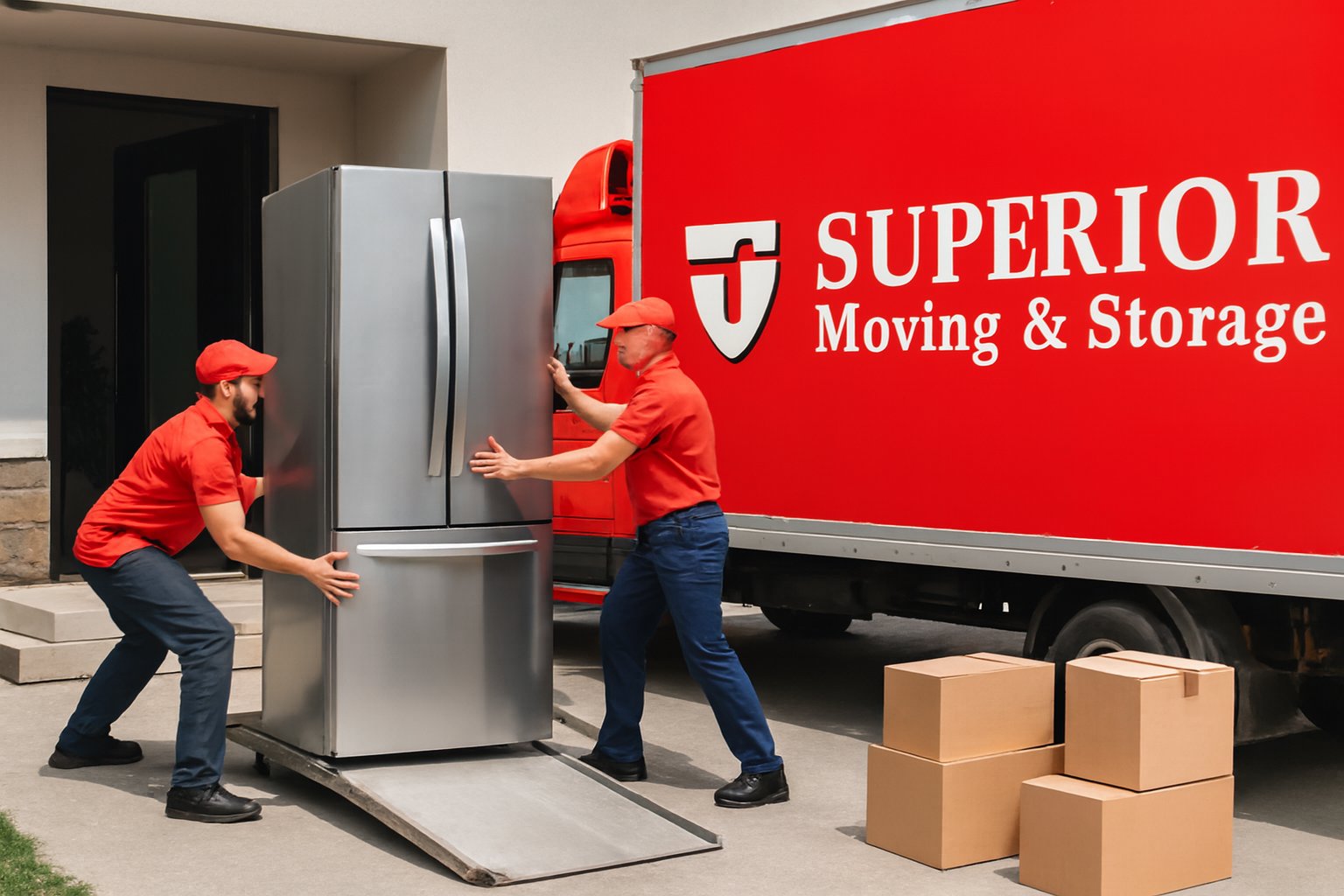
When moving day arrives, the difference between a well-decluttered home and one that wasn't is immediately visible. Rooms that have been cleared of non-essential items are faster to stage for the crew, easier to navigate, and faster to load. Furniture that's been identified as staying versus going can be set aside clearly. Donation boxes that have already been scheduled for pickup aren't cluttering the path between the door and the truck.
For the moving crew, a decluttered home means better focus, less second-guessing about what gets loaded, and a faster overall job. That efficiency benefits everyone — it's not just an abstract benefit. It typically translates to a shorter move, a lower final bill, and a smoother experience from start to finish.
At Superior Moving & Storage, we've worked with customers who have done the hard work of decluttering ahead of time, and the difference in how moving day unfolds is noticeable every time. Fewer boxes, cleaner spaces, and a crew that can move quickly and confidently — that's the payoff for the time you invest before the truck arrives.
Frequently Asked Questions
How far in advance should I start decluttering before a move?
Ideally, start decluttering at least four to six weeks before your move date. Beginning early gives you time to be thoughtful, pursue the best disposal options (selling, donating, or recycling), and avoid last-minute decisions that lead to keeping things you don't need or discarding things you might have sold.
What's the best way to decide what to keep versus get rid of?
A simple three-question framework works well: Have I used this in the last 12 months? Would I buy it again today? Does it have a defined place in my new home? Items that fail all three questions should generally go. Items that pass all three are keepers. This approach prevents decision fatigue and keeps the process moving.
What should I do with items that are too worn to donate but too bulky to trash?
For items in poor condition that can't be donated — old mattresses, broken furniture, accumulated junk — a professional junk removal service is usually the most efficient option. Scheduling removal well before move day keeps disposal off your critical path and clears space for packing and staging.
Does decluttering actually lower my moving cost?
Yes, in most cases it does. Local moves are typically priced by the hour, so fewer items means a faster job and a lower bill. Long-distance moves are often priced by weight, so reducing volume can directly reduce what you pay. Beyond cost, decluttering also cuts down on unpacking time and prevents clutter from simply relocating to your new home.
Should I declutter before or after I get a moving quote?
It's worth doing a preliminary declutter — or at least a rough assessment — before getting a moving quote, since the quote will be based on the volume of items you're moving. If you declutter significantly after receiving an estimate, let your moving company know so the estimate can be updated to reflect the actual scope of the job.



Have Questions About Your Move?
Find clear answers to common moving questions. Learn more about our services, process, and what to expect on moving day.
Our team is here to help. Contact us for personalized assistance with your moving needs.
Ready for a Stress-Free Move?
Let our family help your family with a move handled the right way from start to finish. Request your free quote today and see why Philadelphia families have trusted us since 1981.