.webp)
How to Move Antique and Heirloom Furniture Without Damaging Its Value
Written by:
Superior Moving & Storage
Published:
September 17, 2026
Learn how to move antique and heirloom furniture safely, from wood finishes to veneer joints, without cracking, chipping, or devaluing the piece.
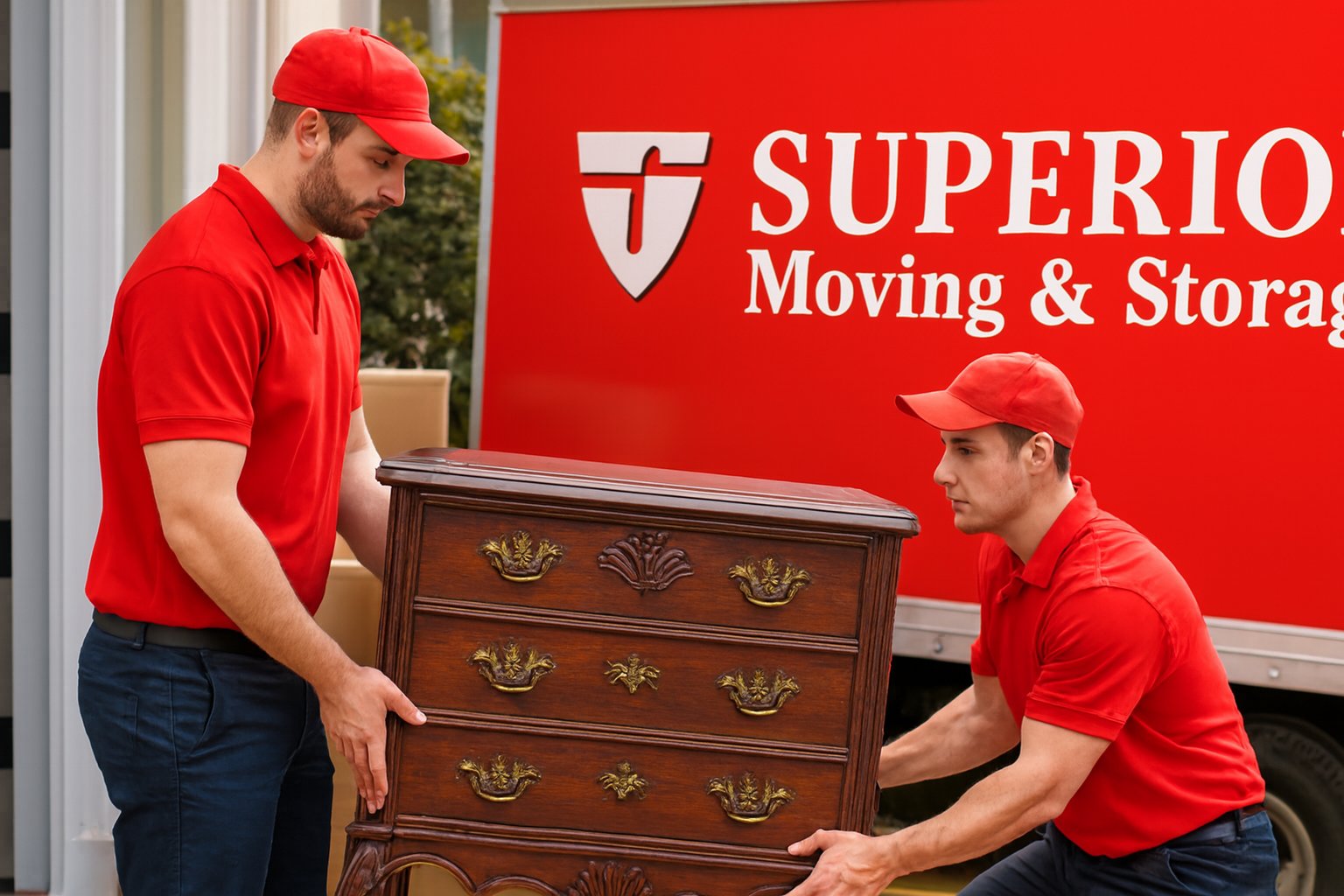
Moving antique furniture safely comes down to three things: protecting the original finish, stabilizing loose joints and veneer before the piece ever leaves the room, and handling it in a way that doesn't stress old wood or hardware. A great-grandmother's dresser or a hand-carved dining table wasn't built for the same wear as flat-pack furniture, and it doesn't respond the same way to bubble wrap, tape, or a fast turn around a doorframe. Treat it like the one-of-a-kind object it is, not like another box on the truck.
This guide is specifically about the furniture in your home that has age, craftsmanship, or family history behind it, the pieces where a chip or a crack isn't just cosmetic, it's a real loss. We'll walk through what actually damages antiques in transit, how to prep and wrap each material correctly, and when it's worth paying for professional handling instead of doing it yourself.
What Actually Damages Antique Furniture During a Move?
Most antique furniture damage happens from three causes: joints flexing under weight they weren't designed to carry anymore, finishes reacting badly to plastic wrap or tape adhesive, and sudden temperature or humidity swings inside a moving truck. Knowing which of these applies to your piece tells you how to prep it.
Old glue joints, especially hide glue used before the mid-20th century, become brittle with age. A dresser that's sat still for thirty years can develop weak joints you won't notice until the piece is tilted or lifted at an angle. Veneer, thin sheets of decorative wood glued over a solid base, is even more vulnerable: it can bubble, crack, or peel if the surface flexes or gets damp. And finishes like shellac or old lacquer can react with plastic wrap left on too long, causing a cloudy haze or permanent tackiness that's very hard to reverse.
Temperature swings matter more than people expect. Wood expands and contracts with humidity, and a piece that goes from an air-conditioned house into a hot truck for several hours can develop new cracks in already-stressed joints, particularly in tabletops and drawer fronts.
How Do You Pack an Antique Dresser, Table, or Cabinet for Moving?
Pack antiques in layers: a breathable barrier against the finish first, then padding for impact protection, then an outer layer for structure. Skip anything that traps moisture or sticks directly to old wood or gilding.
Protecting the finish
Use clean, unprinted packing paper or a cotton moving blanket directly against the wood, never plastic wrap touching the surface. If you must use stretch wrap for stability, wrap it over the blanket, not against bare wood, and remove it as soon as the piece reaches its destination. Avoid regular tape on any part of the furniture itself; painter's tape on trim only, and never directly on a finished surface.
Stabilizing loose parts
Remove and individually wrap anything that can shift or swing: mirrors from dressers, glass shelves from cabinets, drop-leaf sides, and any hardware that's already loose. Pad drawers with soft cloth so contents don't slide and crack a drawer front, or empty them entirely if the piece is especially old or fragile. Tie doors and drawers shut with soft cord rather than tape so nothing swings open mid-move.
Handling veneer and inlay
Veneer and inlay work should never be gripped directly. Lift antique furniture from its structural frame (the legs, the base, the case) rather than from a tabletop edge or a decorative panel, which can pop the veneer loose under pressure. Keep these pieces flat when possible rather than standing them on end for transport.
Should You Hire Professional Movers for Antique or Heirloom Furniture?
For anything with real age, sentimental weight, or appraised value, professional handling is worth the cost. A crew experienced with fragile and high-value pieces knows how to build custom crating, use furniture pads correctly, and load a truck so antiques aren't pinned under heavier items during transit.
DIY moving works fine for sturdy, replaceable furniture, but antiques carry a different kind of risk: damage isn't just expensive to fix, it's often impossible to fully restore without reducing the piece's value further. If you're weighing your options, our specialty moving services are built around exactly this kind of item, using padded crates, controlled loading, and climate-aware transport for pieces that can't be replaced. For truly rare or high-value estate pieces, our estate moving services add extra layers of documentation and white-glove handling on top of standard specialty care.
If you're only unsure about one or two tricky pieces and the rest of your move is straightforward, ask about labor-only help for loading and unloading rather than paying for a full crew; it's a lighter-touch option when you've already handled the packing yourself.
Do You Need Special Insurance to Move Antique Furniture?
Standard mover's liability coverage, which is usually based on weight, will not come close to covering an antique's real value. If a piece is appraised or irreplaceable, you need either a rider on your homeowner's policy or full-value protection through your moving company before moving day, not after something happens.
Get a written appraisal or at least clear photos and a value estimate before the move. This matters for two reasons: it gives you a documented baseline if you ever need to file a claim, and it helps the moving crew understand which pieces need the most careful handling. Ask your mover directly what their valuation coverage actually pays out for antiques specifically, since some policies define "value" as replacement cost of similar new furniture, which is meaningless for a 100-year-old piece.
How Should Antique Furniture Be Loaded and Transported?
Antiques should be loaded last and unloaded first, positioned so nothing heavier sits on top of or against them, and secured with straps rather than stacked boxes for stability. Climate control matters too, especially for long moves or anything going into storage for a period of time.
If your move involves any storage gap between homes, ask specifically whether the facility offers climate-controlled units. Extreme heat or cold in a standard storage unit can do the same damage a hot truck does, just more slowly. Our storage services include climate-controlled options that are worth the small upgrade cost for wood antiques, musical instruments, or anything with veneer or inlay.
Planning the Rest of Your Move
Antique furniture is rarely the only complicated part of a move. If you're also relocating a full household in the Philadelphia area and want one crew that can handle both the delicate pieces and everything else, our Philadelphia moving team can walk through your inventory and flag which items need special handling before the truck ever gets loaded. Getting a written plan in place ahead of time is the best way to make sure nothing irreplaceable gets treated like just another box.
Ready to get specifics on your move? Get a moving quote and mention any antique or high-value pieces so we can plan the right equipment and crew in advance.
Frequently Asked Questions
Can you use plastic wrap on antique wood furniture?
Not directly against the wood. Plastic wrap can react with old finishes like shellac or lacquer, causing haze or tackiness. Use a moving blanket or clean packing paper against the surface first, and only add stretch wrap over that layer for stability.
How do you move an antique dresser with a mirror attached?
Remove the mirror from the dresser before moving if at all possible. Wrap it separately in a mirror box or padded blanket, and pad the mount points on the dresser itself so nothing scratches during transport.
Is it safe to move antique furniture in the summer heat?
Extreme heat can stress old glue joints and cause veneer to bubble. If you're moving antiques in hot weather, keep them out of a parked truck for long stretches and ask about climate-controlled transport for longer moves.
Does homeowners insurance cover antique furniture during a move?
Sometimes, but you should confirm with your provider before moving day. Many policies require a specific rider for appraised antiques, since standard coverage often excludes items in transit or values them well below their actual worth.
Should antique furniture be disassembled before a move?
Only if it was designed to come apart, like a table with removable legs or a bed frame. Forcing apart joints on furniture that wasn't built to be disassembled, especially anything held together with old glue, risks cracking the wood.


Have Questions About Your Move?
Find clear answers to common moving questions. Learn more about our services, process, and what to expect on moving day.
Our team is here to help. Contact us for personalized assistance with your moving needs.
Ready for a Stress-Free Move?
Let our family help your family with a move handled the right way from start to finish. Request your free quote today and see why Philadelphia families have trusted us since 1981.