.webp)
How to Move a Mattress Without Ruining It (Or Your Back)
Written by:
Superior Moving & Storage
Published:
August 31, 2026
Learn how to move a mattress without tears, stains, or a wrecked frame. Bag, bend, and load it the right way, plus when to just call in movers.
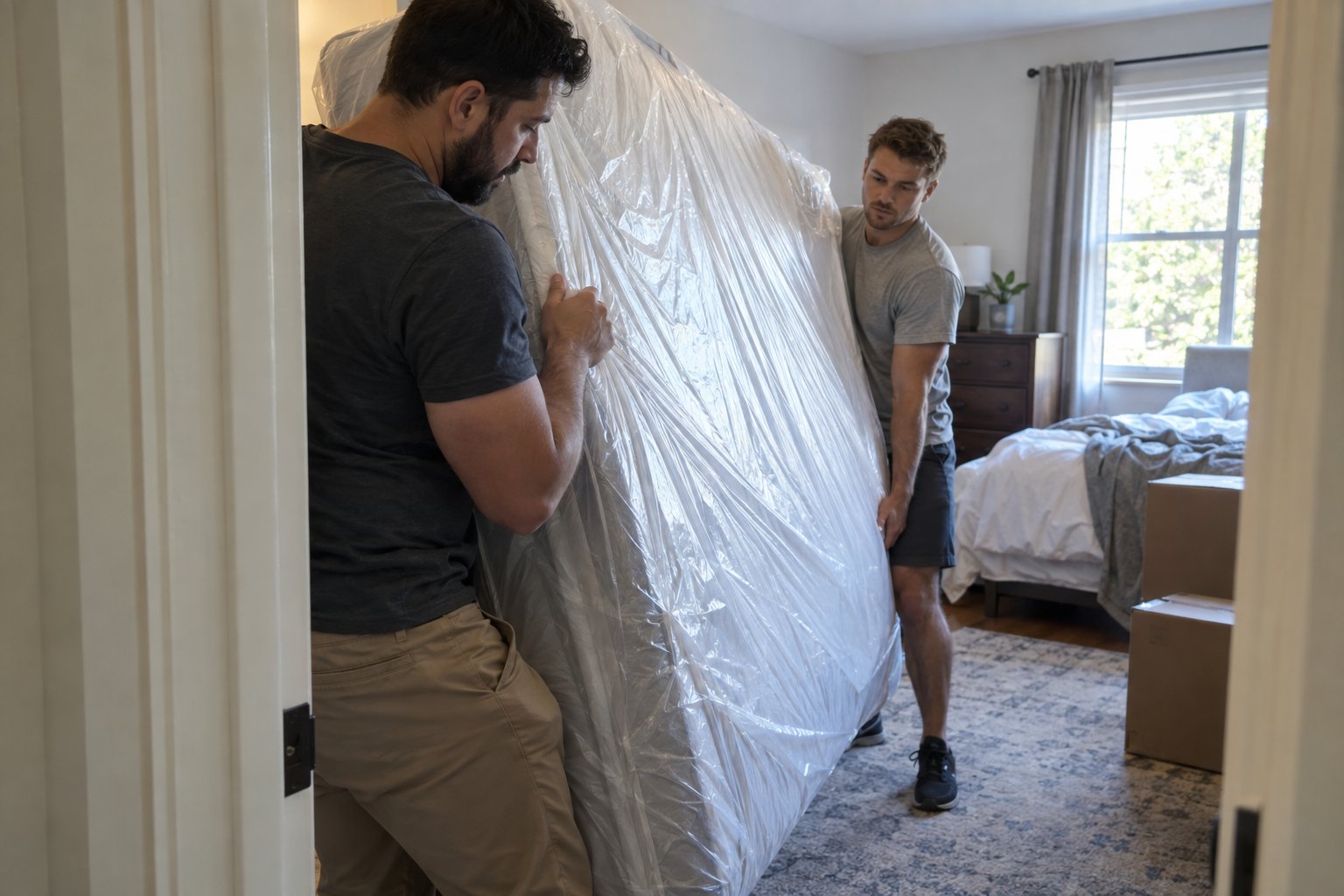
A mattress is one of the most awkward things you will ever try to move: too big to hide in a box, too floppy to stack neatly, and expensive enough that tearing the fabric or soaking it in rain feels like a real loss. Moving a mattress the right way comes down to three things: protecting the surface, controlling how much it bends, and getting it through doorways and into the truck without anyone getting hurt. Here is how to do all three without buying equipment you will never use again.
Do You Really Need a Mattress Bag?
Yes, in almost every case. A mattress bag is a heavy plastic or woven cover that seals around the entire mattress, and it is the cheapest insurance you can buy against dirt, moisture, and tears during a move. Without one, a mattress that touches a dusty truck floor, brushes against a doorframe, or gets rained on for even a few minutes can pick up stains that never fully come out.
Standard moving supply retailers and most full-service movers sell mattress bags sized for twin, full, queen, king, and California king. Buy one sized to your mattress rather than a "universal" bag; too much loose plastic bunches up, catches on stairwells, and tears. Tape the open end closed with painter's tape or the bag's built-in adhesive strip rather than packing tape, which can pull fibers off cheaper bag material.
Can You Bend a Mattress to Get It Through a Doorway?
You can bend most innerspring and hybrid mattresses temporarily to clear a tight doorway or stairwell turn, but only in a shallow curve, never folded sharply, and never held that way for more than a few minutes. Memory foam mattresses tolerate bending better than innerspring models, but any mattress with an internal coil system can develop permanent dips or damaged springs if you fold it hard or leave it bent while it sits in a truck.
If a doorway is genuinely too narrow, bending is a short-term maneuver, not a transport position. Never strap a bent mattress into a truck that way for a long-distance haul; lay it flat once you are through the tight spot. For rowhome staircases, tight apartment turns, or units where nothing seems to fit straight, it is worth reading our guide on navigating Philadelphia rowhomes and narrow streets before moving day, since mattresses are usually the first thing that gets stuck.
How Should a Mattress Be Loaded and Secured in a Truck?
A mattress should be loaded flat whenever possible, either on the floor of the truck as a base layer under lighter items or upright against a side wall, never on top of boxes or furniture where it can shift or sag. If you load it upright, it needs to be braced tightly against the wall with straps, not just leaned, because a shifting mattress in transit can crush anything stacked near it and arrive bowed out of shape.
A few loading rules that prevent the most common damage:
- Never lay heavy boxes or furniture directly on top of a mattress; the weight compresses the foam or springs unevenly.
- Keep the mattress away from anything with sharp edges or exposed hardware, even inside the bag.
- If the mattress will ride upright, use ratchet straps or rope tied to anchor points, not just gravity and other cargo, to hold it in place.
- Load it last if it is going in flat on top of everything else, so nothing gets stacked on it afterward.
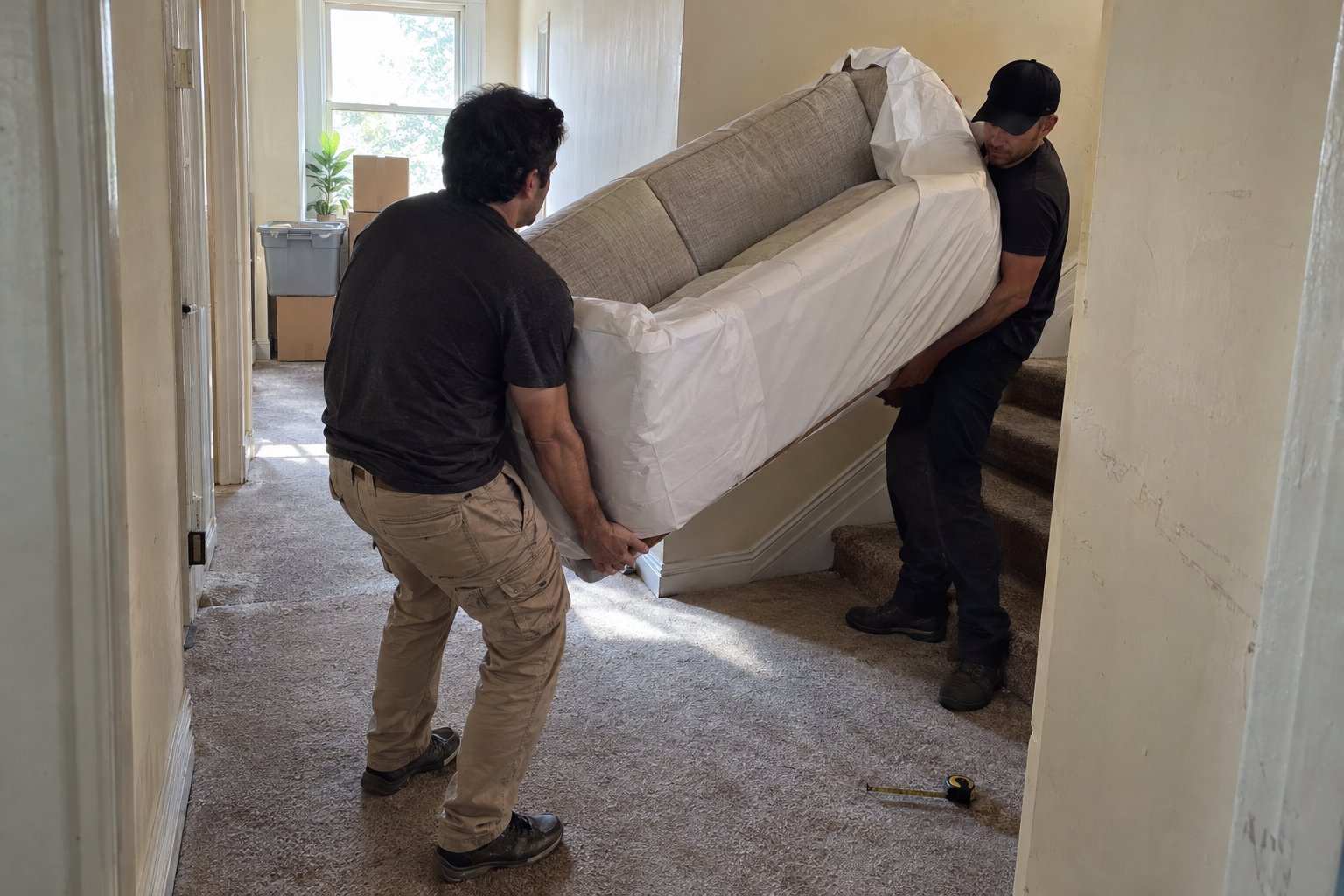
Foam and hybrid mattresses are also heavier and more unwieldy than most people expect, especially queen and king sizes carried up or down stairs. If you are also relocating other bulky furniture in the same load, our guide to moving large and heavy furniture without damaging your home covers the same carrying and doorway techniques that apply to a mattress and box spring set.
What About Moving a Mattress Long Distance or Into Storage?
A mattress that is being stored for more than a few weeks or shipped long distance needs more protection than a same-day local move, mainly against moisture, pests, and prolonged compression. Beyond the mattress bag, avoid storing it flat on a concrete floor, where trapped moisture can encourage mold; stand it on its side on a pallet or slats instead, and never store anything heavy on top of it. If your move involves a storage gap between homes, whether that is a few days or a full season, it is worth reading how storage services handle bulky items like mattresses so you know how it will be positioned and protected while it waits. For moves crossing state lines where the mattress will be on a truck for days rather than hours, ask your movers directly how mattresses are braced for a multi-day haul; the answer should be more thorough than "we'll strap it down."
Is It Worth Hiring Movers Just for a Mattress?
Hiring movers for a mattress alone rarely makes sense on its own, but if it is part of a larger load, professional handling solves the two biggest risks: damage from improper bending or loading, and injury from carrying an unwieldy, heavy object down stairs alone. A queen or king mattress is not dangerous because it is heavy in the way a dresser is heavy; it is dangerous because it is hard to see around and easy to lose control of on stairs.
If you only need help with the bulky, awkward pieces like a mattress and box spring rather than a full household move, labor only moving services can cover just the loading and carrying without booking a full crew and truck. It is a practical middle ground between doing it entirely yourself and hiring a complete moving package.
Getting It Right on Moving Day
A mattress does not need special tools to move safely, just a properly sized bag, a little patience with bends and turns, and a loading plan that keeps weight off it in the truck. Handle those three things and a mattress that cost real money will arrive the way it left: clean, flat, and free of new dips or tears.
Frequently Asked Questions
Can a mattress be transported standing up on its side in a moving truck?
Yes, as long as it is braced tightly against a wall with straps so it cannot slide or fall during transit. An unsecured mattress standing loosely against boxes can tip and crush whatever is stacked near it.
Will folding a memory foam mattress in half damage it permanently?
A brief, shallow fold to clear a doorway usually will not cause lasting harm to memory foam, but holding it folded for an extended period or folding it sharply can create creases that do not fully relax back out.
Do mattress protectors work as a substitute for a mattress bag when moving?
A fitted mattress protector is not a substitute; it is designed to guard against everyday spills at home, not the dirt, moisture, and abrasion a mattress is exposed to while being carried, loaded, and trucked during a move.
How long can a mattress safely sit bent or rolled before it needs to lie flat again?
Treat any bend as a temporary maneuver measured in minutes, not hours. Once through a tight doorway or stairwell, lay the mattress flat again as soon as possible, especially for innerspring or hybrid models.
Does a mattress need to be replaced after a long-distance move if it gets slightly bent?
Usually not. A brief bend during loading does not typically shorten a mattress's lifespan, but a mattress left folded or leaning under pressure for days can develop permanent sagging that a replacement bag and better bracing would have prevented.

Have Questions About Your Move?
Find clear answers to common moving questions. Learn more about our services, process, and what to expect on moving day.
Our team is here to help. Contact us for personalized assistance with your moving needs.
Ready for a Stress-Free Move?
Let our family help your family with a move handled the right way from start to finish. Request your free quote today and see why Philadelphia families have trusted us since 1981.