.webp)

How Much Notice Do Movers Actually Need? A Booking Timeline Guide
Written by:
Superior Moving & Storage
Published:
September 10, 2026
Wondering how far ahead to book movers? Here's what actually drives availability by season, move size, and distance, plus what to do if you're already behind.
Most local movers want two to four weeks of notice, and long-distance or full-service moves are safer at four to eight weeks out. But the real answer depends on the season, the size of your move, and how flexible your date is. Book too early and you're guessing at details; book too late and your first-choice date and crew size may already be gone.
This is a different question than a moving day checklist or a general planning timeline. Those tell you what to do once a date is locked in. This is about the step before that: figuring out when to actually pick up the phone or submit a request so the date you want is still available.
How Far in Advance Should You Book Movers?
As a baseline, book a local move two to four weeks ahead and a long-distance or large-home move four to eight weeks ahead. Add extra cushion at both ends if your move falls between May and September, on a weekend, or at the start or end of a month.
Movers build their schedules around crew availability and truck capacity, not just calendar dates. A two-bedroom apartment move on a random Tuesday in February can often be booked with a week's notice. The same move on the last Saturday of June might need to be locked in a month or more ahead, simply because so many other households are trying to book that exact window. If your dates are fixed (a lease that ends on a specific day, a closing date on a house), treat the longer end of these ranges as the real deadline, not the average.
Why Do Peak Season and Month-End Dates Fill Up Faster?
Peak season and month-end dates fill up fast because demand concentrates on a handful of days while crew capacity stays roughly fixed. Summer accounts for a large share of annual household moves, and the last few days of any month draw an outsized number of lease turnovers and closings.
A moving company only has so many trucks and trained crews on a given day. When a large share of the region's movers all want the same Saturday, that day's slots go first, often weeks before the surrounding weekdays fill up. If your move has to happen on a weekend or at month-end, don't wait for a "quiet week" to call. Reach out as soon as you have a probable date, even before every detail of the move is settled, and adjust the specifics later.
Signs You're Already Cutting It Close
- Your target date is a Friday or Saturday in June, July, or August.
- You need a full crew plus a truck large enough for a 3+ bedroom home.
- Your move falls in the last five days of the month.
- You're coordinating a move-out and move-in on the same day (a "same-day" or "back-to-back" move).
Does the Size or Type of Move Change the Lead Time?
Yes. A studio or one-bedroom local move can often be scheduled with just a week or two of notice, while a full-service move involving packing, a multi-bedroom home, specialty items, or interstate transport needs more runway. The more moving parts, the more advance planning it takes to line them up.
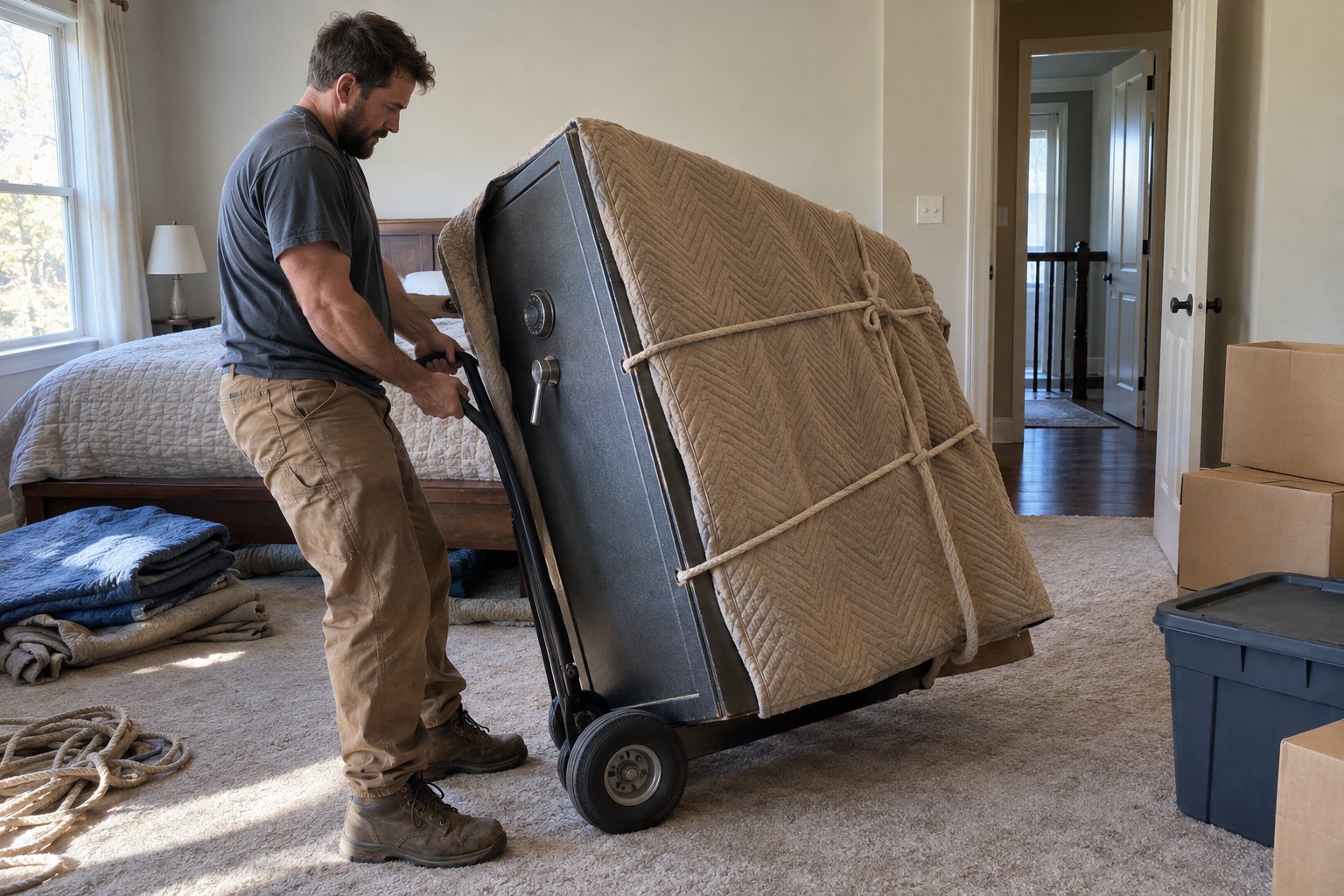
Packing services, in particular, add a scheduling layer. If you want a crew to pack your kitchen and bedrooms the day before the move (a common approach for busy households), that's a separate visit that has to be reserved alongside the moving day itself, not assumed. Specialty items like pianos, safes, or large art collections may also require a different truck configuration or additional crew, which some companies book from a smaller specialized pool. If your move includes any of these, mention them when you first reach out rather than adding them later, since that's often what pushes a booking from "next week" to "three weeks from now."
What If You Need to Book on Short Notice?
If you're inside your ideal window, you still have options: call multiple companies the same day, be flexible on the exact date and time, and be upfront that you're working with less lead time than usual. Weekday moves, especially Tuesday through Thursday, are the most likely to have last-minute openings.
Some companies also hold a small buffer of capacity for exactly this situation, since cancellations and date changes happen regularly. Asking directly whether a company has any openings in the next 5 to 10 days, rather than only asking about your one preferred date, often turns up availability you wouldn't find otherwise. Be honest about what's non-negotiable (a lease deadline, for example) versus what's flexible (morning versus afternoon start), since that flexibility is usually what gets a late booking fit into an already tight schedule.
When Is It Actually Fine to Wait?
It's reasonable to wait if your move is local, off-peak (roughly October through April), on a weekday, and doesn't require packing help or specialty handling. In that scenario, a week or two of notice is often plenty, and booking further ahead mostly buys you a wider choice of times rather than the difference between getting a mover at all.
The tradeoff to waiting is price flexibility, not just availability. Companies sometimes have more room to work with your budget on dates that aren't in high demand. If your situation matches this lower-pressure profile, use the extra time to get your moving quote finalized and compare a couple of options instead of rushing into the first one you call.
Building Your Booking Decision Into a Full Plan
Once you've locked in a date, the actual planning work still lies ahead: sorting what to pack yourself versus what to hand off, working out a week-by-week moving timeline, and deciding whether you need short-term storage if your old and new dates don't line up perfectly. If your move crosses state lines, the lead-time math shifts again, since long-distance moving involves more coordination on the carrier side.
The takeaway is simple: the date drives the timeline, not the other way around. Figure out your real deadline first, then work backward from there instead of assuming a fixed number of weeks will always be enough.
Ready to check availability for your date? Get a moving quote and we'll tell you honestly whether your timeline is comfortable or tight.
Frequently Asked Questions
Can I book movers with only a few days' notice?
Sometimes, especially for a small local move on a weekday. Call several companies the same day, ask specifically about openings in the next 5 to 10 days rather than just your preferred date, and stay flexible on start time.
Is it more expensive to book movers last minute?
It can be, since you have less room to compare quotes and less leverage to negotiate. Companies with more lead time can sometimes offer better rates because they can slot your move in more efficiently around other jobs.
Do I need to book earlier if I'm also using packing services?
Yes. A packing crew is typically a separate scheduled visit from the moving day itself, so add extra lead time if you want professional packing help, especially during summer months.
What's the earliest I should book a long-distance move?
Aim for six to eight weeks ahead if possible. Long-distance moves involve coordinating trucks and crews across a wider route, so companies generally need more runway than for a same-day local move.
Does booking way in advance guarantee a lower price?
Not necessarily, but it usually gives you more flexibility to compare quotes and choose a less busy date, both of which tend to work in your favor compared to booking under time pressure.


Have Questions About Your Move?
Find clear answers to common moving questions. Learn more about our services, process, and what to expect on moving day.
Our team is here to help. Contact us for personalized assistance with your moving needs.
Ready for a Stress-Free Move?
Let our family help your family with a move handled the right way from start to finish. Request your free quote today and see why Philadelphia families have trusted us since 1981.