.webp)
Moving with Houseplants Isn't the Hard Part, Storing Them Is
Written by:
Superior Moving & Storage
Published:
September 7, 2026
Can you put houseplants in storage during a move? Here's what actually happens to plants in a storage unit and better ways to keep them alive.
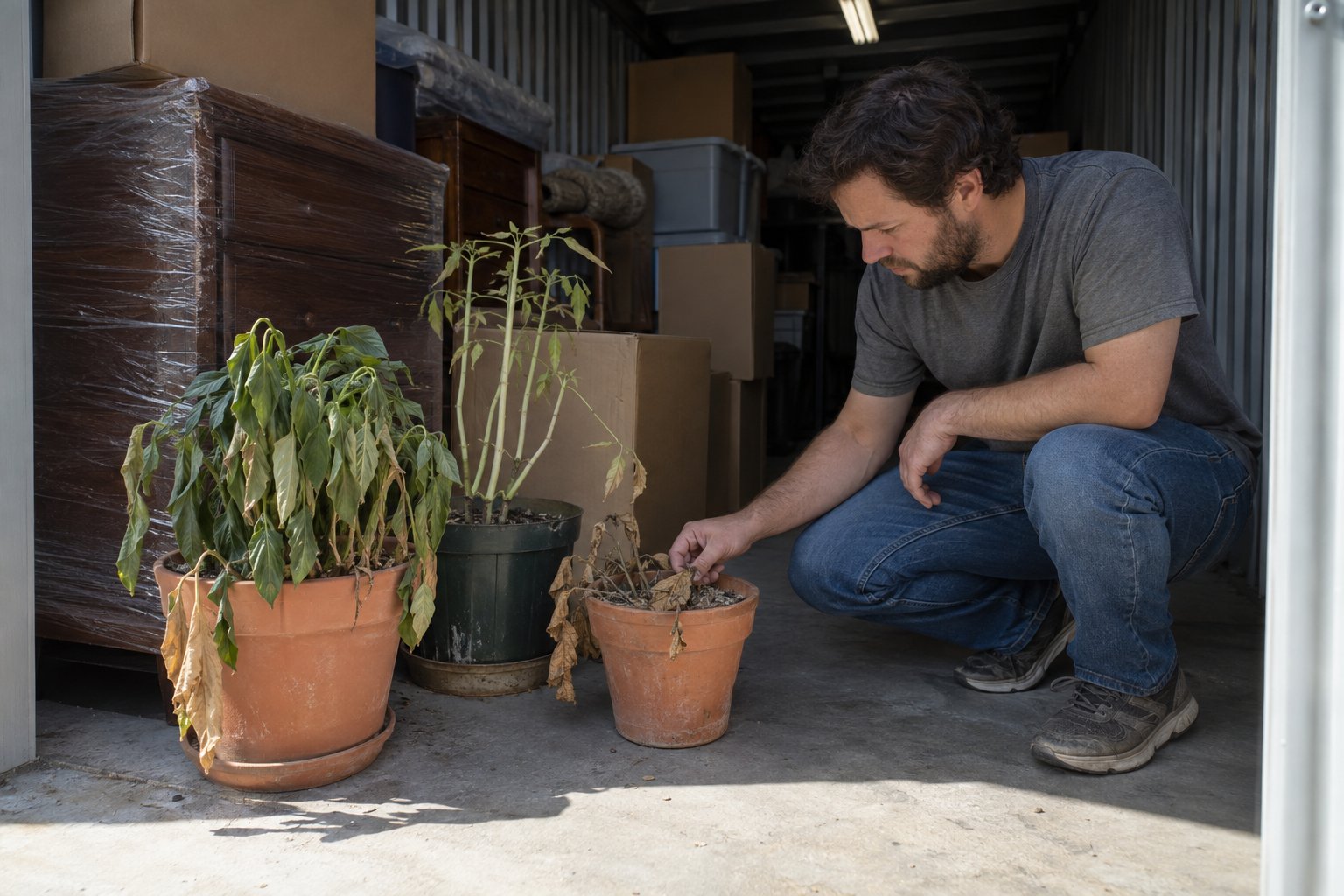
Can you put houseplants in storage during a move? Technically yes, but in almost every real-world scenario it will kill them within a few weeks. Standard storage units are sealed, dark, and climate-controlled for furniture and boxes, not for living things that need light, airflow, and water. If your move involves a storage gap, plants need a different plan than the rest of your belongings.
This is a narrower question than "how do I move my plants," which is mostly about transporting them safely on moving day. Here we're answering the harder version: what happens when your move has a storage gap in the middle, and your plants can't just ride along in the car.
What Actually Happens to a Plant in a Storage Unit?
A plant left in a typical storage unit will start declining within days and is usually dead or unsalvageable within two to four weeks. Even climate-controlled units are built to protect furniture and electronics from temperature swings and humidity, not to provide the light and air exchange a living plant needs to photosynthesize.
Most storage facilities are windowless by design. Without light, a plant can't produce energy, and it will drop leaves and exhaust its stored reserves. Add in a sealed environment with limited air circulation, and you also get mold risk on soil that stays damp with nowhere to evaporate to. Some storage facility contracts explicitly prohibit storing living plants for exactly this reason, along with the pest and mold liability they create.
If a move forces a short storage period and a plant absolutely cannot travel with you, understand you're accepting a real risk to that plant, not a safe pause.
How Long Can a Houseplant Survive Without Light or Water?
Most common houseplants can survive three to seven days in low light with no water before real stress sets in, and hardier varieties like snake plants or ZZ plants can stretch longer. Beyond a week or two, most species will not recover even if conditions improve afterward.
Succulents and cacti tolerate drought well but still need some light, so a dark unit is still a problem even if watering isn't. Tropical plants like pothos, philodendron, or ferns are the least forgiving; they'll show wilting and leaf drop within days of losing light and consistent humidity. If your move is going to involve any storage time at all, sort your plants by hardiness before you decide which ones might tolerate a short, imperfect situation and which ones need a different plan entirely.
Better Alternatives When You Have a Storage Gap
The better move is almost always to keep plants out of the storage unit entirely and find them a temporary home with light and water access. A few practical options work better than storage for the days or weeks between move-out and move-in.
- Ask a friend or neighbor to plant-sit. This is usually the simplest fix for a gap of a few days to a couple of weeks, especially for plants that need regular watering.
- Bring them in your own vehicle. If your timeline allows it, transporting plants yourself, even to a hotel room with a window, beats leaving them in the dark.
- Use a plant-sitting or boarding service. Some nurseries and garden centers offer short-term plant boarding for exactly this situation, and it's worth a call before you assume storage is your only option.
- Gift or propagate before the move. If a plant is large, hard to transport, or not worth the hassle, taking cuttings and starting fresh at the new place is sometimes more practical than keeping the original alive through a gap.
If you're weighing whether to use a storage unit at all during your move, it helps to understand what storage is actually good for and what it isn't; our guide to using storage during a move covers the categories of belongings that hold up well in a unit, which plants are not part of.
What If You Have No Other Option?
If a short, unavoidable storage stay is genuinely your only choice, you can reduce the damage but you can't eliminate it. Treat this as damage control for a day or two, not a real storage plan.
Water the plant thoroughly right before it goes in, since it won't get another chance for a while. If the unit has any interior lighting or you can prop the door for an hour with someone present, a brief window of light is better than none. Group plants together, since they create a slightly more humid microclimate for each other. Most importantly, set a hard limit on how long they stay, ideally under 48 hours, and check on them the moment you're able to. Beyond that window, expect real losses even with these precautions.
Planning Ahead Prevents This Problem
The real fix is timeline planning, not a better storage technique. If you know your move involves any gap between homes, decide where your plants are going before moving day, not during it.
When you book with a full-service mover, it's worth asking directly how they handle plants and whether their crew can time delivery to avoid a storage gap altogether. A mover with flexible scheduling around your local moving timeline can sometimes coordinate move-out and move-in closely enough that plants never need a temporary home at all. If your move does require a storage period for the rest of your belongings, our team can talk through storage services options and help you plan around the pieces, like plants, that don't belong in a unit.
Ready to talk through your moving timeline and figure out the best plan for the parts of your move that need special handling? Get a moving quote and we'll walk through the details with you.
Frequently Asked Questions
Will a storage facility let me store live plants?
Many storage facilities prohibit living plants in their rental agreements because of mold, pest, and liability concerns. Always check your contract before assuming plants are allowed, even for a short stay.
Do climate-controlled storage units keep plants alive longer than regular units?
Climate control helps with temperature swings but doesn't solve the bigger problem, which is lack of light. A climate-controlled unit will still be dark, so plants decline on a similar timeline to a standard unit.
Which houseplants survive longest without light during a move?
Hardier, drought-tolerant plants like snake plants, ZZ plants, and pothos tend to hold up longer than tropical or flowering varieties, but none of them thrive in total darkness for more than a week or two.
Can I ship houseplants to my new home instead of storing them?
Shipping is possible for hardy plants using specialty plant shippers, but it's expensive and risky for anything delicate. For most moves, personal transport or a short-term plant sitter is more reliable than shipping.
Is it better to give away plants before a move than risk storing them?
If your move involves an extended storage gap and no one available to plant-sit, rehoming a plant or taking cuttings to start over is often more realistic than trying to keep the original alive through storage.
Have Questions About Your Move?
Find clear answers to common moving questions. Learn more about our services, process, and what to expect on moving day.
Our team is here to help. Contact us for personalized assistance with your moving needs.
Ready for a Stress-Free Move?
Let our family help your family with a move handled the right way from start to finish. Request your free quote today and see why Philadelphia families have trusted us since 1981.