.webp)
How to Choose the Right Packing Supplies: A Complete Guide to Boxes, Tape, and Materials
Written by:
Superior Moving & Storage
Published:
July 7, 2026
Not all packing supplies are created equal. Learn exactly which boxes, tape, and materials to buy — and how much — so nothing breaks in transit.
Choosing the right packing supplies for moving is one of the most underestimated decisions in the entire relocation process. Most people grab whatever boxes are available behind a grocery store, buy one roll of tape, and assume the rest will work itself out. It rarely does. At Superior Moving & Storage, we've seen how the wrong materials — undersized boxes, cheap tape, inadequate cushioning — lead to broken items, collapsed loads, and a moving day that takes longer than it should. This guide gives you everything you need to choose the right packing supplies, in the right quantities, for every room and item type in your home.
The goal is simple: every item that leaves your home should arrive at the destination in the same condition. The right materials make that possible. Here's how to approach it.
Why Packing Supplies Matter More Than Most People Realize
Packing supplies are not all equivalent. The cardboard used in purpose-built moving boxes is significantly thicker and more structurally sound than the cardboard in a cereal box or a wine shipping container. The adhesive strength of quality packing tape is orders of magnitude higher than masking tape or painter's tape. Bubble wrap engineered for moving provides a different level of protection than newspaper — which, despite being free, can transfer ink and provides limited cushioning for fragile items.
Beyond protection, the right supplies affect efficiency. Standardized box sizes stack cleanly in a moving truck, maximizing space and minimizing shifting during transit. Mismatched boxes — different heights, different structural integrity — create unstable loads that shift, tip, and create pressure on items that shouldn't bear weight. A move packed with the right materials loads faster, rides more securely, and unloads more cleanly on the other side.
If you're considering professional packing services, your crew will bring industry-grade supplies. But if you're packing yourself — even partially — this guide gives you the same knowledge your moving crew uses.
The Essential Packing Supplies You Actually Need
Moving Boxes: The Foundation of Everything
Boxes are the single most important packing supply, and the variety matters. Here are the main sizes and what they're designed for:
- Small boxes (1.5 cubic feet): Books, canned goods, tools, and anything else that's heavy per unit. The smaller footprint keeps the weight manageable for lifting. Never pack books in large boxes — the weight becomes unmanageable and the box may fail.
- Medium boxes (3.0 cubic feet): The workhorse of most moves. Ideal for kitchen items, toys, décor, small appliances, and miscellaneous household goods. This is the size you'll use most often.
- Large boxes (4.5–6.0 cubic feet): Best reserved for light, bulky items — pillows, comforters, linens, lampshades, stuffed animals. Do not use large boxes for heavy items, even if they fit. A large box packed with dishes will be nearly impossible to lift safely and may fail structurally.
- Wardrobe boxes: Tall, free-standing boxes with a metal hanging bar across the top. Clothes move from closet to box to closet without folding. Worth every penny for garment-heavy households.
- Dish/cell boxes: Also called dishpack boxes — reinforced double-wall boxes with internal cardboard dividers. Designed specifically for plates, glasses, and fragile kitchenware. If you're not wrapping each piece individually and using a cell box, your dishes are at real risk.
- Mirror/picture boxes: Flat, adjustable-length boxes that telescope to fit artwork and framed mirrors. These items should never be packed in a standard box.
- TV boxes: Purpose-built boxes sized for flat-screen televisions. If you no longer have the original packaging, a TV box is the safest alternative for transport.
How Many Boxes Do You Need?
Estimating box count is notoriously difficult because it depends entirely on how much you own and how densely you pack. As a rough framework for a fully packed household (not accounting for items that go in wardrobe or specialty boxes):
- Studio or 1-bedroom apartment: approximately 20–40 boxes total
- 2-bedroom home: approximately 40–60 boxes total
- 3-bedroom home: approximately 60–80 boxes total
- 4+ bedroom home: 80–100+ boxes, often more
These are rough estimates. If you've already decluttered before your move, your box count will be lower. If you have a home with significant kitchen inventory, a full library, or a workshop, budget higher. When in doubt, buy slightly more than you think you need — most reputable moving supply retailers allow returns on unused, flattened boxes.
Tape, Cushioning, and Protective Materials
Tape: Don't Underestimate It
Packing tape is not all the same. Here's what to know:
- Polypropylene (standard packing tape): The most common type. Strong adhesive, clear, wide (2–3 inches). This is what most professional movers use and what you should default to. Buy rolls that are at least 2 inches wide for full seam coverage.
- Hot melt tape: A stronger variant that bonds more aggressively, including in cold temperatures. Better for heavy boxes or if you're moving in winter conditions.
- Avoid: Masking tape, painter's tape, scotch tape, or duct tape for box sealing. They either lack the adhesive strength to hold a loaded box or leave residue that damages boxes if they're being reused.
You'll need more tape than you think. A useful rule of thumb: plan for at least 3–4 tape guns (or a single quality dispenser with multiple backup rolls) and assume roughly 1–2 rolls per room. A 3-bedroom home typically burns through 8–12 rolls of packing tape.
Cushioning Materials: Layer Your Protection
Not all cushioning is interchangeable. Different materials serve different purposes:
- Bubble wrap: Best for fragile items — glassware, ceramics, small electronics, framed photos. Use the side with bubbles facing the item and tape securely. Large-bubble wrap cushions better against impact; small-bubble wrap provides a tighter, more form-fitting wrap.
- Packing paper (unprinted newsprint): The most versatile cushioning material. Use it to wrap individual items, fill void spaces in boxes, crumple into layer separators, and protect surfaces. Unlike printed newspaper, it won't transfer ink. Buy it in bulk — you will use far more than you expect.
- Foam sheets and foam pouches: Thin foam sheets wrap china, silverware, and delicate décor cleanly. Foam pouches (pre-formed sleeves) are convenient for stemware and odd-shaped glassware.
- Stretch wrap (furniture wrap): A wide, self-adhering plastic film used to wrap furniture — protecting drawers, bundling items together, and keeping upholstered pieces clean. It doesn't stick to surfaces and leaves no residue. Essential for moves involving upholstered sofas, chairs, and mattresses.
- Furniture blankets/moving pads: Heavy textile pads used to wrap large furniture, appliances, and anything else that won't fit in a box. Your moving company will typically supply these for the truck, but having a few extra on hand during packing is useful.
Specialty Supplies for Specific Situations
Mattress Covers and Bags
Mattresses are expensive and difficult to clean. A mattress bag — a thick plastic sleeve that seals around the entire mattress — protects against dirt, moisture, and tears during the move. They're sized for twin, full, queen, and king mattresses and cost only a few dollars each. There is almost no reason not to use one.
Plastic Bins for Short-Term Moves
If you're moving locally and have the option to load and unload in a single day, hard-sided plastic bins can be a practical supplement to cardboard boxes. They're stackable, reusable, and protect contents from moisture. Many customers find a mix of bins (for items they want immediate access to) and boxes (for everything else) works well.
If you'd prefer to skip the purchase entirely, ask about moving crate rental — reusable plastic moving crates delivered to your home before your move and picked up after. It removes the need to source and dispose of cardboard boxes entirely.
Labels, Markers, and Box Organization Tools
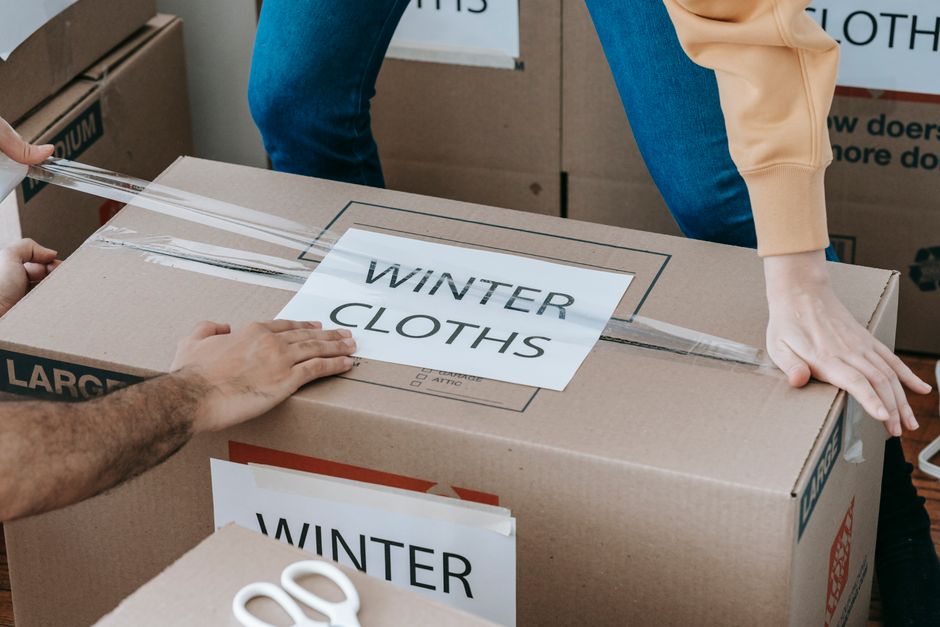
Unlabeled boxes create chaos at the destination. Every box should be labeled on at least two sides — the top and one face — with its destination room and a brief content description. Use a permanent marker with a wide tip for legibility. Color-coded labels (one color per room) make it even easier for your moving crew to route boxes to the right rooms without asking.
Additional tools worth having on hand:
- Box cutter or scissors (for opening boxes at the destination)
- Ziploc bags (for screws, hardware, and small parts removed from furniture)
- Rope or bungee cords (for securing loose items in the truck)
- Furniture sliders (for moving heavy pieces across hard floors without scratching)
Where to Buy Packing Supplies
You have several options for sourcing materials, each with trade-offs:
Moving Companies
Many professional movers, including Superior Moving & Storage, can supply packing materials as part of a full-service package. If you're already booking moving services, ask about supply packages — it simplifies sourcing and ensures you're using materials the crew is familiar with.
Moving Supply Retailers and Home Improvement Stores
U-Haul, Home Depot, Lowe's, and similar retailers stock a full range of moving boxes, tape, and cushioning materials. Quality is generally solid, prices are predictable, and the selection covers all standard box sizes. Many offer bundle packages that discount supplies when purchased together.
Online Retailers
Buying in bulk online can be economical, particularly for packing paper, bubble wrap, and tape. The trade-off is shipping time — don't order online if you need supplies within a day or two. Factor in lead time when planning your packing schedule.
Free Boxes: Proceed With Caution
Liquor store boxes, grocery boxes, and free boxes from community groups like Buy Nothing or Craigslist can supplement your supply, but use them thoughtfully. Check for damage, moisture exposure, and structural integrity before relying on them for heavy or fragile loads. Free boxes are fine for light, non-fragile items — linens, pillows, and clothing — where the cost of a box failure is low.
How to Estimate Your Total Supply Budget
The cost of packing supplies varies by quantity and source, but here's a reasonable planning framework:
- Budget-conscious approach (mix of purchased and sourced boxes, standard tape and paper): $50–$150 for a 1–2 bedroom move; $150–$300 for a 3–4 bedroom home.
- Mid-range approach (all new boxes, quality tape, foam sheets, bubble wrap): $150–$300 for a 1–2 bedroom move; $300–$500+ for a 3–4 bedroom home.
- Full-service supply package through your mover: varies; request a quote as part of your overall moving estimate.
These ranges are approximations. Homes with extensive glassware, artwork, or fragile collections will need more cushioning material, which pushes costs higher. If you're unsure, err toward buying more — most unused materials can be returned or repurposed for future storage needs.
A Room-by-Room Supply Snapshot
Different rooms have different packing supply needs. Here's a quick reference:
- Kitchen: Dish/cell boxes, foam sheets, packing paper (high volume), bubble wrap for small appliances, medium boxes for pantry goods.
- Living room: Mirror boxes for artwork and framed pieces, stretch wrap for upholstered furniture, medium and large boxes for décor and books.
- Bedroom: Wardrobe boxes for hanging clothes, medium boxes for folded clothing and linens, mattress bags.
- Bathroom: Small and medium boxes, Ziploc bags for toiletries, plastic bags to prevent spills.
- Home office: Small boxes for books and files, original packaging or TV boxes for electronics, foam sheets for screens and monitors.
- Garage/workshop: Heavy-duty small boxes for tools and hardware, Ziploc bags for fasteners and parts, stretch wrap for bundling long items.
Frequently Asked Questions
What type of packing tape is best for moving boxes?
Standard polypropylene packing tape — at least 2 inches wide — is what most professional movers use and what we recommend. It has strong adhesive, holds reliably on cardboard, and doesn't peel under the weight of a loaded box. Avoid masking tape, painter's tape, or scotch tape, which lack the holding strength for a full, heavy box. For moves in cold weather, hot melt tape performs better. Buy more rolls than you think you need — most moves burn through tape faster than expected.
How do I know how many boxes to buy for my move?
A rough estimate: 20–40 boxes for a studio or 1-bedroom, 40–60 for a 2-bedroom, 60–80 for a 3-bedroom, and 80–100+ for a 4-bedroom home. These numbers vary significantly based on how much you own and whether you've decluttered before packing. When in doubt, buy slightly more than you estimate — many retailers allow returns on unused, flattened boxes. Boxes you don't use can always be broken down and stored or returned.
Is it safe to use free boxes from grocery stores or liquor stores?
Free boxes can supplement your supply, but use them selectively. Liquor store boxes are often structurally sound and well-sized; grocery boxes are more variable in quality and may have been exposed to moisture. Check every free box for signs of water damage, soft spots, or structural compromise before using it. Reserve free boxes for light, non-fragile loads — linens, pillows, or stuffed animals — and use purpose-built moving boxes for anything heavy or breakable.
Do I really need specialty boxes, or can I use standard boxes for everything?
Specialty boxes make a real difference for specific items. Dish/cell boxes with internal dividers protect glassware and plates far better than standard boxes filled with newspaper. Wardrobe boxes keep hanging clothes wrinkle-free and eliminate the need to fold and re-hang everything. Mirror and picture boxes prevent the cracking and corner damage that's almost inevitable when flat items are packed in standard boxes. TV boxes are the safest option for flat-screen televisions if you no longer have the original packaging. For most other items, medium and large standard moving boxes work well.
Can I rent moving crates instead of buying cardboard boxes?
Yes — moving crate rental is an option that eliminates the need to source, break down, and dispose of cardboard boxes. Reusable plastic moving crates are delivered to your home before the move and picked up afterward. They're stackable, weather-resistant, and reusable — a practical choice for local moves where the turnaround is tight. Ask your moving company whether crate rental is available as part of your service package.



Have Questions About Your Move?
Find clear answers to common moving questions. Learn more about our services, process, and what to expect on moving day.
Our team is here to help. Contact us for personalized assistance with your moving needs.
Ready for a Stress-Free Move?
Let our family help your family with a move handled the right way from start to finish. Request your free quote today and see why Philadelphia families have trusted us since 1981.