.webp)
How to Move an Office Desk Without Damaging It or Your Doorways
Written by:
Superior Moving & Storage
Published:
October 1, 2026
Learn how to move an office desk without scratches, broken drawers, or doorway damage, from disassembly to loading it safely onto a truck.
Moving an office desk goes wrong in one of two ways: it gets stuck halfway through a doorway, or it arrives at the new place with a cracked drawer front and a wobbly leg. Desks are deceptively hard to move because they combine awkward dimensions with delicate joinery, glass inserts, or cable management hardware that nobody thinks about until it is dragging on the floor. Whether you are moving a single executive desk out of a home office or several workstations out of a small business, the process is the same: disassemble what you can, protect what you can't, and plan the route before you lift anything.
This guide walks through how to move an office desk step by step, including which desk types need full disassembly, how to protect glass and laminate surfaces, and when it makes more sense to call in professional help instead of risking an expensive desk, or your stairwell wall, on moving day.
Should You Disassemble a Desk Before Moving It?
Yes, in almost every case. Disassembling a desk, meaning removing the legs, detaching hutches, and taking out drawers, reduces its weight and size enough to move it safely through hallways and doorways, and it prevents the stress that causes joints to crack during transport.
Start by removing anything sitting on top of the desk, then empty every drawer completely. Drawers that are left full are both heavier and more likely to slide open and jam mid-move. If the desk has a separate hutch or keyboard tray, those components almost always detach with a few screws and should travel separately. For desks with a center support leg or modesty panel, take a photo of the underside before removing hardware so reassembly is faster. Keep all screws, bolts, and cam locks in a labeled bag taped to the inside of a drawer or to the underside of the desktop itself, not loose in a moving box where they can get separated from the piece they belong to.
How Do You Protect a Desk's Surface and Hardware During the Move?
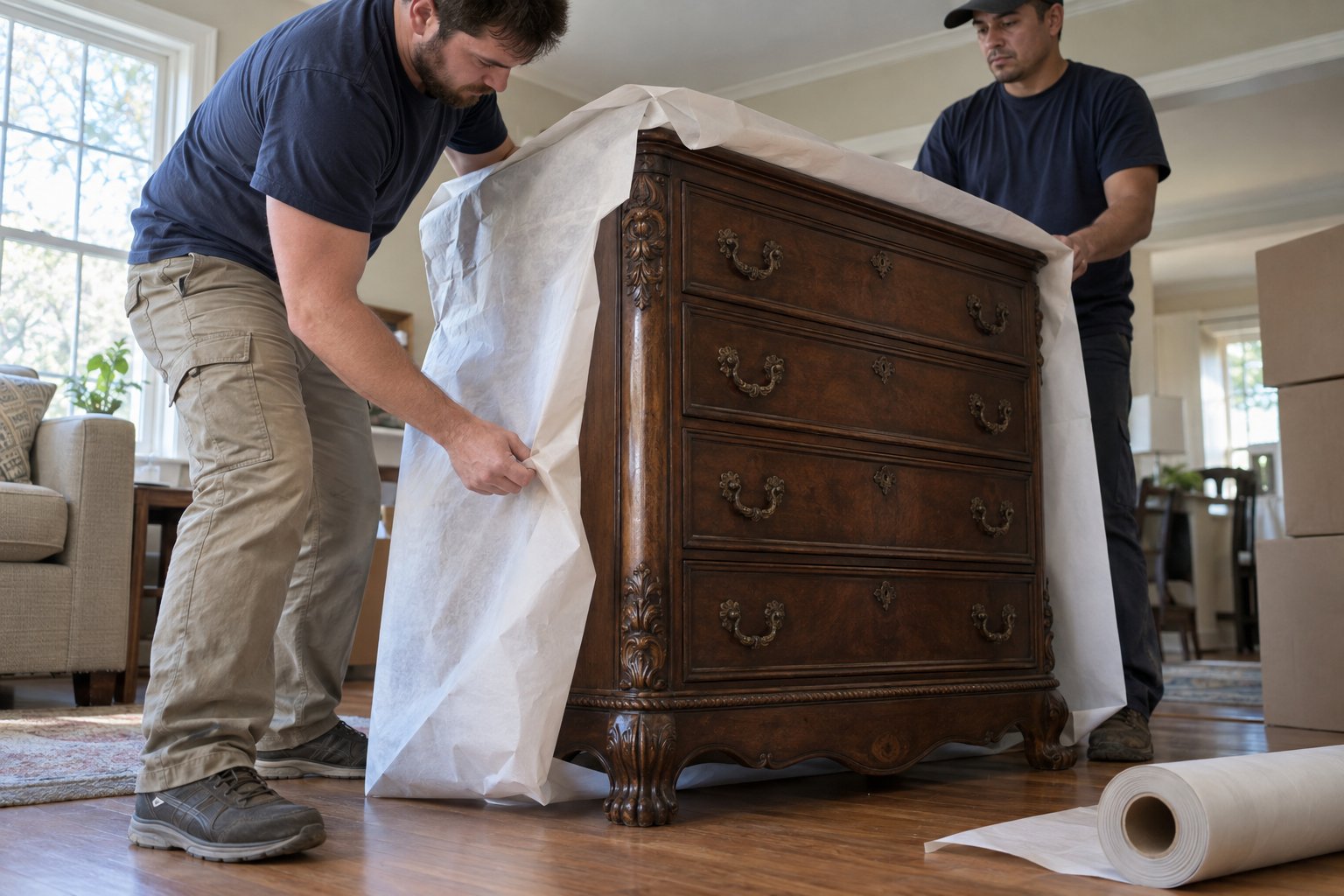
Protect a desk by wrapping the top and any glass inserts in moving blankets or thick padding before taping, then covering the entire piece in stretch wrap to keep the padding in place without touching adhesive to the finish. Glass desktops should be removed separately whenever the design allows it.
Laminate and wood-veneer desks scratch easily, so avoid letting tape or stretch wrap contact the surface directly, use the padding as a buffer layer first. If the desk has a glass top that does not detach, sandwich it between two sheets of cardboard cut to size, taped at the edges only, before wrapping the whole unit in blankets. Metal-frame desks with powder-coated finishes hold up better structurally but still chip at the corners, so wrap the legs and corners with foam corner guards or extra padding where they are most likely to bump a wall or doorframe. If your desk is part of a larger packing job, our packing services cover this kind of surface and hardware protection for an entire office, not just one piece.
What's the Safest Way to Carry and Load a Desk Through Tight Spaces?
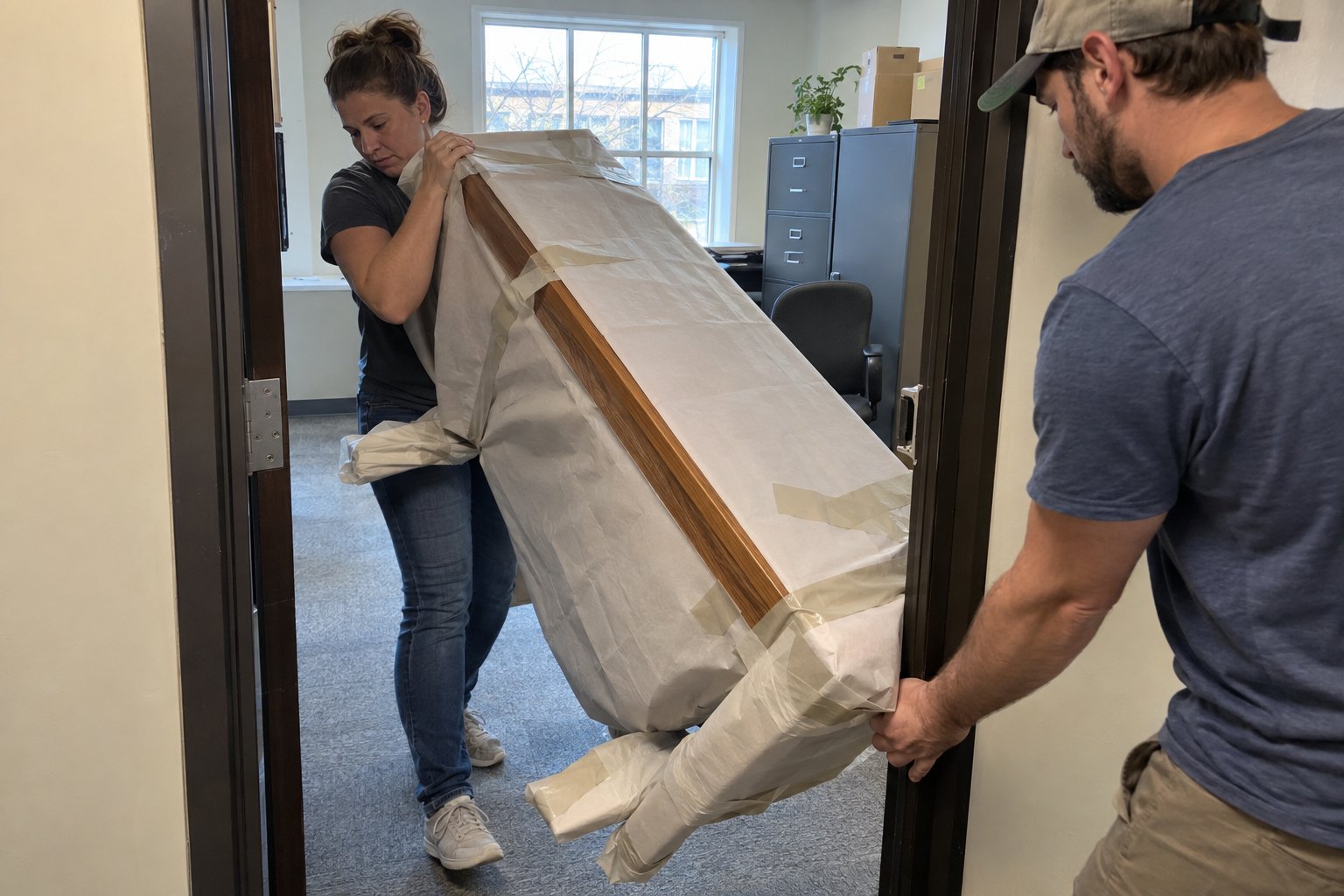
Carry a desk on its side or at an angle through narrow doorways, never flat if the opening is close to the desk's width. Measure your doorways, stairwells, and hallway turns before moving day so you know which pieces need to go through on an angle or require removing a door from its hinges.
Two people is the minimum for almost any desk larger than a small writing table, and L-shaped or executive desks often need three. Lift with your legs, keep the desk close to your body, and communicate every turn out loud, most doorway dings happen when one person pivots before the other is ready. A furniture dolly makes a huge difference once the desk is clear of tight turns: strap it down securely and move slowly over thresholds and uneven flooring rather than rolling it at a normal walking pace. If you're moving several large, heavy pieces alongside the desk, the same lifting and route-planning rules apply across the board, and it's worth reviewing how to move large, heavy furniture before the day arrives.
Office Desks vs. Workstations: Does a Business Move Need a Different Approach?
Moving one desk out of a home office is a different job than relocating a dozen workstations out of a business, mostly because of cabling, shared equipment, and the need to keep downtime short. Commercial moves benefit from a coordinated plan that groups desks, monitors, and cabling by workstation so nothing gets mismatched on the other end.
If you're relocating an entire office rather than a single desk, label each workstation's components as a set before anything gets loaded, including power strips, monitor arms, and any shared peripherals. Businesses juggling a tight reopening timeline often find it worthwhile to bring in a team experienced in commercial and office moving rather than handling the disassembly and reinstallation piecemeal after hours. For a single home workstation, our broader guide to moving an entire home office covers the files, equipment, and room-level planning that this article doesn't.
When Should You Call Professional Movers Instead of DIY-ing It?
Call in professional help when the desk is unusually heavy, has glass components, needs to go up or down a stairwell, or is part of a larger office relocation where downtime matters. A desk that seems manageable on paper can still turn into two people wedged in a stairwell with a cracked leg if the geometry doesn't cooperate.
Solid wood executive desks, antique pieces, and anything with structural glass are the biggest red flags for DIY moving, since repair or replacement costs far outweigh the cost of a few hours of professional labor. If your move involves several heavy or awkward pieces beyond just the desk, it's worth requesting a written quote so you know exactly what help is available before moving day arrives.
Final Walkthrough Before Moving Day
Before the move, do one last pass: confirm every drawer is empty, every bag of hardware is labeled and secured, and every doorway along the path has been measured against the desk's largest dimension. A few extra minutes of prep here prevents most of the damage and injuries that happen with desks specifically, because the problems with desks are rarely about weight alone, they're about awkward shape meeting a space that wasn't measured in advance.
Frequently Asked Questions
Can you move a desk without taking the legs off?
It depends on the desk and the doorway widths involved. Small desks with simple frames can sometimes be moved intact through wide openings, but most standard desks move far more safely, and with less risk to walls and joints, when the legs are removed first.
How do you move a desk with a glass top?
Remove the glass separately whenever possible and transport it upright in a sturdy box or crate padded on both sides. If the glass doesn't detach, sandwich it between cut cardboard taped at the edges only, then wrap the full desk in moving blankets before loading it.
What tools do you need to disassemble an office desk?
Most desks come apart with a Phillips or flathead screwdriver, an Allen wrench set for cam locks, and a drill with the right bits for speed. Keep a small parts bag and label it immediately so hardware doesn't get lost before reassembly.
How many people does it take to move a heavy desk?
Two people handle most standard desks safely, but L-shaped desks, executive desks, and anything solid wood often need three, especially if the move involves stairs or tight hallway turns.
Is it worth hiring movers for just one desk?
If the desk is heavy, has glass components, or needs to travel through a stairwell or narrow hallway, professional help is often worth it to avoid damage or injury, even when the rest of the move is handled on your own.


Have Questions About Your Move?
Find clear answers to common moving questions. Learn more about our services, process, and what to expect on moving day.
Our team is here to help. Contact us for personalized assistance with your moving needs.
Ready for a Stress-Free Move?
Let our family help your family with a move handled the right way from start to finish. Request your free quote today and see why Philadelphia families have trusted us since 1981.