.webp)
How to Move a Home Gym Without Wrecking Your Equipment or Your Floors
Written by:
Superior Moving & Storage
Published:
September 24, 2026
Moving a home gym takes more planning than a spare room. Learn how to disassemble, protect, and transport weights, racks, and cardio machines safely.
Moving a home gym safely means treating it as three separate problems: heavy iron that can crush a foot or a floor if it shifts, motorized cardio equipment that hates being tilted or jostled, and bulky frames that rarely fit through a doorway assembled. Skip any of the three and you risk a cracked treadmill belt, a gouged staircase, or a dropped 45-pound plate on moving day.
If you have built out a garage, basement, or spare bedroom with a rack, a bench, free weights, and a cardio machine or two, this guide walks through how to move a home gym in the order it actually needs to happen: what to break down first, how to pack the pieces that get damaged easily, and when the load is heavy enough that you should stop lifting and call for help.
What's the Right Order for Disassembling Home Gym Equipment?
Start with anything bolted to the wall or floor, then move to the tallest, most top-heavy pieces, and save loose weights for last since they're the easiest to box and carry. Working in this order keeps the room passable and prevents a half-disassembled rack from blocking access to everything else.
Power racks and squat cages should come down to their base plates: remove the pull-up bar, safety arms, and J-cups first, bag the hardware separately for each section, and label which upright each bag belongs to. Cable machines and functional trainers need their weight stacks emptied or secured before the frame is tilted, since a stack that slides can bend the guide rods. Benches typically only need the seat pad or backrest folded down, but adjustable benches with pins should have those pins taped in place so they don't rattle loose in the truck.
Keep every bolt, washer, and Allen wrench in a labeled zip-top bag taped directly to the equipment it came from. This one habit prevents the single most common home gym moving headache: reassembling a rack with half the hardware missing.
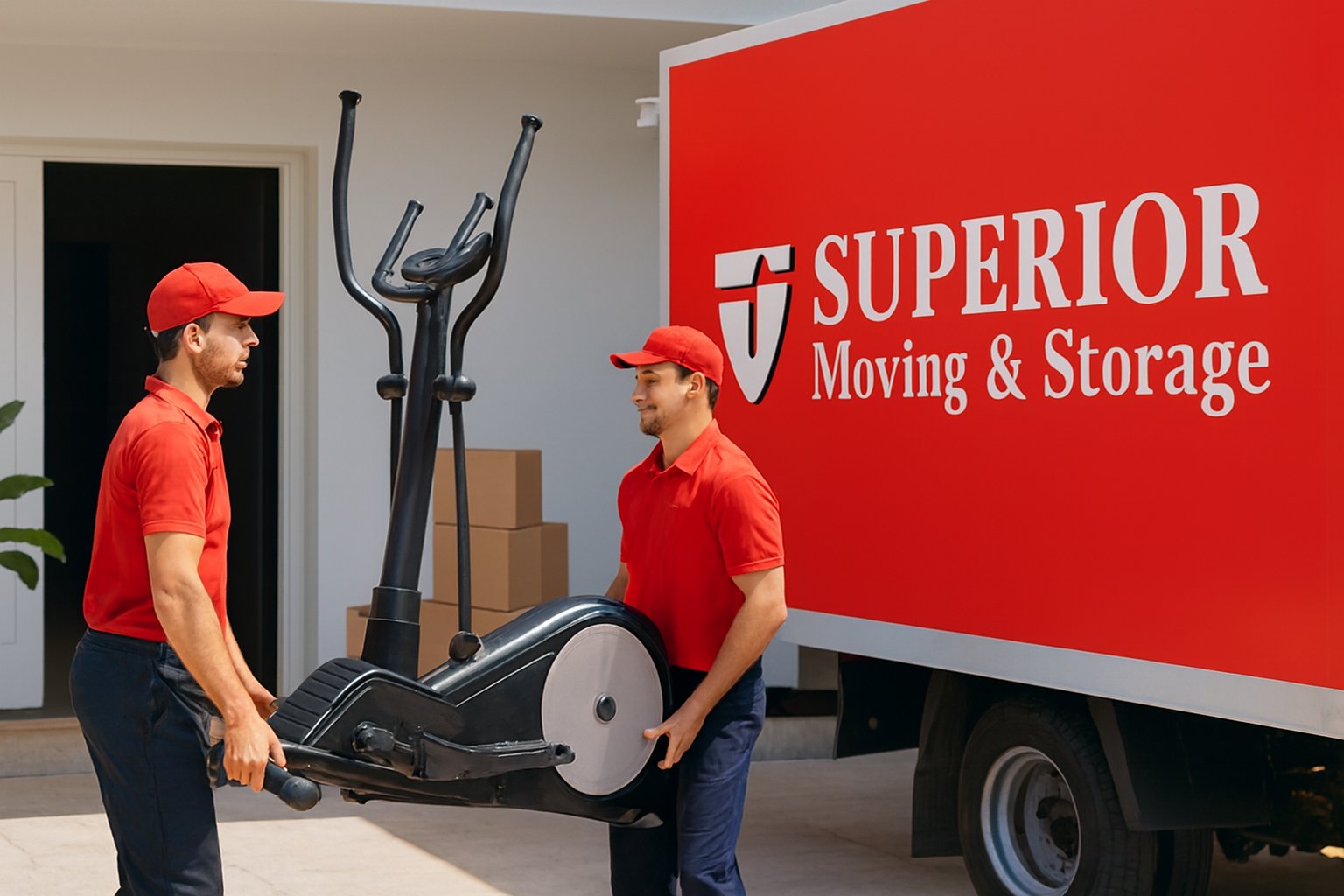
How Do You Move a Treadmill or Elliptical Without Damaging the Motor?
Cardio machines need to stay as close to upright as possible and should never be dragged on their wheels across anything but flat, hard flooring. Most treadmills and ellipticals have a folding deck; fold it and lock the safety pin before moving, since an unlocked deck can slam down and damage the motor housing or pinch fingers.
Treadmills are deceptively heavy for their footprint, often 200 to 300 pounds concentrated at one end. Two people should lift from the frame, not the console or handrails, which are usually the weakest attachment points. If the machine has to go up or down a staircase, back it down slowly with one person controlling the base and another spotting the top, rather than tilting it onto its wheels and rolling.
For long-distance moves, disconnect and separately pack the console if the manual allows it. Vibration during transport is harder on electronics than on steel, so a treadmill or elliptical that will sit in a truck for several hours benefits from extra padding around the display and wiring harness, not just the frame.
What's the Safest Way to Pack and Transport Weight Plates and Dumbbells
Loose weights should go in small, heavily reinforced boxes, never in one large box that becomes impossible to lift safely. A box of 45-pound plates gets heavy fast, and a bottom that gives out mid-carry is how floors, feet, and moving trucks get damaged.
Cast iron and rubber-coated plates can go in the same box as long as you pack heaviest on the bottom and use dividers or folded moving blankets to stop plates from sliding and chipping each other's coating. Dumbbells with rubber heads should never be stacked directly on hard flooring in the truck; a furniture pad or piece of scrap carpet underneath prevents both floor damage and dumbbell damage from road vibration. Kettlebells and medicine balls travel fine loose in a box padded on all sides, since their shape doesn't stack or shift the way plates do.
If your total weight collection runs into the hundreds of pounds, spread it across several smaller boxes and load it low and centered in the truck. Concentrated weight near the tailgate or high on a stack changes how the truck handles and how safely everything else rides.
Do You Need Professional Movers for a Home Gym, or Can You DIY It?
A single bench and a rack of dumbbells is a reasonable DIY job for two capable people. A full power rack, a loaded cable machine, or a commercial-grade treadmill is where hiring help starts to make sense, both for safety and to avoid damaging the equipment itself.
The math changes once you're dealing with pieces that weigh more than a person can safely lift alone, need to travel through a stairwell or tight hallway, or represent enough investment that a scratch or drop would actually hurt. Racks and heavy cardio equipment are also awkward rather than just heavy, which is a common source of back injuries and dropped equipment during DIY moves.
If your gym gear is moving alongside the rest of a full household, it usually makes sense to fold it into your regular local moving company booking rather than arranging a separate trip. For oversized or unusually heavy pieces, a crew equipped with proper hoisting services can get a rack or treadmill up or down a staircase without the guesswork.
How Should You Set Up Your Home Gym in the New Space?
Before anything gets carried in, check the new room's flooring and ceiling height against your equipment's footprint. A rack that fit in a basement with 8-foot ceilings won't necessarily clear a room with ductwork or a lower drop ceiling, and a treadmill needs several feet of clearance behind it for safe use.
Reassemble in reverse order from how you took things apart: bolted and anchored items first, then cable machines and cardio equipment, then loose weights last so they aren't sitting in the walkway while you're maneuvering larger pieces. Rubber gym flooring tiles or interlocking mats are worth putting down before equipment goes in rather than after, since it's much easier to lay flooring in an empty room.
If your new home is still being packed with the rest of the household's boxes and furniture, it's worth reviewing a general room-by-room setup guide for sequencing the whole move-in, then treating the gym as its own zone once the heavier logistics are handled.
Ready to Move Your Home Gym the Right Way?
A home gym is one of the more physically demanding parts of any move, and it's an area where rushing tends to cause the most damage, both to equipment and to backs. Whether you're moving a single rack or a full basement setup, having the right plan (and the right hands) makes the difference between a smooth relocation and a chipped treadmill console.
Get a moving quote from Superior Moving & Storage and let our team handle the heavy lifting, literally.
Frequently Asked Questions
Can you move a treadmill lying on its side?
Most treadmills should be moved upright or folded upright, not laid flat. Lying a treadmill on its side can cause internal lubricant or fluids in the motor housing to leak or shift, and it puts stress on the frame joints. Check your specific model's manual, but as a general rule, keep it vertical or folded.
How much does a fully loaded power rack weigh when moving it?
An empty power rack frame typically weighs 150 to 300 pounds depending on the brand and steel gauge, before you add attachments or plates. Always strip it down to the bare frame and move weights separately rather than trying to move it loaded.
Do movers charge extra for gym equipment like weights and racks?
Many moving companies price heavy or bulky items differently than standard furniture because they take more time, manpower, or specialized handling. It's worth mentioning your gym equipment specifically when requesting a quote so the estimate reflects the actual job.
Should you drain or empty water-filled or sand-filled gym equipment before a move?
Yes. Some cardio machines and stability equipment use liquid or sand-based resistance or ballast. Draining or emptying these before the move reduces weight, prevents leaks in transit, and avoids damage to the equipment's internal components.
Is it worth disassembling a cable machine completely or just tilting it into the truck?
Full disassembly is safer for the machine even though it takes more time. Tilting a loaded or partially loaded cable machine can bend guide rods or damage the weight stack housing, so it's worth removing the stack and any attachments before moving the frame.





Have Questions About Your Move?
Find clear answers to common moving questions. Learn more about our services, process, and what to expect on moving day.
Our team is here to help. Contact us for personalized assistance with your moving needs.
Ready for a Stress-Free Move?
Let our family help your family with a move handled the right way from start to finish. Request your free quote today and see why Philadelphia families have trusted us since 1981.