
How to Carry Heavy Furniture Through Tight Hallways and Stairwells Without Damage
Written by:
Superior Moving & Storage
Published:
October 22, 2026
Stuck with a narrow hallway or tight stairwell? Learn how to carry heavy furniture through tight spaces without wall gouges, back injuries, or stuck pieces.
Carrying heavy furniture through tight hallways comes down to measuring before you lift, choosing the right angle of approach, and moving in short, controlled stages instead of one continuous push. Rowhomes, older apartment buildings, and narrow stairwells around Philadelphia and the surrounding counties make this a near-constant problem, and most of the damage we see on moving day happens in the three feet on either side of a tight turn, not out in the open rooms. This guide covers the measuring, the technique, and the moments where you should stop and rethink the plan entirely.
Why Does Furniture Get Stuck in Hallways and Stairwells?
Furniture gets stuck because the diagonal depth of the piece, not just its width, exceeds the width of the hallway or stairwell landing. A couch that's 34 inches deep can still jam in a 36-inch hallway once you factor in the turn radius needed to clear a corner. The fix is measuring the diagonal, not just the obvious dimension, before anyone picks the piece up.
Older buildings compound the problem. Rowhomes built a century ago often have hallways narrower than modern code minimums, and many stairwells include a 90-degree turn at a landing with no room to reposition. If you've ever watched a couch go up partway and then come right back down, it's almost always because someone skipped this step and discovered the geometry didn't work halfway through the climb.
How Do You Measure Furniture and Doorways Before Moving Day?
Measure the furniture's height, width, and depth, then measure the doorway width, hallway width, and ceiling height along the entire path, including stairwell landings. Compare the furniture's diagonal measurement (corner to corner) against the narrowest point in the path, since that's the real constraint, not the straight-line width.
Walk the entire route from the piece's current spot to the truck or new room, and note every pinch point: a turn at the bottom of stairs, a radiator jutting into a hall, a light fixture hanging low, a door that only opens 90 degrees. Write these down or photograph them. On moving day, knowing in advance that the hallway narrows to 30 inches at the thermostat is far more useful than discovering it with a dresser in your hands.
For sectional sofas and large wardrobes, check whether the piece disassembles. A sofa with removable legs or a wardrobe with a separable top section can shave off the inches that make the difference between a clean carry and a wedged piece.
What's the Right Technique for Carrying Furniture Through a Narrow Space?
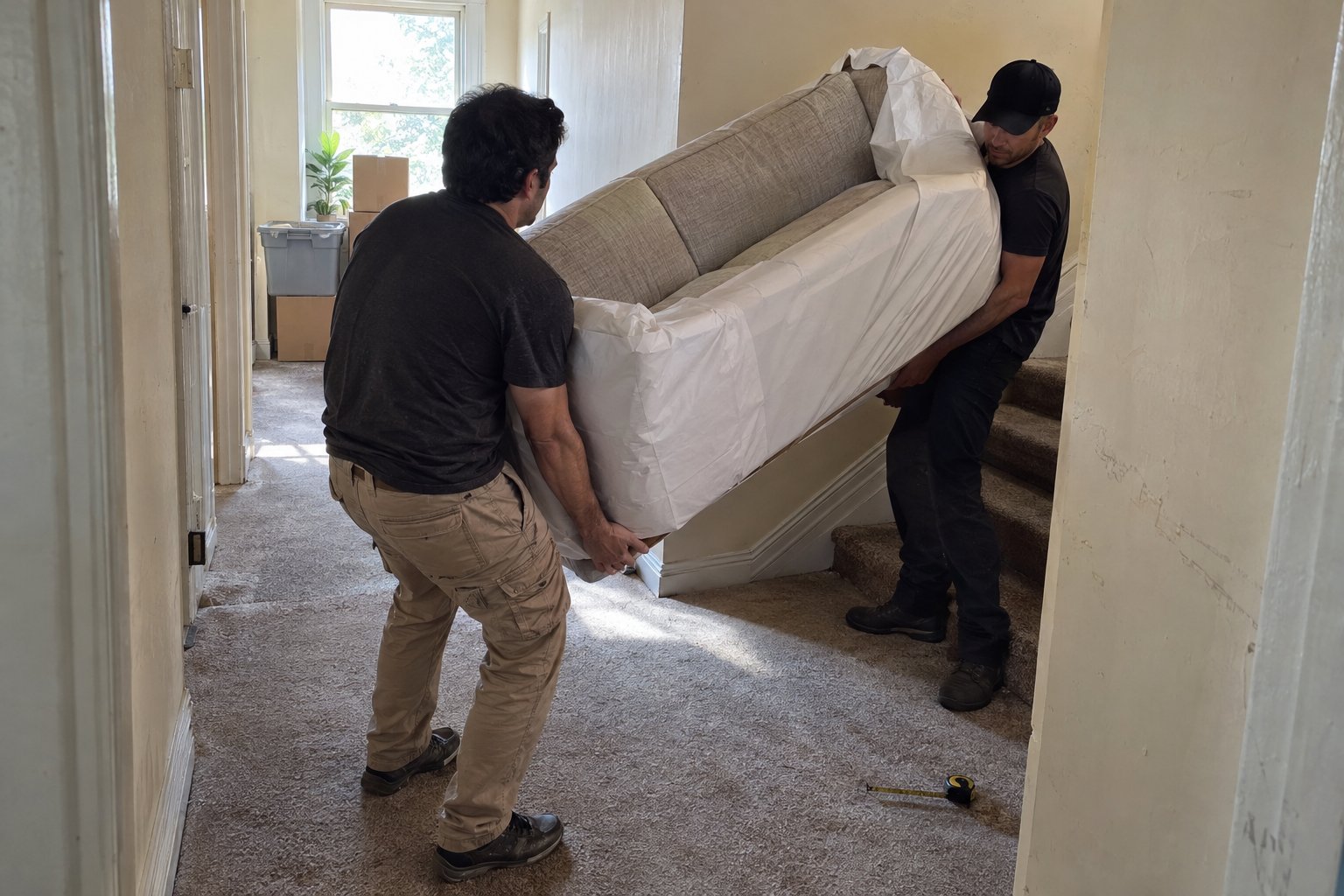
Tip the piece onto its end or side to reduce its footprint, lead with the narrowest edge, and move in short increments with a spotter calling out clearances at both ends. Two people should never lift and walk blind through a tight turn; one person needs eyes on the leading edge while the other watches the trailing edge for wall contact.
A few specifics that matter in practice:
- Lead with the top or the legs, whichever is narrower, and angle the piece so its longest dimension runs parallel to the direction of travel through the tightest point.
- Use furniture sliders or a dolly on flat stretches, then switch to a hand-carry for the actual pivot through a doorway or stair landing, since wheels don't help you execute a tight-radius turn.
- Pause before every corner, set the piece down if needed, and re-angle rather than trying to muscle through a turn mid-stride.
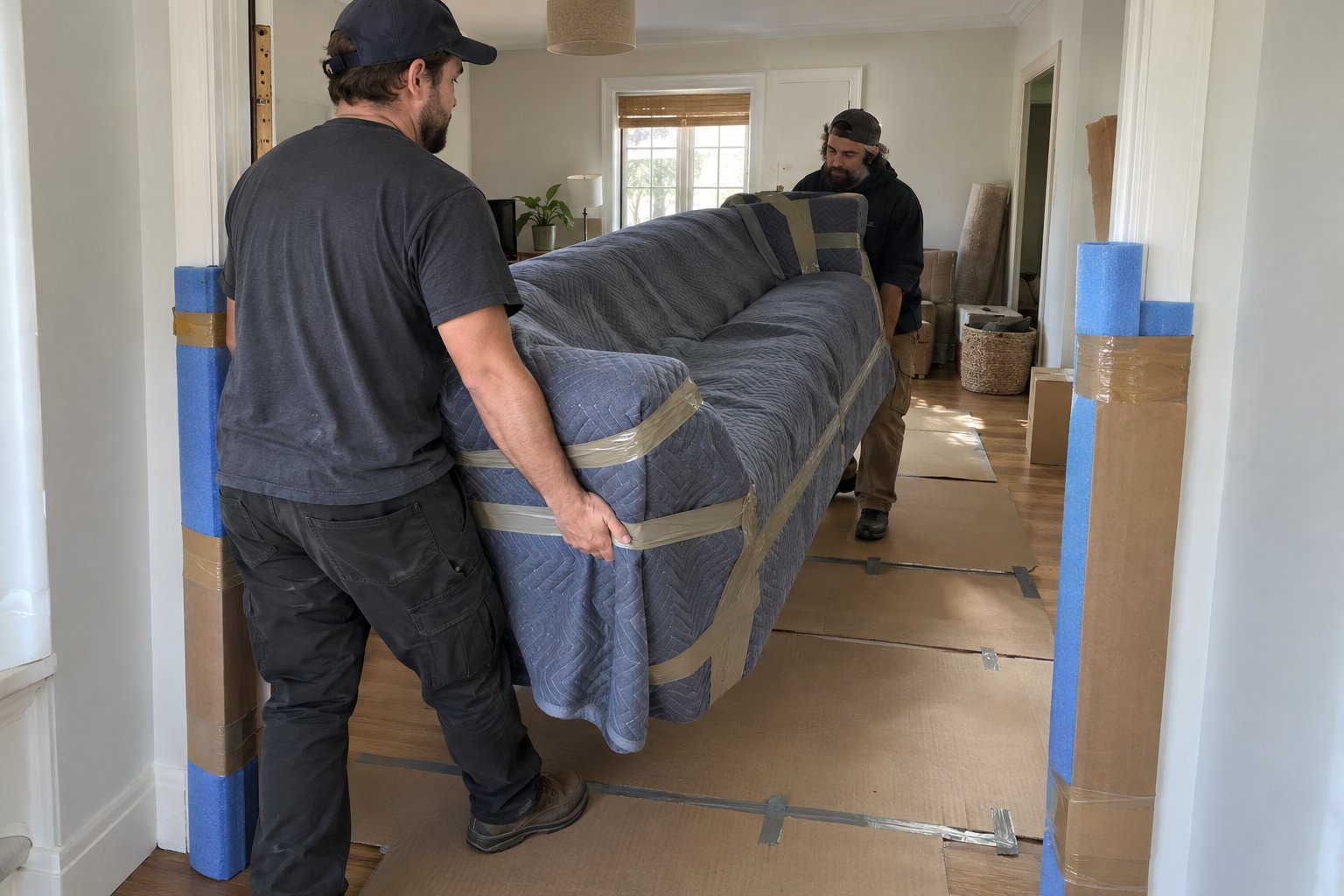
- Protect the walls proactively, not reactively. Corner guards, moving blankets taped over doorframes, and painter's tape marking the pinch points all help, but they only work if you place them before the piece is in motion.
On stairs specifically, the person below should bear most of the weight on the way down and the person above should control pace and direction, since gravity will try to accelerate the piece past a safe speed on a tight stairwell turn.
When Should You Stop and Call for Help Instead of Forcing It?
Stop as soon as a piece won't clear a pinch point after two reasonable attempts at repositioning, or if it requires more force than two people can apply safely. Forcing a stuck piece risks gouged drywall, a cracked door frame, a dropped corner on someone's foot, or a back injury that outlasts the move by weeks.
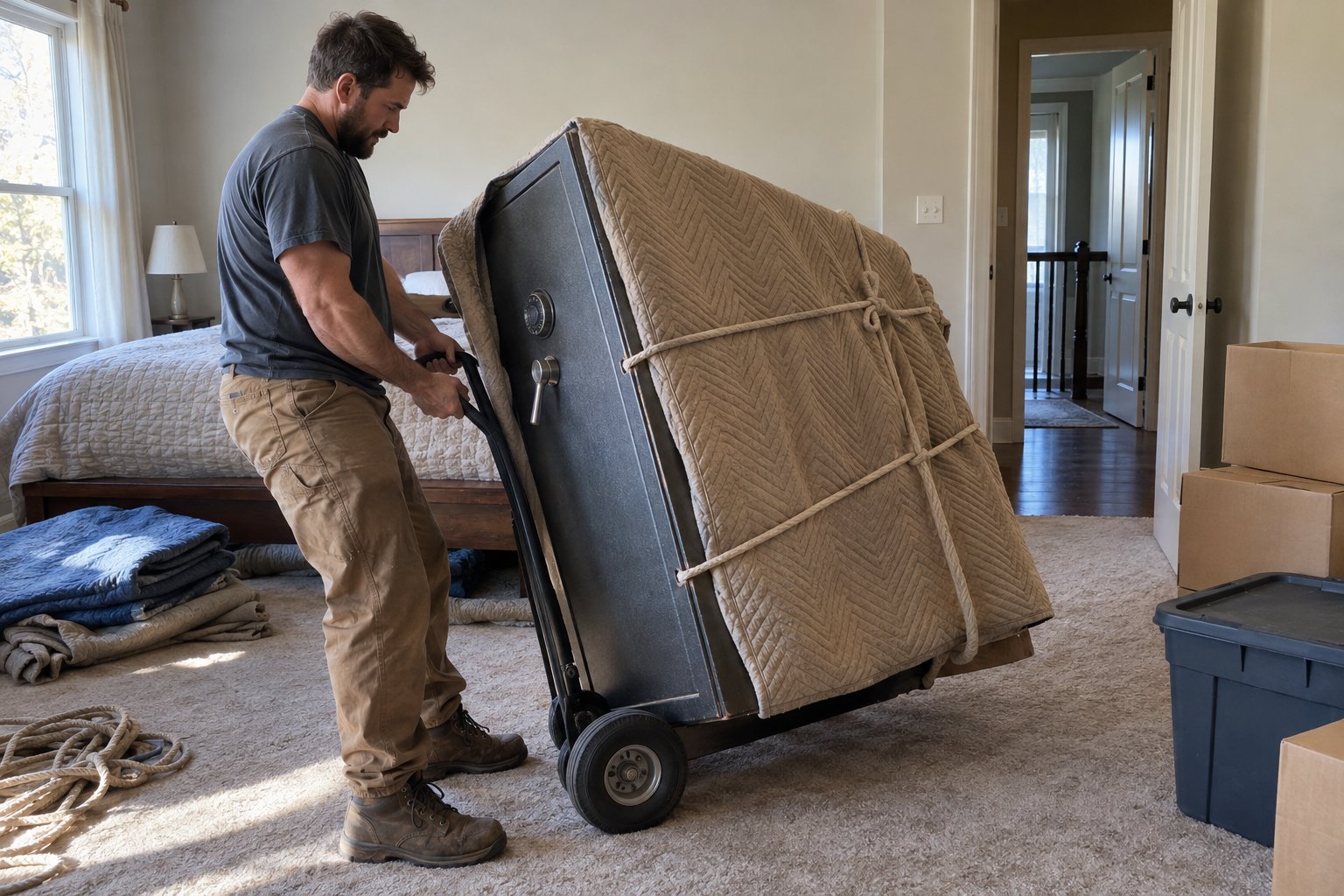
Some pieces are simply not meant to travel through a standard hallway intact. A large sectional, a king-size bed frame, or an armoire that won't disassemble may need to go out a window or over a balcony with proper rigging, which is a job for a crew with the right equipment rather than a DIY attempt. If you're relocating into or out of a rowhome with a notoriously tight stairwell, it's worth having that conversation with your movers before the truck arrives rather than during the carry.
If your move involves this kind of layout, our local moving company team plans the route through narrow hallways and stairwells before moving day, not during it, which is usually the difference between a clean carry and a damaged doorframe.
Protecting Floors and Walls During the Carry
Protect floors and walls by laying runners or flattened boxes along the carry path and padding every corner the piece will pass, not just the ones at the start and end. Most wall damage happens at the midpoint of a turn, where attention naturally drifts to the furniture itself instead of the surroundings.
If you're also worried about scuffed hardwood or dented drywall beyond just the tight sections, our guide on protecting floors and walls when movers are carrying furniture covers broader protection techniques for the rest of the house.
Furniture Carrying Checklist for Tight Hallways
- Measure furniture height, width, depth, and diagonal
- Walk the full route and note every pinch point
- Check whether the piece can disassemble
- Assign a spotter at each end before lifting
- Protect corners, doorframes, and floors before moving
- Agree on a stop signal if the piece won't clear
- Have a backup plan (disassembly or hoisting) ready before moving day
Planning the route is often more valuable than extra muscle. If your new or current home has a layout you're unsure about, a free moving quote is a good time to flag it so your crew can plan the carry in advance.
Frequently Asked Questions
What do you do if a couch won't fit around a stairwell corner?
Try tipping the couch onto its end or side to change its profile, and check whether the legs or any removable panels can come off to reduce the diagonal measurement. If it still won't clear after a couple of careful repositioning attempts, stop and consider whether the piece needs to go out a window or over a balcony with proper rigging instead of through the stairwell.
How many people does it take to carry a heavy dresser through a narrow hallway?
Two people is the minimum for most dressers, with one person watching the leading edge and the other watching the trailing edge for wall contact. Heavier or larger pieces, or ones that require a tight pivot at a landing, often go more smoothly with a third person to spot the turn itself.
Should I take the doors off their hinges to move furniture through?
Removing a door from its hinges is a quick way to gain two to three extra inches of clearance and is worth doing whenever a piece is close to fitting but not quite clearing. It takes a few minutes with a basic tool kit and is far less risky than forcing furniture through a doorway that's slightly too narrow.
Can furniture sliders help in a tight hallway, or do they make it harder to control?
Sliders work well on straight, flat stretches where you're moving the piece in a line, but they generally get in the way during an actual pivot through a doorway or stair landing. Most movers use sliders for the easy stretches and switch to a controlled hand-carry for the tight turns themselves.
What's the first thing to check before attempting to move a large piece through an old rowhome?
Measure the diagonal of the furniture against the narrowest point along the entire path, not just the doorway width, since older rowhomes often have hallways and stair landings narrower than modern homes. Walking the full route and noting every pinch point before lifting anything prevents the most common mid-move surprises.

Have Questions About Your Move?
Find clear answers to common moving questions. Learn more about our services, process, and what to expect on moving day.
Our team is here to help. Contact us for personalized assistance with your moving needs.
Ready for a Stress-Free Move?
Let our family help your family with a move handled the right way from start to finish. Request your free quote today and see why Philadelphia families have trusted us since 1981.