.webp)
How to Protect Hardwood Floors and Walls When Movers Are Carrying Furniture
Written by:
Superior Moving & Storage
Published:
October 15, 2026
Learn how to protect hardwood floors, walls, and doorways when moving heavy furniture, from floor runners to corner guards and banister padding.
Scuffed hardwood, gouged drywall, and a scraped banister are some of the most common casualties of moving day, and almost all of it is preventable. Knowing how to protect floors and walls when moving furniture comes down to covering the right surfaces before the first box goes out the door, not scrambling to touch up paint afterward. The good news is that most of the protection is cheap, fast to put down, and reusable if you plan to move again someday.
This guide covers what actually works to shield hardwood, carpet, walls, doorways, and stairways from the dents, drags, and dings that heavy furniture causes, plus a few habits that prevent damage before it starts. For the rest of your day-of plan, see our guide to handling moving day like a pro.
What's the Best Way to Protect Hardwood Floors During a Move?
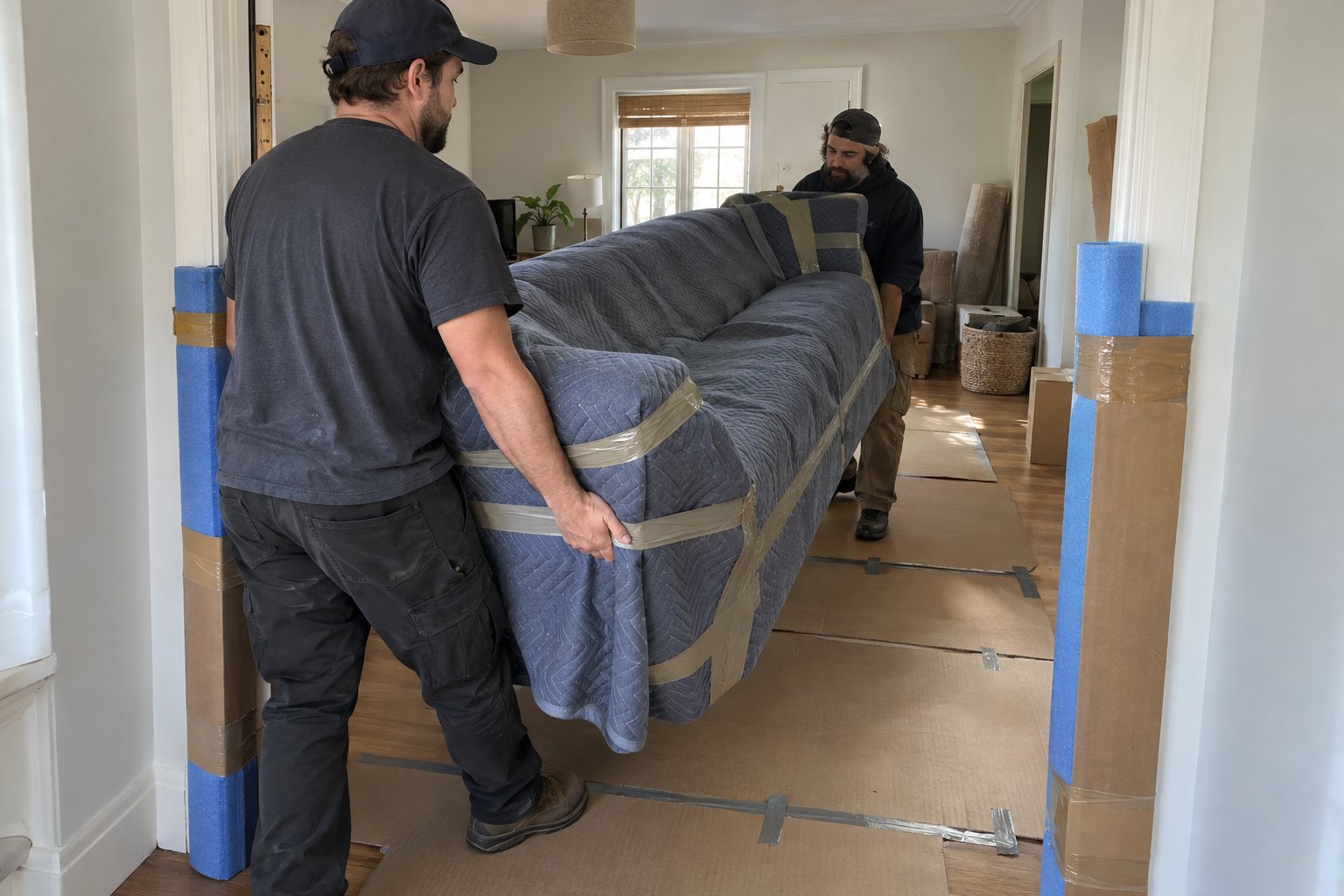
The best way to protect hardwood floors during a move is to lay down a continuous, taped-down path of ram board, rosin paper, or heavy moving blankets along every route furniture will travel, from each room to the exit. A single sheet near the front door is not enough; damage happens anywhere a dresser gets dragged or a leg catches a seam.
Ram board (the rigid, corrugated material contractors use) holds up best under repeated foot and furniture traffic and resists tearing if something is dragged across it. Rosin paper is cheaper but tears more easily under heavy pieces, so it works better for lighter traffic areas like hallways people are only walking through. Whichever you choose, tape the seams down with painter's tape, not duct tape, since duct tape can pull up finish when it's removed.
Felt furniture pads under the legs of anything you are sliding rather than carrying (bookshelves, dressers, appliances on dollies) cut down on scratches dramatically, and they are worth keeping on hand even after the move for everyday furniture rearranging.
How Do You Keep Walls and Door Frames From Getting Scratched?
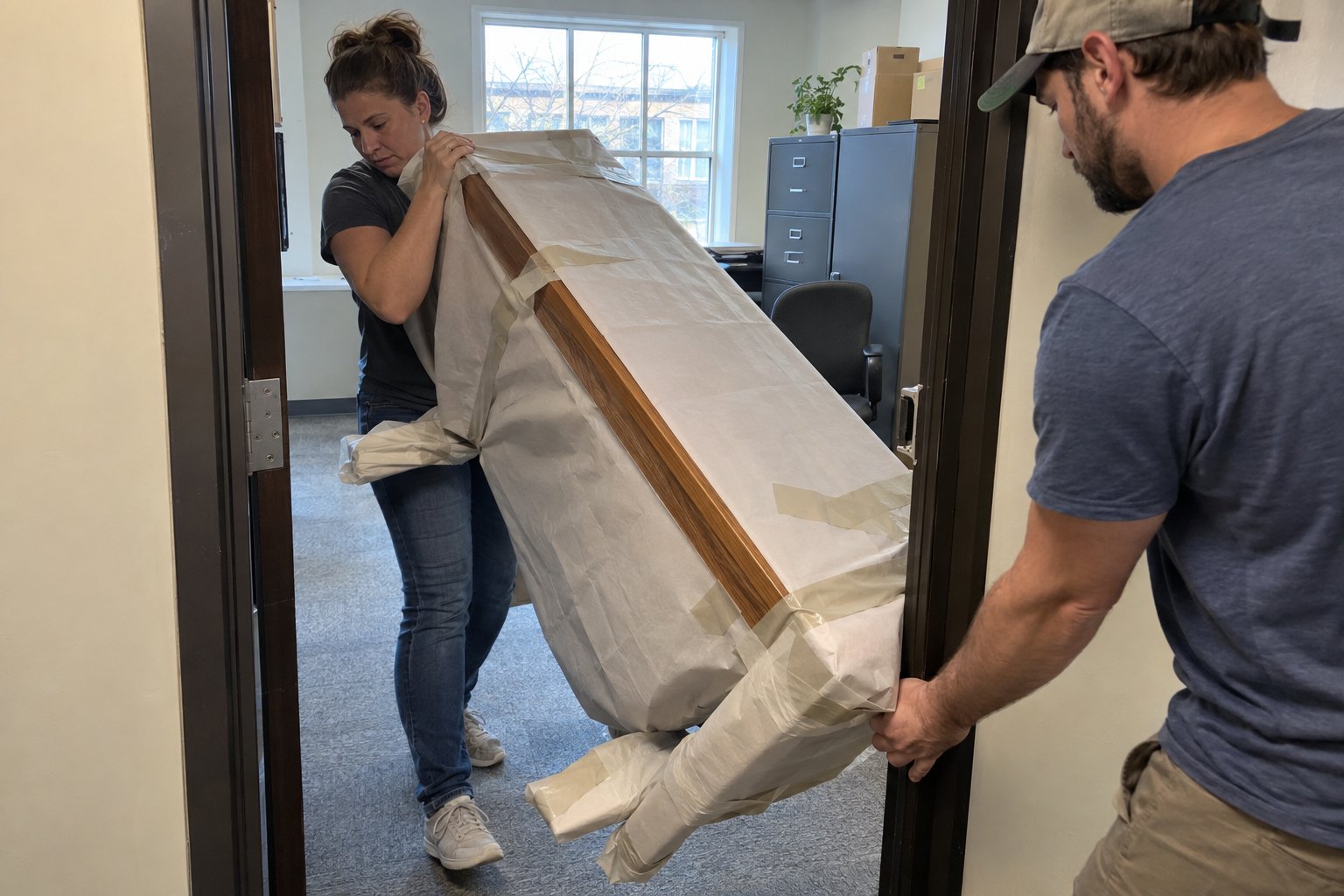
You protect walls and door frames by padding the corners and edges that furniture will pass closest to, especially stairwell turns, narrow hallways, and doorway trim, and by carrying large pieces at an angle instead of pushing them straight through. Most wall damage happens at pinch points where there isn't enough clearance to course-correct.
Foam corner guards or folded moving blankets secured with tape over doorframe edges absorb the inevitable bump from a couch arm or mattress frame. For stairwell banisters, wrap the rail itself in a moving blanket or an old towel, since a dragged dresser can gouge painted wood or scuff a finish in seconds. If you have a particularly tight turn, it's worth temporarily removing a door from its hinges rather than risking the frame on every pass. If a piece needs to come apart to clear a tight hallway in the first place, our guide on furniture disassembly and reassembly during a move walks through what's worth taking apart versus carrying whole.
Light switch plates and thermostats at hallway height are also easy to clip with a wide piece of furniture. A strip of cardboard taped loosely over them for the day is a two-minute fix that prevents a cracked plate.
Should You Cover Carpet and Stairs Too, or Just Hardwood?
Carpet and stairs need protection as much as hardwood, just a different kind. Carpet shows crushed pile lines and tracked-in dirt or grease from dolly wheels, while stairs combine the risks of both flooring types with the added danger of a slip.
Plastic carpet film (the kind that's self-adhesive on one side) keeps foot traffic and wheels from grinding dirt into the fibers and is easy to pull up and discard afterward. On stairs, a non-slip runner or carpet protector taped to each tread does double duty: it shields the stair surface and gives movers better footing than bare carpet or wood, which matters more than most people realize when someone is backing down a flight with a dresser.
If your stairs are hardwood with a finish, treat each tread like you would any other floor surface and make sure the protective material is secured tightly enough that it won't bunch or shift underfoot.
What Should You Do Before Movers Even Arrive?
Before movers arrive, walk the exact path furniture will travel from each room to the truck and lay protection down that entire route, not just the areas you think will see the most traffic. It takes 20 to 30 minutes and prevents nearly all of the avoidable damage that happens in the first hour of loading.
Take photos of your floors, walls, and any existing nicks or marks before the move starts. This isn't about assigning blame, it's about having a clear record if a disagreement ever comes up about whether a mark was already there. Clear the path of rugs that can bunch underfoot, remove wall art and mirrors from any hallway furniture will pass through, and confirm doorways are propped open so nobody is managing a swinging door and a couch at the same time.
If you've hired professional movers, ask what floor and wall protection they bring standard versus what you're expected to supply. Reputable crews typically carry their own furniture pads, floor runners, and door jamb protectors as part of their equipment, and confirming this ahead of time means you aren't scrambling to tape down rosin paper the morning of the move. If you're still comparing companies, our guide to vetting a moving company covers the questions worth asking before you book.
Is It Worth Protecting Floors If You're Only Moving a Few Rooms Yourself?
Yes, floor and wall protection matters even for a small, DIY move, because the damage risk comes from the weight and awkwardness of the furniture, not the number of items being moved. A single mishandled bookshelf or recliner can leave a mark that costs more to repair than the protective materials would have cost to buy.
For a smaller move, you don't need a full contractor-grade setup. A roll of rosin paper for main pathways, a few felt pads, and a couple of moving blankets for doorframes and banisters will cover most households moving a handful of large pieces. The habit that matters most isn't the materials themselves, it's taking the time to look at the path before you start carrying anything heavy.
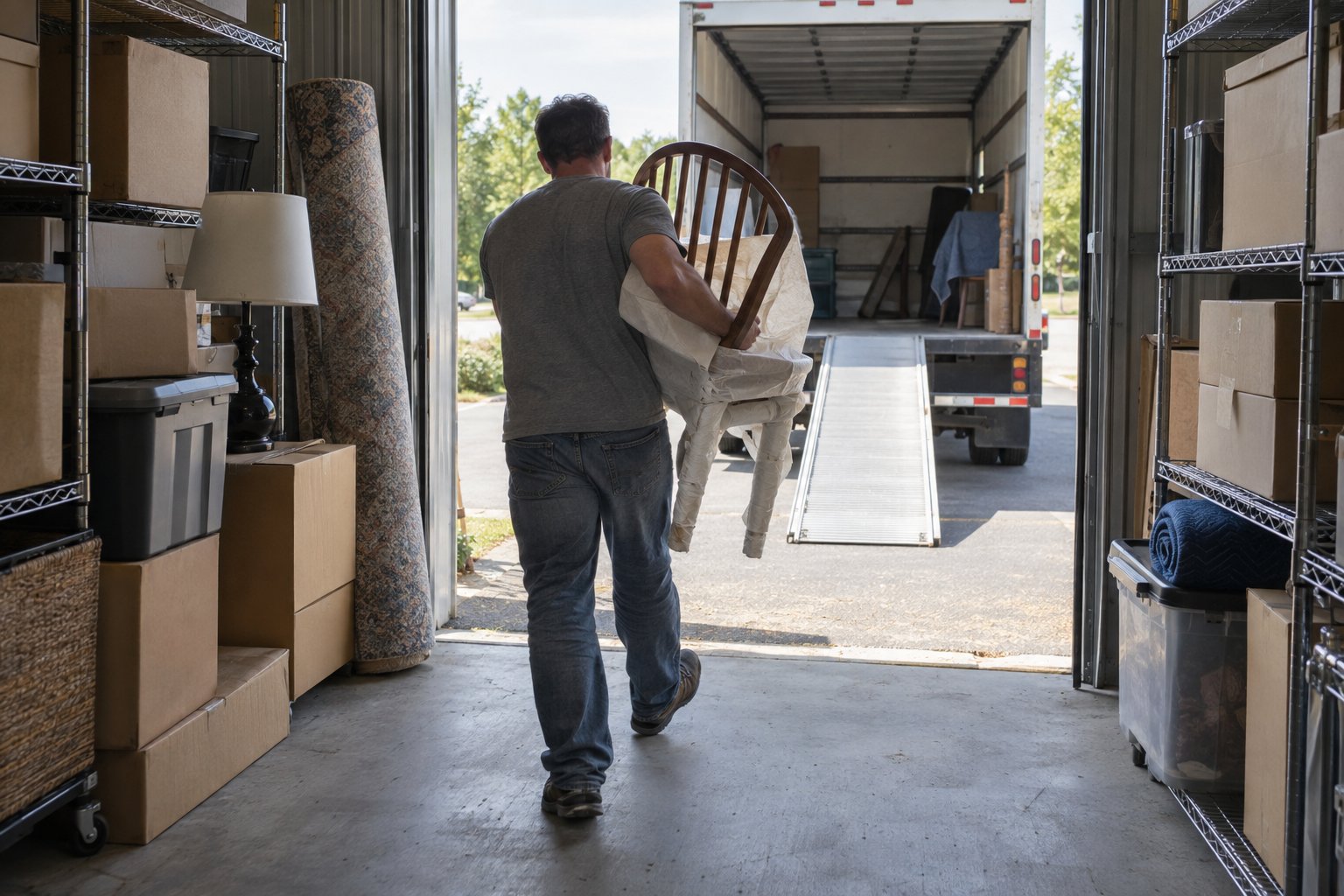
If the pieces involved are especially large, heavy, or awkward to maneuver through tight stairwells and doorways, it may be worth bringing in a local moving company rather than risking the floors, walls, or your back. Carrying heavy furniture through tight spaces and protecting the home with pads, wrapping, and floor runners is standard practice on a professional move.
Whether you're handling a single room yourself or a full house with help, it's worth building floor and wall protection into your plan the same way you'd plan for boxes and tape. If you'd like a hand with the heavier pieces, you can always get a moving quote and ask what protective equipment is included.
Frequently Asked Questions
What tape is safe to use on hardwood floors during a move?
Painter's tape is the safest choice for securing floor protection like rosin paper or ram board, since it holds the material in place without pulling up the floor's finish when removed. Avoid duct tape or packing tape directly on hardwood, as the stronger adhesive can lift the finish or leave a sticky residue.
Do felt pads actually work for protecting floors from furniture?
Felt furniture pads significantly reduce scratches when furniture is being slid rather than lifted, and they're inexpensive enough to put under every leg of a piece that will be dragged across hardwood or tile. They aren't a substitute for floor runners on main pathways, but they help prevent the small scuffs that happen during repositioning.
How do you move a couch through a narrow doorway without hitting the walls?
Tilt the couch onto one end and angle it through the doorway diagonally rather than pushing it straight on, since most of the clearance problem is the couch's depth, not its height. Having one person guide from inside the room and another from the hallway helps catch wall contact before it happens.
Should you remove doors from hinges before moving large furniture?
Removing a door is worth doing when a turn is so tight that there's no way to angle a large piece through without repeated contact with the frame. It takes a few minutes with a screwdriver and is far faster than repairing a gouged doorjamb afterward.
What's the cheapest way to protect floors during a short local move?
A roll of rosin paper from a hardware store, painter's tape, and a few old moving blankets folded over doorframes will cover most small or local moves without the cost of contractor-grade ram board. The key is covering the full path from each room to the exit, not just the busiest hallway.
Have Questions About Your Move?
Find clear answers to common moving questions. Learn more about our services, process, and what to expect on moving day.
Our team is here to help. Contact us for personalized assistance with your moving needs.
Ready for a Stress-Free Move?
Let our family help your family with a move handled the right way from start to finish. Request your free quote today and see why Philadelphia families have trusted us since 1981.