.webp)
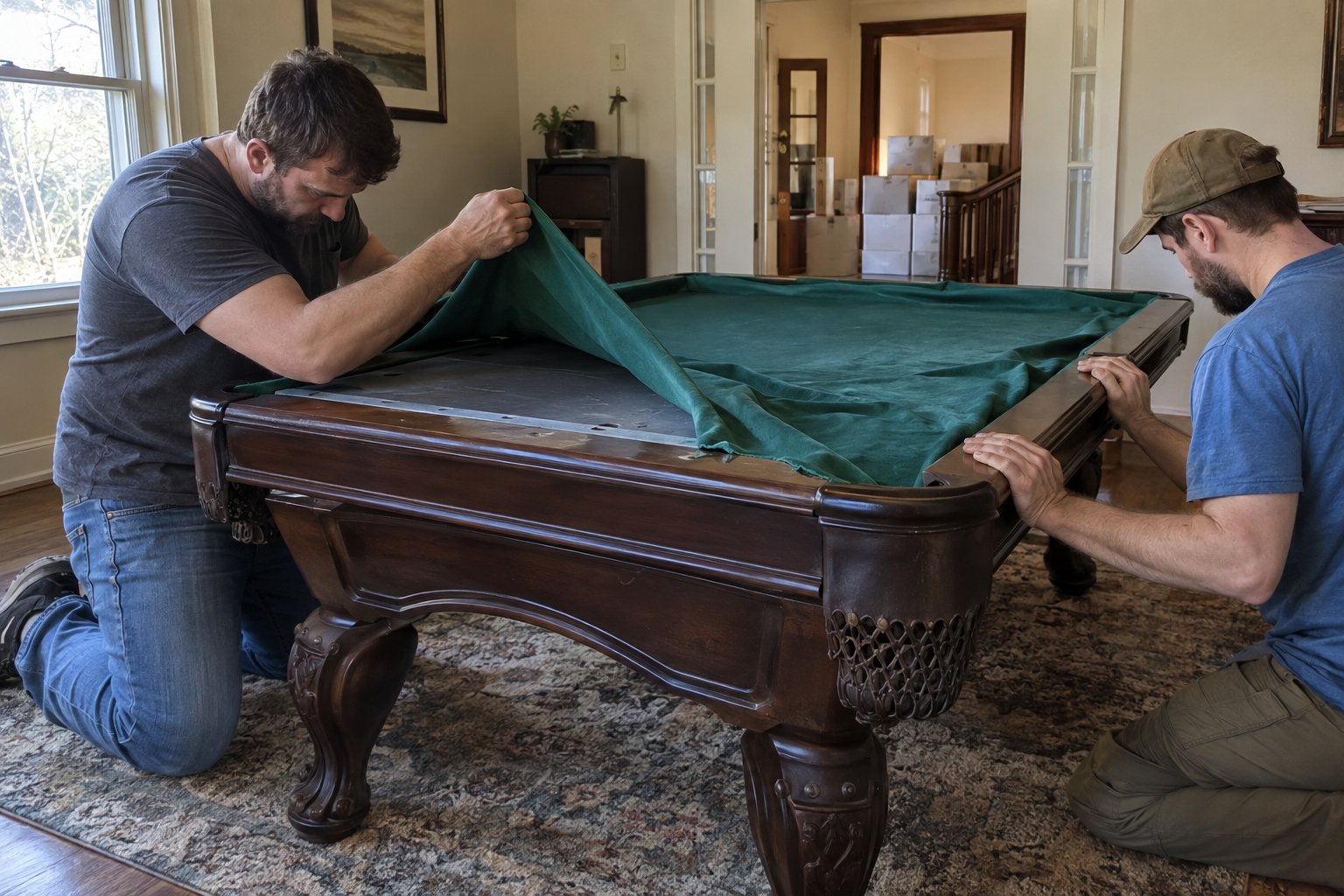
How to Transport a Pool Table: Disassembly, Moving, and Reassembly Basics
Written by:
Superior Moving & Storage
Published:
October 5, 2026
Learn how to transport a pool table safely, from disassembling the rails and pockets to protecting the slate, plus when to call in professional movers.
A pool table cannot be rolled out the door like a sofa. It is built in heavy, separable layers, cloth, slate, frame, and legs, each of which reacts badly to being handled the wrong way. Knowing how to transport a pool table means understanding that the slate is the part most likely to crack, the felt is the part most likely to tear, and the whole piece is almost always too heavy and too awkward for two people to carry fully assembled. This guide breaks down what actually has to happen before, during, and after the move so the table plays the same on the other end as it did before you touched it.
Can You Move a Pool Table Without Taking It Apart?
In almost every real-world case, no. A standard pool table weighs several hundred pounds once you include the slate, and most doorways, hallways, and stairwells simply are not wide enough to clear an assembled table. Even if your space could physically fit it, moving it whole concentrates enormous stress on the frame joints and risks shifting the slate seams, which throws off the level of the playing surface permanently.
The only situation where a table might move intact is a short slide across the same flat room, done by a crew of four or more experienced movers using furniture dollies. For anything involving stairs, a truck, or a different address, disassembly is the standard and safer approach.
How to Disassemble a Pool Table Step by Step
Disassembly follows a set order: pockets and rails first, then felt, then slate, then frame and legs. Skipping the order or rushing the felt removal is what leads to tears, dents, and lost hardware.
Removing the Rails and Pockets
Start by removing the ball return system if your table has one, then unbolt the rails from underneath the table. Label each rail as you remove it (most tables have matching numbers stamped on the rail and the frame) so reassembly lines up the same way it did before.
Lifting the Felt
Pool felt is usually either stapled or glued to the slate. Staple-mounted felt can be carefully pulled up starting at a corner; glued felt is harder to remove without damage and often needs to be re-glued or replaced after the move regardless of how carefully you work. If the felt is in good condition and staple-mounted, roll it loosely (never fold it) with the nap facing inward to avoid creasing.
Separating the Slate
Slate is usually split into two or three sections, each bolted to the frame and often heavy enough to require two people per piece. Unbolt each section, then lift it straight up rather than sliding it, since sliding can chip the edges where sections meet. Wrap each slate piece individually in moving blankets and keep it flat during transport; slate can crack if it is stood on its edge or allowed to flex.
Breaking Down the Frame and Legs
Once the slate is out, the frame is far lighter and the legs typically unbolt or unscrew individually. Keep all bolts, washers, and leg levelers in a single labeled bag taped to one of the rails so nothing gets left behind in the move.
How Should You Protect Each Piece During Transport?
Every component needs its own protection strategy because they fail in different ways. Slate needs rigidity and a flat ride, felt needs to stay dry and uncreased, and rails need corner protection so the finish doesn't chip against other furniture in the truck.
- Slate: Wrap each piece in furniture pads, then sandwich it between two rigid boards (plywood works) secured with moving straps so it cannot flex or slide during transport.
- Felt: Store the rolled felt in a long cardboard tube or a flat box longer than the roll itself, and keep it away from humidity and direct sun.
- Rails and pockets: Wrap rail ends in bubble wrap or blankets, since the joinery edges are the most likely place for chips.
- Hardware: Keep every bolt bag with its matching rail or leg, not loose in a toolbox, so nothing gets mismatched during reassembly.
Load the slate pieces flat on the truck floor, never leaned against a wall, and load them last so nothing heavy sits on top of them.
Is It Worth Hiring Professionals to Move a Pool Table?
For most households, yes. A pool table is one of the few household items where the cost of a mistake (a cracked slate, a torn felt, a dropped rail) usually exceeds what professional disassembly and transport would have cost. Movers who handle specialty items regularly also tend to have the straps, dollies, and blanket-wrapping techniques that make the slate transport step far less risky.
If you do want professional help, look for a mover who explicitly offers help with oversized and specialty items rather than a general crew, since slate handling is a specific skill. Superior Moving & Storage's specialty moving services cover pool tables and other awkward, heavy pieces that need more than a standard furniture dolly and a flat of moving blankets. For truly delicate reassembly work where felt and finish condition matter, our white glove moving service is built around that level of care.
Reassembling the Table at Your New Home
Reassembly is disassembly in reverse, but leveling is the step people most often shortchange. A pool table that isn't level will roll balls toward one pocket no matter how carefully everything else was reassembled, so plan to check level at the frame stage and again once the slate and felt are back in place.
Set the frame and legs first, confirm the frame is level on the floor, then place the slate sections and bolt them down before stretching the felt back over the top. If the felt was removed and is being reused, it will likely need to be re-stretched and possibly re-stapled by someone experienced with the process, since a wrinkle in the felt is difficult to fix without pulling the whole thing up again.
Planning the Move Around a Pool Table
A pool table is heavy enough that it changes how the rest of the move gets planned, not just how it gets packed. If the table is moving with the rest of a full household, it usually makes sense to schedule it alongside your other large and heavy furniture so the same crew and equipment handle everything oversized in one pass, rather than treating it as a separate trip.
If your move also includes long-distance travel, factor extra time into your schedule for the slate to be re-leveled and the felt re-stretched once it arrives, since that part of the process should never be rushed just to meet a moving day deadline. When you're ready to plan logistics, request a moving quote and mention the pool table specifically so the crew arrives with the right equipment.
Frequently Asked Questions
Can you transport a pool table lying flat instead of upright?
The frame and rails can usually travel either way once disassembled, but the slate sections should always be transported flat and fully supported, never stood on an edge or leaned against a wall, since that position puts uneven pressure on the stone and increases the risk of cracking.
How many people does it take to move a pool table slate?
Most slate sections need at least two people to lift safely, and a three-piece slate table often benefits from four, since each section can weigh well over a hundred pounds and awkward one-person lifting is a common cause of dropped or chipped slate.
Do you have to replace the felt every time you move a pool table?
Not always. Staple-mounted felt in good condition can often be carefully removed, rolled, and reinstalled, but glued felt or felt that is already worn usually tears during removal and needs to be replaced after the move.
How long does it take to disassemble and reassemble a pool table?
Disassembly typically takes one to two hours for an experienced crew, while reassembly, including releveling the slate and re-stretching the felt, often takes longer, sometimes three to four hours, since leveling has to be checked at multiple stages.
What size truck or vehicle is needed to transport a pool table?
A standard pickup truck can sometimes carry a disassembled table if the slate is laid flat and well secured, but a cargo van or moving truck is generally safer since it allows the slate to stay flat on a stable floor without shifting during transport.
Have Questions About Your Move?
Find clear answers to common moving questions. Learn more about our services, process, and what to expect on moving day.
Our team is here to help. Contact us for personalized assistance with your moving needs.
Ready for a Stress-Free Move?
Let our family help your family with a move handled the right way from start to finish. Request your free quote today and see why Philadelphia families have trusted us since 1981.