
Moving Day Checklist for Taking Apart and Putting Furniture Back Together
Written by:
Superior Moving & Storage
Published:
November 5, 2026
A step-by-step checklist for taking furniture apart before movers arrive and getting it back together at your new home, with hardware tips that actually work.
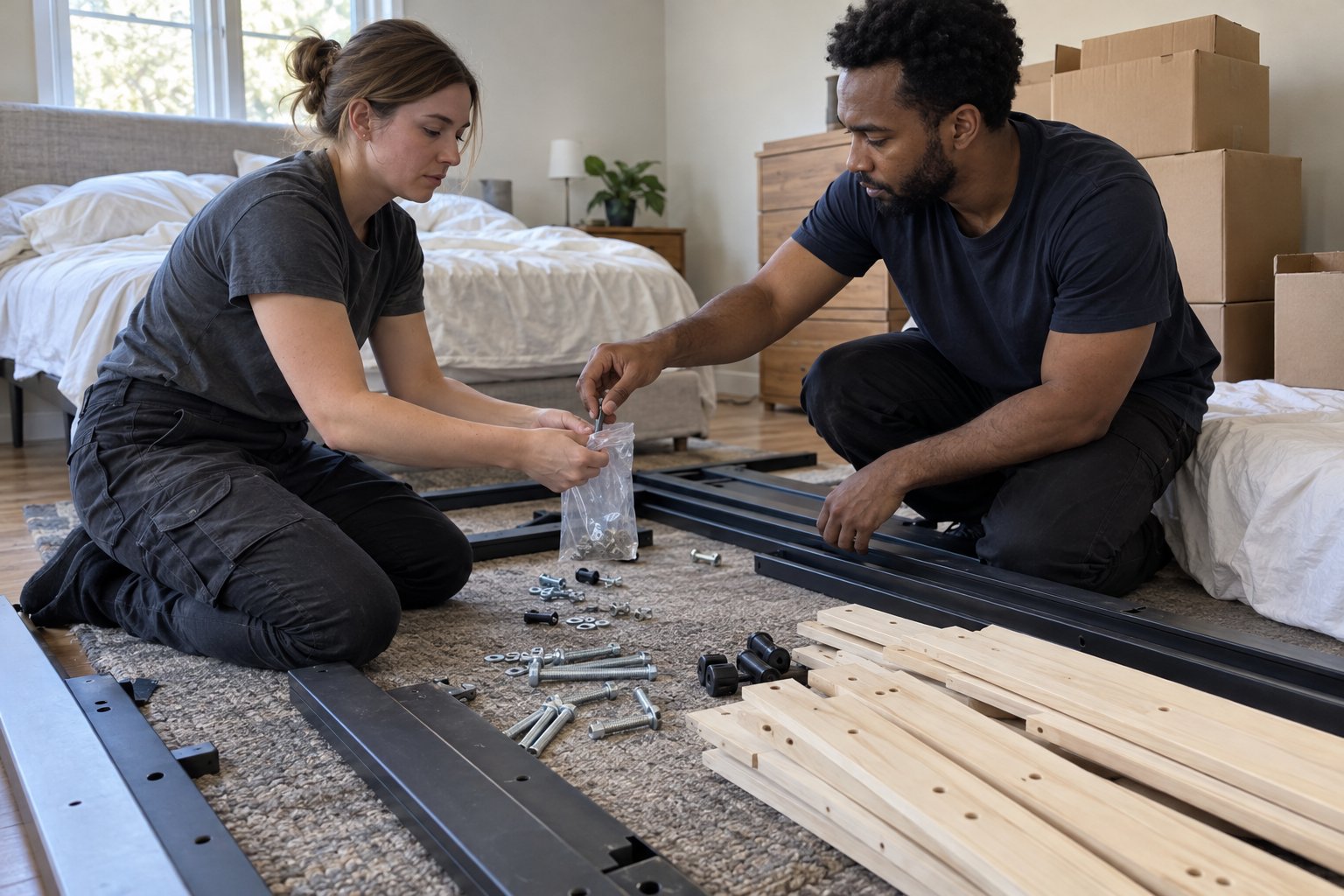
A furniture disassembly checklist for moving day keeps you from standing in a new living room with a loose headboard, three unlabeled bags of screws, and no idea which ones go where. The fix isn't working harder on moving day itself, it's splitting the job into a before list and an after list, and treating hardware like its own category of packing. Here's how to build both lists so nothing gets left behind or lost in a box marked "misc."
What Should Be On Your Before-the-Move Checklist?
Your before-the-move list should cover every piece that's too wide for a doorway assembled, too heavy to carry as one unit, or likely to get racked out of shape in transit. Walk through each room a few days ahead and sort furniture into "take apart" and "leave assembled" before the crew shows up.
- Bed frames: headboards, footboards, and rails separate for almost every move, since full frames rarely clear hallways or stairwells in one piece.
- Dining tables with leaves or pedestal bases: removing the legs or base protects the joints from stress during loading.
- Large wardrobes, bookcases, and sectional sofas: anything built in sections should travel in those same sections.
- Desks with hutches or attached shelving: separate the hutch from the desk body so neither piece is carrying weight it wasn't built to carry.
Leave dressers, nightstands, and most upholstered chairs assembled unless a specific piece won't clear a doorway. Taking apart furniture that didn't need it just creates more hardware to track and more reassembly time later. If you're unsure which pieces will fit through your doorways and stairwells, tell your crew about your home's layout before moving day so they can plan for it.
How Do You Keep Track of Screws, Bolts, and Small Parts?
The single biggest reason reassembly goes wrong isn't a broken piece, it's missing hardware. Give every disassembled item its own labeled bag and tape that bag directly to the largest flat part of the furniture it belongs to, not loose in a box with everything else.
- Zip-top bags, one per piece of furniture: mixing hardware from two different items is how you end up with leftover screws and no idea which one needs them.
- A permanent marker, not a pen: write what the bag belongs to and which end of the piece it came from ("bed frame, headboard side").
- Painter's tape on cords and small panels: label both ends of any cord you disconnect so it's obvious what it plugs back into.
- A phone photo before you start: one picture of the assembled piece and one of tricky joints saves guesswork later.
If a piece uses an Allen wrench or a specific tool, tape that tool to the hardware bag instead of tossing it in a toolbox you'll have to dig through at the new place.
What Happens to Disassembled Furniture on the Truck?
Disassembled parts need to travel together and stay protected from scratching against other items during the drive. Group each item's pieces in the same area of the truck rather than scattering boards and panels wherever they fit.
Flat panels like headboards and tabletops should stand on edge, padded, rather than lie flat under other boxes. Long rails and legs travel well bundled together with a furniture strap or tied securely so they don't shift and bang against each other. If you're moving these parts yourself in a separate vehicle, keep the hardware bags with you rather than in a box that might get unloaded last.
Furniture that stays assembled still needs wrapping. Ask about blankets and shrink wrap for anything with finished wood or glass that's riding in the truck fully assembled; packing services cover this kind of protection for items that aren't being broken down.
What's the Reassembly Checklist for Your New Home?
Reassembly goes fastest when you set up rooms in the order you'll actually use them: bedrooms first so you can sleep, then common areas, then everything else. Working room by room instead of piece by piece keeps you from opening ten hardware bags before you've finished a single item.
- Unwrap and check for damage before reassembling anything. It's much easier to document and report an issue before a piece is back together.
- Match hardware bags to furniture by the labels you wrote beforehand. If a bag isn't labeled, check your photos before guessing.
- Reassemble beds and seating first. You'll want somewhere to sit and sleep while everything else gets sorted out.
- Tighten everything twice. Furniture that was taken apart and reassembled tends to need a second pass with the screwdriver once the joints settle.
Give yourself a realistic window: a single bed frame or small table might take fifteen minutes, but a full bedroom set with a wardrobe and dresser can take a good part of an afternoon.
Handling Hardware for a Multi-Room Move
A whole-house move multiplies the hardware problem, since you might disassemble a dozen items across several rooms in the same morning. Keep a single designated box, clearly marked, just for hardware bags, and load it last so it's the first thing off the truck at your new home.
If you're coordinating a move across Pennsylvania, New Jersey, Delaware, or Maryland and want the heavier lifting and carrying handled for you, a local moving company can take apart and reassemble standard pieces like beds and tables as part of the job, which cuts the number of hardware bags you personally need to track.
One Rule of Thumb Worth Remembering
As a rough guide, plan on roughly fifteen to thirty minutes to disassemble a standard bed frame or dining table, and budget more time for anything with hidden brackets or cam locks you haven't dealt with before. That estimate is enough to build a realistic morning-of schedule without underestimating how long the "quick" jobs actually take.
If you're relocating from a home in Wilmington, DE or Princeton, NJ, build this disassembly and reassembly time into your overall day alongside loading and drive time, since furniture work tends to get rushed when it's left for the very end of a long day.
Planning your move? Request a quote from Superior Moving & Storage.
Frequently Asked Questions
Do I need to disassemble furniture myself before movers arrive?
Not necessarily. Tell your crew ahead of time which pieces you'd like taken apart and which you plan to handle yourself, so the schedule for moving day accounts for that work either way.
What's the best way to label furniture hardware so it doesn't get mixed up?
Use a separate zip-top bag for each piece of furniture, write on the bag which item and which section it belongs to, and tape it directly to the largest flat part of that piece rather than packing it in a general box.
How do I remember how a piece of furniture goes back together?
Take a photo of the assembled piece and any tricky joints or brackets before you start taking it apart. It's a quick step that saves real guesswork once you're reassembling at the new place.
Should bed frames always be taken apart for a move?
Most bed frames need to come apart since full frames rarely clear hallways, stairwells, or doorways in one piece. Headboards, footboards, and rails typically separate into manageable sections.
What furniture usually doesn't need to be taken apart for a move?
Dressers, nightstands, and most upholstered chairs can usually stay assembled unless a specific doorway or stairwell won't accommodate them. Taking apart furniture that doesn't need it just adds extra hardware to track.
Have Questions About Your Move?
Find clear answers to common moving questions. Learn more about our services, process, and what to expect on moving day.
Our team is here to help. Contact us for personalized assistance with your moving needs.
Ready for a Stress-Free Move?
Let our family help your family with a move handled the right way from start to finish. Request your free quote today and see why Philadelphia families have trusted us since 1981.