
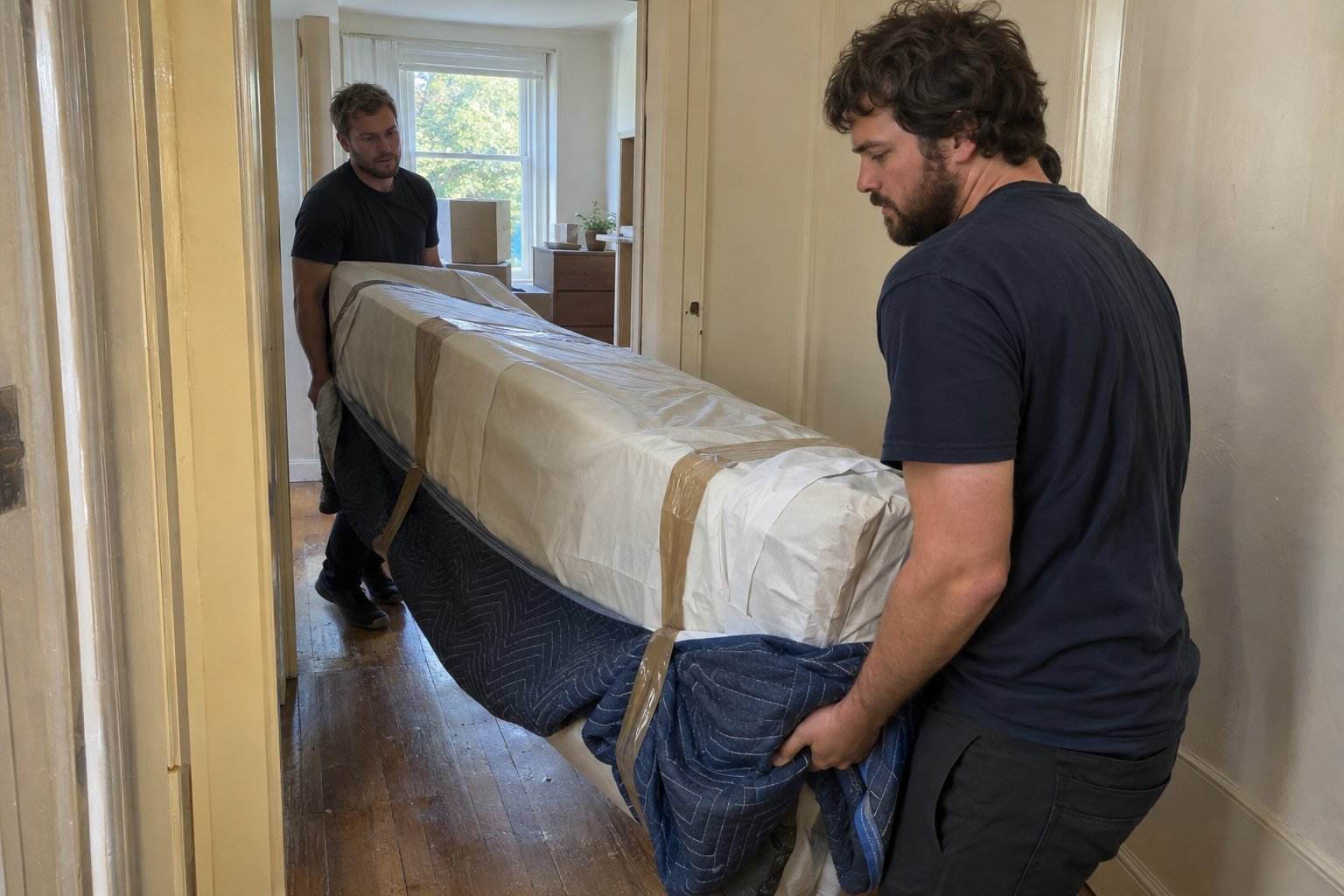
Move-Out Damage Prevention Checklist: Protecting Floors, Walls, and Furniture
Written by:
Superior Moving & Storage
Published:
November 19, 2026
A move-out damage prevention checklist covering floor protection, corner guards, and furniture padding, plus what to do the day before and on moving day.
Protecting the walls, floors, and furniture you're leaving behind (and the rental deposit tied to all of it) comes down to a short list of supplies and a plan for using them before the truck ever gets loaded. Most move-out damage disputes trace back to a handful of avoidable spots: scuffed door frames, dented hallway corners, and gouged hardwood under a dragged dresser. A little prep removes most of that risk.
Why Does Move-Out Damage Happen in the First Place?
Move-out damage usually happens because furniture gets carried through the same tight turns, door frames, and stairwells over and over in a single day, and nobody budgets time to protect the path first. Each trip through a doorway is a chance to clip a corner or scrape paint, and fatigue late in the day makes it worse.
The fix isn't working faster. It's reducing the number of unprotected surfaces a heavy object can touch. That means covering floors before boxes start moving, padding the furniture pieces most likely to swing into a wall, and knowing which doorways and turns need a second set of hands rather than one person muscling a couch through alone.
Checklist: Supplies to Have on Hand Before Moving Day
Gather these before moving day, not the morning of, so you're not making a store run while a crew or a truck is waiting.
- Furniture blankets or moving pads. Wrap dressers, tables, and upholstered pieces so a bump against a doorframe doesn't transfer to the wood or fabric.
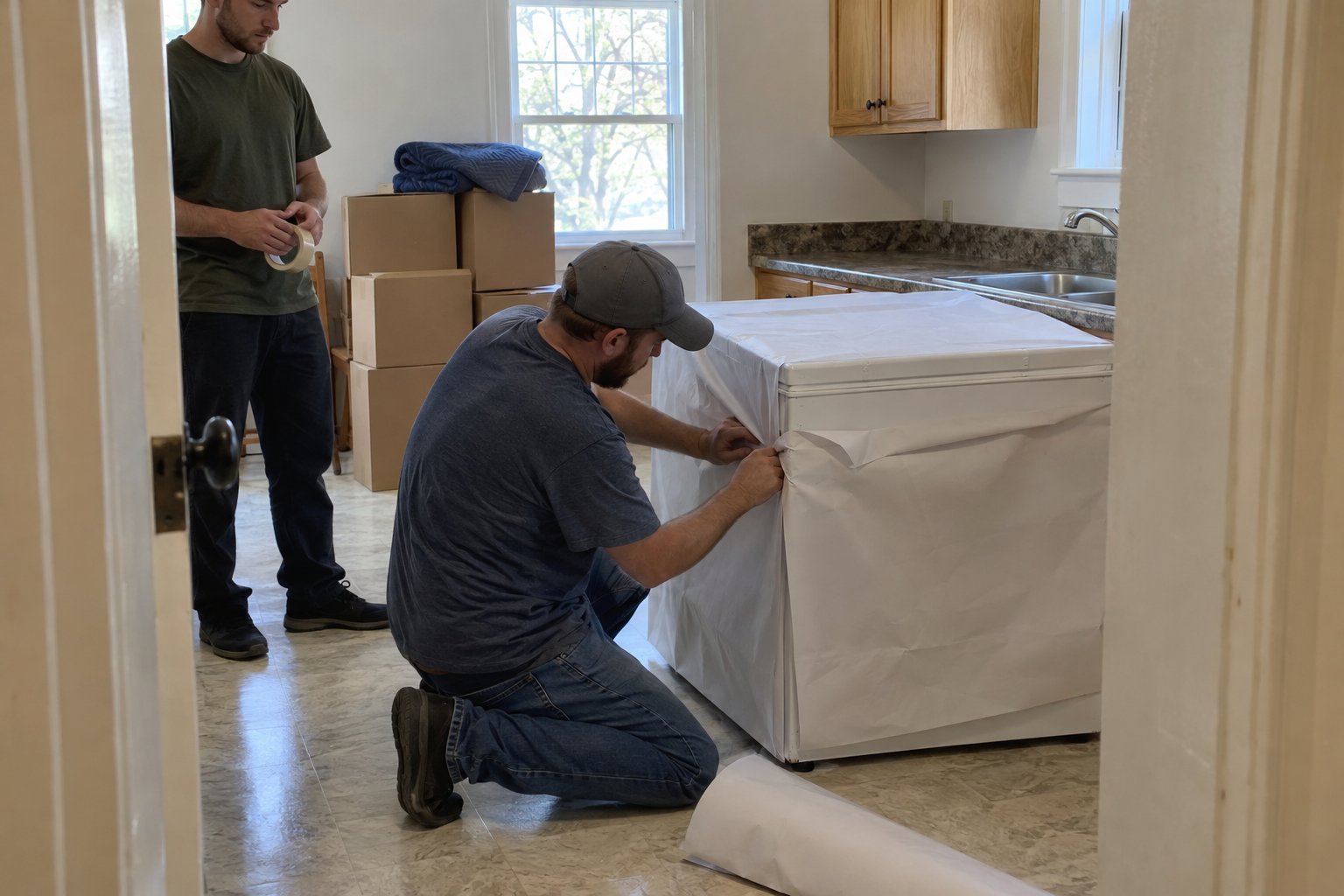
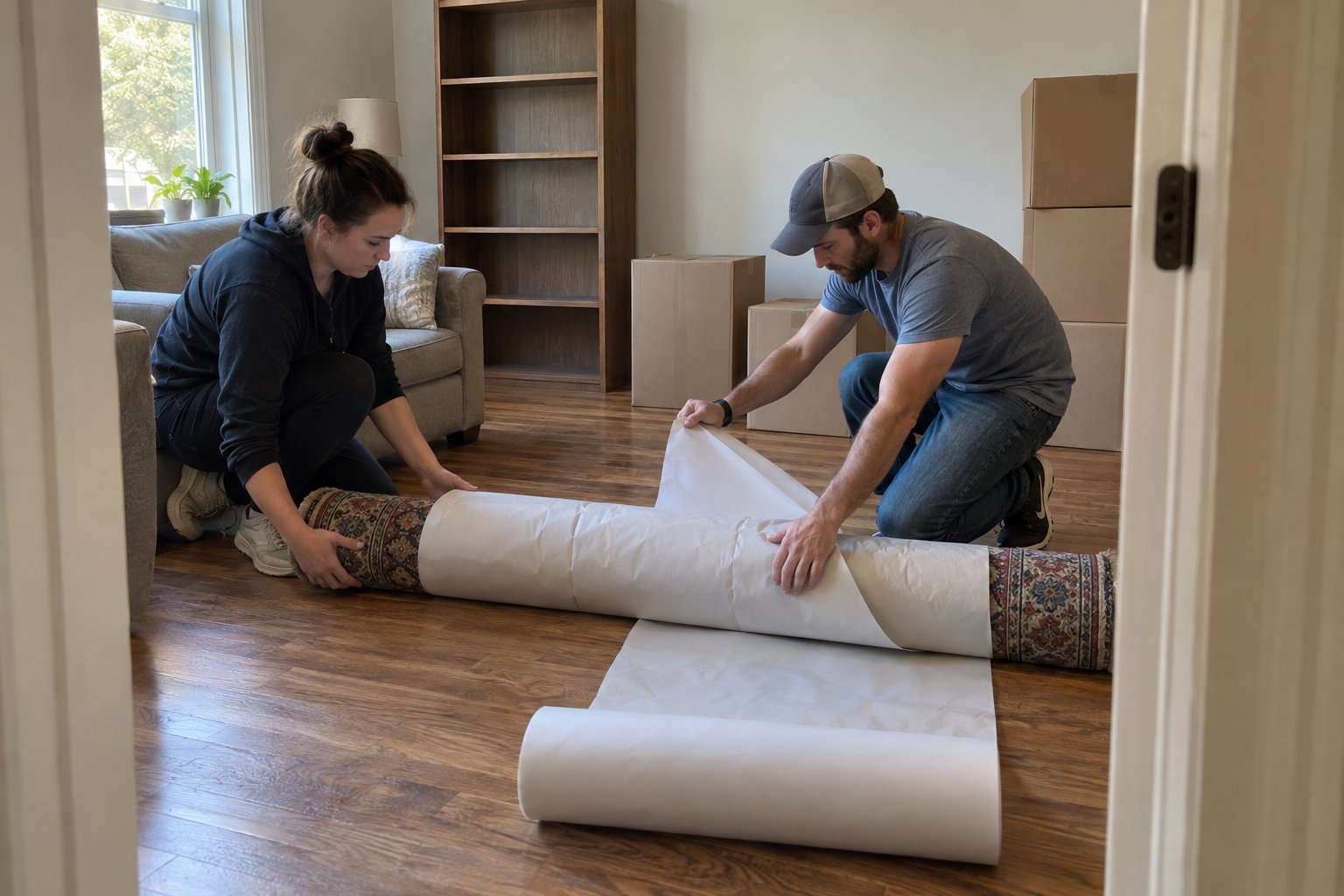
- Floor runners or rosin paper. Rolled down the main carry path, from the front door to the truck, these keep dollies and dragged boxes from scratching hardwood or tile.
- Corner and door-edge protectors. Foam or cardboard guards on door frames and stair corners absorb the glancing hits that happen when a piece doesn't quite clear a turn.
- Stretch wrap. Holds moving blankets in place on furniture and keeps drawers and doors from swinging open mid-carry.
- A furniture dolly and moving straps. Reduce how much furniture gets dragged or tipped, which is where most dents and scuffs start.
- Painter's tape. Secures paper runners and corner guards without pulling paint or finish off when it's removed.
None of this needs to be expensive specialty gear. The goal is coverage on the surfaces that take the most contact, not a full inventory of every product available.
What Should You Do the Day Before Moving?
The day before a move, walk the exact path furniture will travel, from each room to the truck, and lay down protection along it. Trying to protect floors and corners after boxes are already stacked in the hallway is much harder than doing it while the space is still clear.
- Roll out floor runners along the main route, taping down the edges so they don't bunch up under foot traffic.
- Attach corner guards to any door frame or stair corner the largest pieces of furniture will have to pass.
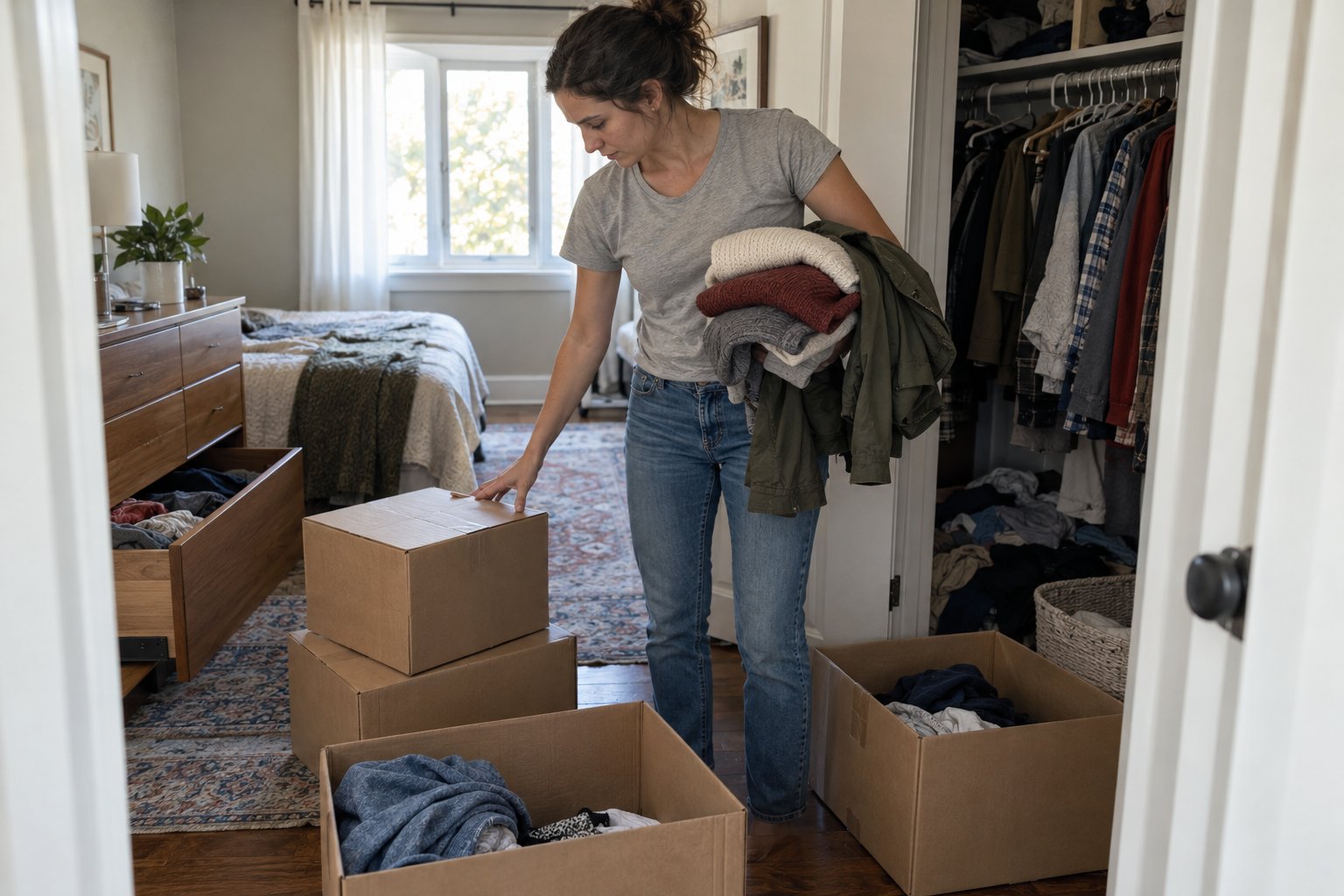
- Wrap furniture that's already packed up or staged, so it's ready to carry without a last-minute scramble.
- Take a few photos of floors, walls, and trim in good light. If a landlord or new owner raises a damage claim later, dated photos showing the condition beforehand are useful.
What to Do on Moving Day Itself
On moving day, the priority is keeping the protected path intact as traffic through it increases. Floor runners shift, tape lifts, and pads slip out of place as the day goes on, so someone needs to be checking in on them, not just laying them down once in the morning.
- Before anything heavy comes through, confirm the runners and corner guards from the day before are still secure.
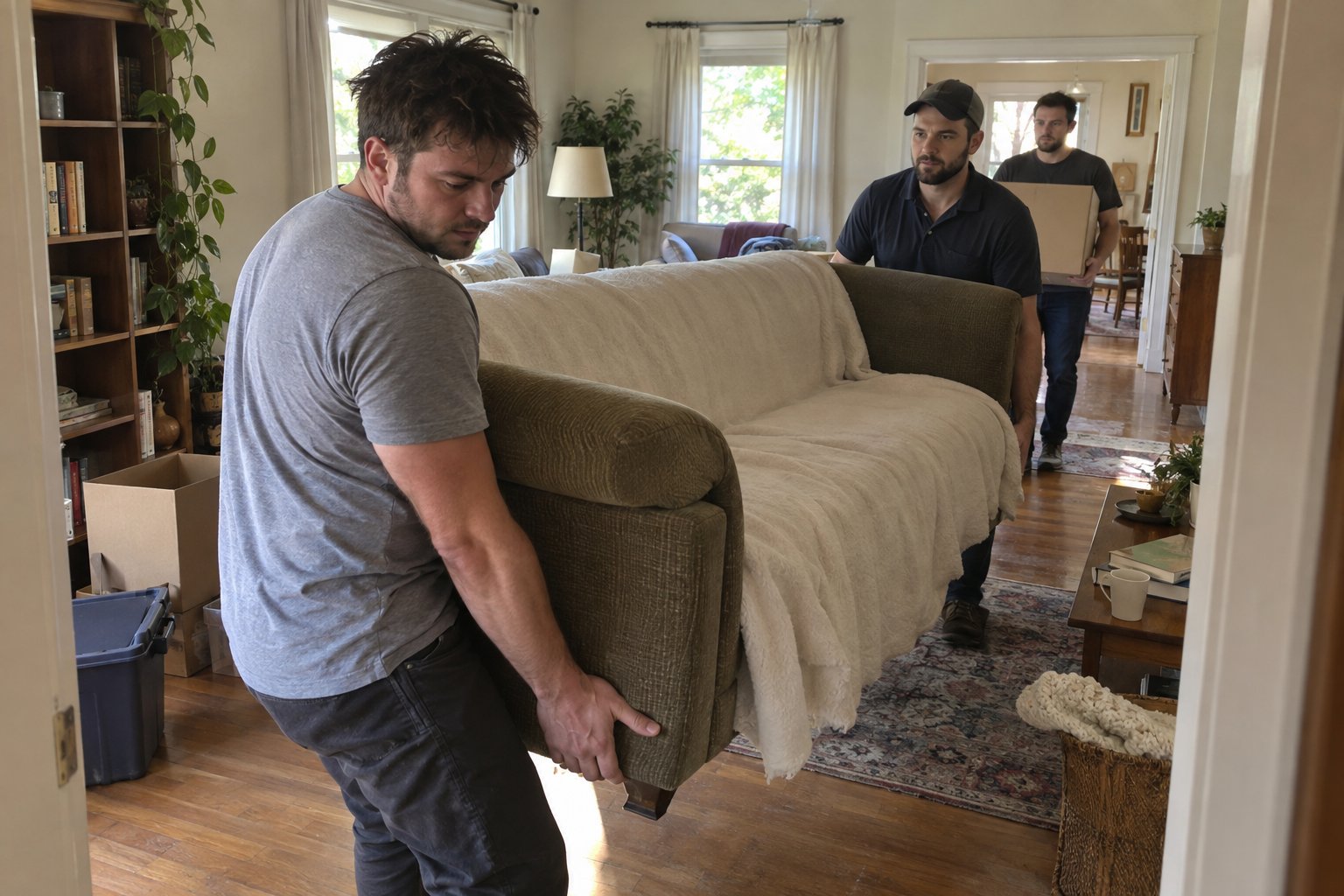
- Walk large or awkward pieces through tight turns with two people, one guiding the back end, instead of letting one person pivot it alone.
- Re-tape or reposition floor protection partway through the day if it's bunching or sliding.
- Do a final walkthrough of every room once it's empty, checking walls, floors, and trim before the truck pulls away. Catching a scuff while you're still on-site is easier to address than discovering it weeks later.
As a rule of thumb, plan for roughly an hour to lay down protection in an average-sized home before loading starts. It's time well spent compared to patching drywall or refinishing a scratched floor afterward.
Packing Supplies That Do Double Duty for Damage Prevention
Some supplies you're already buying for packing can pull double duty for protecting your space. Leftover moving blankets make good padding for stair railings. Flattened boxes taped to a wall can shield it during an awkward furniture turn. If you're deciding what to buy in the first place, a look at how to choose the right packing supplies covers box and tape choices that also hold up well as improvised protection.
If you'd rather not store or dispose of pads, wrap, and floor runners afterward, renting reusable moving crates through moving crate rental cuts down on the cardboard and tape you'd otherwise need to track and discard.
When Protecting the Home Yourself Isn't Enough
A DIY protection plan works well for a studio or a one-bedroom with a straightforward layout. It gets harder in a home with narrow stairwells, a second-floor unit, or furniture too heavy for two people to maneuver safely. In those cases, the risk isn't just a scuffed wall, it's a dropped piece or a strained back.
A crew that carries heavy furniture through tight spaces for a living brings padding, dollies, and the technique to pivot large pieces without forcing them. If your home has a layout you're worried about, it's worth reading through carrying heavy furniture through tight hallways and stairwells before deciding whether to tackle it yourself. For moves within the area, local moving services include the carrying, padding, and floor protection described above as part of the move itself.
Who Do You Tell Before You Even Start Moving Furniture?
Before the first box gets carried out, let your landlord, building manager, or HOA know a move is happening, especially if a loading dock, elevator, or reserved parking spot needs to be scheduled. Buildings often have their own move-in and move-out procedures, so check with the building directly rather than assuming.
It's also worth confirming your address change is in motion before move-out day gets hectic. Filing a change of address with USPS ahead of time means mail starts following you right away instead of piling up at a place you no longer have keys to.
Planning your move? Request a quote from Superior Moving & Storage.
Frequently Asked Questions
What should I tell a moving crew about doorways or stairs before they start carrying furniture?
Point out any tight turns, low doorframes, or stairwells with awkward landings before furniture starts moving, not after a piece is already stuck halfway through. Mention any spots where a large item barely fit on the way in, since it will need the same careful angle on the way out.
How long does it take to protect floors and walls before a move?
Plan for roughly an hour in an average-sized home to lay down floor runners, tape corner guards in place, and wrap furniture that's already staged. Larger homes or ones with more hallways and stairs will take longer.
Do floor runners actually need to be taped down, or can they just be laid out?
Tape the edges down. Loose runners bunch up and slide under foot traffic within the first few trips, which defeats the purpose and can even become a trip hazard during a long day of carrying boxes.
Should I take photos of my home's condition before moving out?
Yes. Photograph floors, walls, and trim in good light before any furniture moves, so you have a clear record of the condition if a landlord or new owner raises a question about damage later.
What's the first thing to protect when movers arrive, floors or furniture?
Floors first. Runners and corner guards need to be down and secure before the first heavy item comes through, since furniture moving over an unprotected floor can cause damage in the first few trips.
Have Questions About Your Move?
Find clear answers to common moving questions. Learn more about our services, process, and what to expect on moving day.
Our team is here to help. Contact us for personalized assistance with your moving needs.
Ready for a Stress-Free Move?
Let our family help your family with a move handled the right way from start to finish. Request your free quote today and see why Philadelphia families have trusted us since 1981.