.webp)
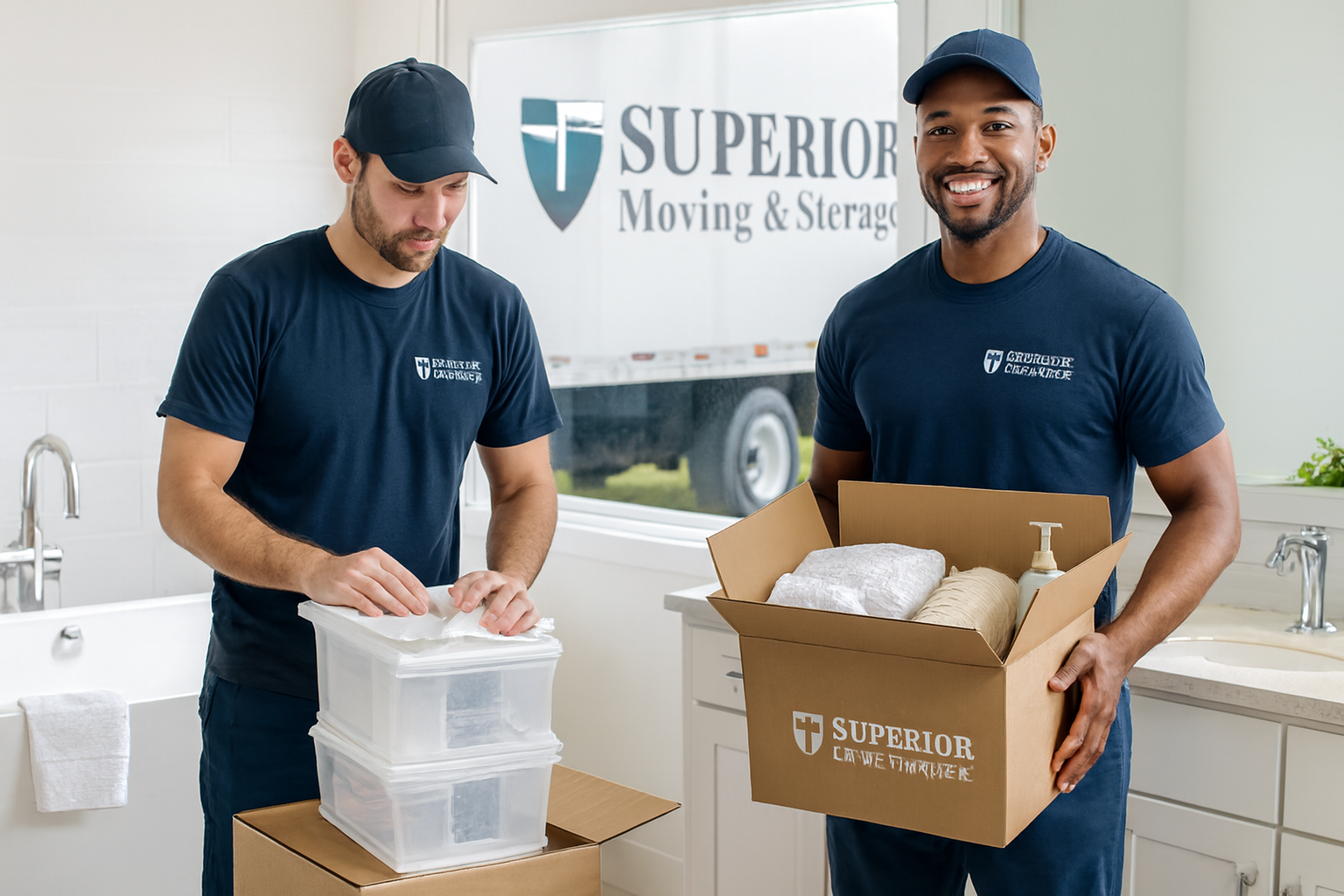
How to Pack and Move Your Bathroom: A Complete Guide to Toiletries, Cabinets, and Fragile Fixtures
Written by:
Superior Moving & Storage
Published:
July 19, 2026
Learn how to pack and move your bathroom the right way — from toiletries and medicine cabinets to mirrors and fixtures. A complete, actionable guide from Superior Moving & Storage.
Knowing how to pack and move your bathroom correctly is one of those tasks most people leave until the very last day of packing — and then immediately regret it. The bathroom seems small and manageable on the surface, but it contains a surprising density of items that require real attention: fragile glass bottles, leaking liquids, expired medications, bulky towels, irreplaceable prescriptions, and mirrors that shatter easily in transit. At Superior Moving & Storage, we've relocated thousands of households across Philadelphia, New Jersey, Delaware, and beyond, and the bathroom is consistently one of the rooms that catches people off guard — not because it's the largest, but because it's the most disorganized and the most prone to spills, breakage, and last-minute chaos. This guide gives you a complete, actionable plan for packing and moving your bathroom from start to finish.
The bathroom presents a particular challenge because it mixes fragile and liquid items in close quarters, often inside cabinets and drawers that haven't been fully opened in months. A thoughtful strategy that addresses both the everyday essentials and the forgotten back-of-cabinet contents is what separates a clean bathroom move from a messy one. Here's how to build that strategy.
Why Your Bathroom Deserves Its Own Packing Plan
Most rooms in a home can be approached with a general packing method: use appropriate box sizes, wrap fragile items, label clearly, and work systematically. The bathroom benefits from a more dedicated approach for several important reasons.
First, bathrooms contain liquids in virtually every cabinet and drawer. Shampoo bottles, conditioners, cleaning sprays, mouthwash, colognes, perfumes, nail polish removers, and liquid medications are all candidates for leaking if packed carelessly. A single unsecured bottle of bleach cleaner can ruin an entire box of towels — or worse, damage other belongings in the truck.
Second, bathroom items span an enormous range of fragility. Thick bath towels can be packed loosely, but glass perfume bottles, ceramic soap dishes, and frameless mirrors require the same level of care you'd give fine china. Packing both categories into the same box without differentiation is a recipe for broken glass and ruined textiles.
Third, bathrooms contain time-sensitive and safety-critical items. Prescription medications, first aid supplies, and personal hygiene essentials need to stay accessible during the move — not buried in a sealed box in the back of a truck. Planning for a bathroom "open first" bag is not optional; it's essential.
Finally, bathrooms frequently contain items that shouldn't move at all: expired medications, nearly empty product bottles, outdated first aid supplies, and toiletries you've been meaning to throw out for years. Moving is the ideal moment to cut that inventory down significantly before you waste packing materials on things you'll immediately discard at the new home.
Decluttering and Sorting Before You Pack a Single Box
Before you open a single box or roll out a single strip of tape, spend time on a dedicated bathroom declutter. This step pays dividends in every phase that follows — less to pack, less to label, less to carry, and less to unpack.
Medications and the Medicine Cabinet
The medicine cabinet is often the most neglected storage space in the entire home. Go through it methodically and check expiration dates on every prescription and over-the-counter medication. Expired medications should be properly disposed of — most pharmacies offer take-back programs, and many municipalities have designated disposal sites. Do not flush medications down the toilet unless the label specifically instructs it, as this can affect local water supplies.
For current prescriptions, make sure you have a sufficient supply to last through the move and the first week or two of settling in. If you're moving to a new area, this is a good time to identify a new pharmacy and begin the transfer process before moving day arrives.
Toiletries and Personal Care Products
Be honest about what you actually use. Most bathrooms contain a graveyard of half-used products: shampoos that didn't work out, body washes with an inch left in the bottle, face creams you tried once, and hair tools still in packaging. Moving all of it costs time, packing materials, and truck weight. Pare down to what you actually use and replace anything that's nearly empty rather than moving it.
Towels, Linens, and Accessories
Towels and bath mats are excellent packing material in their own right — they can cushion fragile items inside boxes and reduce the overall number of packing materials you need. Evaluate your towel inventory: old, worn, or stained towels are better donated or discarded than moved. Keep your best linens, and put them to work as padding during the pack.
Room-by-Room Packing Strategy: What to Pack and How
Once you've decluttered, you're ready to pack what remains. The bathroom works best when broken into distinct categories, each with its own approach.
Packing Liquids and Toiletries
Liquids are the primary risk in any bathroom pack. Here's the best approach for moving them safely:
- Seal every open bottle before packing. Remove the cap, place a small square of plastic wrap over the opening, and screw the cap back on tightly. This prevents leaks even if a bottle is jostled or turned upside down in transit.
- Place bottles upright in boxes. Don't pack liquids on their sides. Use smaller boxes for liquids so the weight stays manageable and bottles stay oriented correctly.
- Double-bag any suspect containers. If a bottle looks like it might leak regardless, place it inside a zip-lock bag before packing it in the box.
- Keep cleaning chemicals separate from personal care items. Household cleaners belong in their own clearly labeled box, away from shampoos, conditioners, and other personal products.
- Check airline and hazmat rules for long-distance moves. If any portion of your move involves air freight or specialized transport, verify what can and can't be shipped in sealed vehicles.
Packing Glass and Fragile Items
Perfume bottles, cologne, glass soap dispensers, ceramic toothbrush holders, and decorative items are among the most breakable things in the bathroom. Treat them like you would fragile kitchen items:
- Wrap each glass or ceramic item individually in packing paper or bubble wrap before boxing.
- Use a small, sturdy box — never a large one — so items don't shift or stack too deeply.
- Fill any empty space in the box with crumpled packing paper or rolled towels to eliminate movement.
- Label the box FRAGILE on all sides and indicate which end is up.
For perfumes and colognes specifically, wrap each bottle individually, place them standing upright, and consider packing them in a separate small box from other toiletries. These bottles are often irreplaceable and difficult to source again — they deserve their own protected space.
Packing Mirrors and Framed Art
Bathroom mirrors — whether over-sink wall mirrors, vanity mirrors, or decorative framed pieces — are among the highest-breakage items in any move. If the mirror is wall-mounted and not part of the vanity fixture itself, remove it carefully and treat it as you would any large piece of framed art. For guidance on wrapping and protecting mirrors specifically, our post on how to pack and move artwork and wall décor covers the techniques in detail.
For medicine cabinet mirrors that are part of the cabinet unit, leave them in place and brace the door shut with painter's tape or rubber bands. Wrap the entire cabinet in moving blankets if it's being transported as a standalone piece.
Packing Towels, Linens, and Soft Goods
Towels and bath linens can go into large boxes or wardrobe boxes without wrapping. The key is to use them strategically:
- Roll towels tightly rather than folding them — rolled towels pack more efficiently and can be used to fill gaps in boxes containing fragile items.
- Keep bath mats and shower curtains together in a labeled box so they're easy to locate and install first at the new home.
- Wash all linens before packing if possible — you'll want fresh towels immediately upon arrival and won't have time to launder them right away.
Packing Bathroom Hardware and Accessories
Towel bars, toilet paper holders, robe hooks, and similar hardware that you're taking with you should be removed before moving day if possible. Wrap each piece in packing paper, place them in a small box or zip-lock bag, and label clearly. Keep all associated screws and anchors in the same bag so reassembly is straightforward at the new home.
If you're leaving fixtures in place for the new owners or tenants, confirm this in writing before moving day — disputes over what's included in a sale or lease are common and avoidable.
The Bathroom "Open First" Bag: Your Most Important Packing Decision
No matter how efficiently you pack everything else, the bathroom "open first" bag is the single most important packing decision you'll make for this room. Moving day is long and often runs later than expected. By the time you arrive at the new home, everyone will want a shower, access to their toothbrush, and their medications within reach.
Pack a clearly labeled bag — a sturdy tote, a small duffel, or a plastic bin with a lid — containing the following items for each person in the household:
- Toothbrush and toothpaste
- Soap or body wash
- Shampoo and conditioner (travel sizes if possible)
- Deodorant
- Any daily prescription medications
- A fresh change of clothes and one clean towel
- Basic first aid supplies (bandages, pain reliever)
- Toilet paper — always bring at least one roll in your open-first bag
This bag should travel with you — not on the moving truck — so it's immediately accessible the moment you arrive. If you're coordinating a larger move, our complete guide on how to handle moving day like a pro covers the full open-first strategy across every room in the house.
Common Bathroom Packing Mistakes and How to Avoid Them
Even careful packers make predictable mistakes in the bathroom. Here are the ones we see most often at Superior Moving & Storage — and how to avoid them.
Packing Liquids in Large Boxes
Large boxes filled with toiletries become extremely heavy and are prone to tipping, which causes liquids to shift and leak. Always use small or medium boxes for liquid-heavy bathroom contents. If a box is too heavy to lift comfortably with one hand, it's too heavy.
Mixing Hazardous Cleaning Products with Personal Care Items
Bathroom cleaners — bleach sprays, toilet bowl cleaners, abrasive scrubs — should never share a box with shampoos, conditioners, or skin care products. In the event of a leak, you want the contamination contained. Label cleaning supply boxes separately and load them last so they're accessible for the final pre-move cleaning of the old bathroom.
Forgetting to Drain and Dry Items Before Packing
Loofahs, pumice stones, soap dishes with standing water, rubber bath toys, and shower caddies with accumulated moisture should be fully dried before packing. Wet items in sealed boxes grow mold quickly — especially during a move that involves a storage period. Give these items 24 hours to air-dry before they go into boxes.
Leaving Packing the Bathroom for the Last Possible Moment
Because the bathroom is used until the morning of moving day, many people assume it has to be packed last. That's partially true for daily-use items, but it's not true for everything in the bathroom. Decorative items, extra towels, guest supplies, and back-of-cabinet products can all be packed days in advance. Leave only your active daily-use items out until moving morning, and pre-pack everything else well ahead of schedule.
What Professional Movers Handle — and What They Don't
If you've hired a professional moving crew, it helps to understand what they will and won't pack in the bathroom by default.
Professional movers will typically handle wrapping and boxing bathroom accessories, towels, and décor items as part of a full-service pack. However, most reputable moving companies — including Superior Moving & Storage — will not transport certain items regardless of how they're packed: open containers of cleaning chemicals, prescription medications, and any item classified as hazardous material.
If you've engaged our professional packing services, your crew will work with you to identify which bathroom items they'll handle and which you should manage yourself. This conversation is best had before moving day rather than on it.
For households with particularly complex bathroom setups — think custom vanities, freestanding soaking tubs being relocated, or antique fixtures — our specialty moving services team has the experience and equipment to handle items that fall outside the scope of a standard residential pack.
Final Walkthrough: Before the Truck Leaves
Once the bathroom is packed and the moving crew has loaded your boxes, do a final walkthrough before the truck pulls away. Bathrooms are notorious for leaving items behind — inside medicine cabinets that look empty but aren't, on shower shelves that are easy to overlook, in under-sink cabinets hidden behind cleaning supplies, and on the backs of doors where hooks and organizers often live.
Check the following specifically:
- Inside every cabinet and drawer, including the ones you cleared first
- The shower and bathtub ledges, shelves, and caddies
- Behind the toilet and on any toilet-mounted organizers
- The back of the door — towel hooks, over-door organizers, robes
- Under-sink plumbing areas where cleaning products often get pushed back
- The medicine cabinet, even if you believe you cleared it
Items left behind in a bathroom are among the most commonly reported "I forgot to take" discoveries in the days after a move. A two-minute final check prevents that entirely.
Frequently Asked Questions
What's the best way to pack liquid toiletries so they don't leak during a move?
The most effective method is to remove each bottle's cap, place a small square of plastic wrap over the opening, and screw the cap back on tightly. This creates a secondary seal that prevents leaks even if bottles are jostled or tipped. Pack liquids upright in small boxes, and place any questionable containers inside a zip-lock bag for added protection. Never pack liquids in large boxes — they become too heavy and are more likely to tip and spill.
Should I pack my medications with the rest of my bathroom items?
No. Prescription medications and daily-use health items should be packed separately and kept with you during the move — not loaded onto the truck. Place them in your open-first bag along with your toothbrush, soap, and other immediate essentials. Expired medications should be properly disposed of before your move; most pharmacies offer take-back programs. If you're moving to a new area, arrange a pharmacy transfer before moving day so you don't run out of critical prescriptions during the transition.
How do I safely pack a bathroom mirror for a move?
For wall-mounted mirrors, remove them carefully and treat them like framed artwork: wrap in packing paper, then bubble wrap, and pack vertically in a mirror box or flat between two pieces of cardboard secured with tape. For medicine cabinet mirrors that are built into the unit, leave them in place and brace the door shut with painter's tape. Wrap the entire cabinet in moving blankets if it's being transported as a freestanding piece. Always label mirror boxes 'FRAGILE — THIS SIDE UP' on all sides.
Can the moving crew pack my bathroom for me?
Professional movers can typically pack bathroom accessories, towels, and décor items as part of a full-service pack. However, reputable moving companies generally won't transport open containers of cleaning chemicals, prescription medications, or items classified as hazardous materials. Talk with your moving company before moving day to clarify exactly which bathroom items they'll handle so there are no surprises on the day of the move.
What should I pack in my bathroom 'open first' bag?
Your bathroom open-first bag should contain everything you'll need during the first 24 hours in your new home: toothbrush and toothpaste, soap or body wash, shampoo and conditioner, deodorant, a clean towel, a fresh change of clothes, daily prescription medications, basic first aid supplies, and at least one roll of toilet paper. This bag should travel with you in your vehicle — not on the moving truck — so it's immediately accessible when you arrive.


Have Questions About Your Move?
Find clear answers to common moving questions. Learn more about our services, process, and what to expect on moving day.
Our team is here to help. Contact us for personalized assistance with your moving needs.
Ready for a Stress-Free Move?
Let our family help your family with a move handled the right way from start to finish. Request your free quote today and see why Philadelphia families have trusted us since 1981.